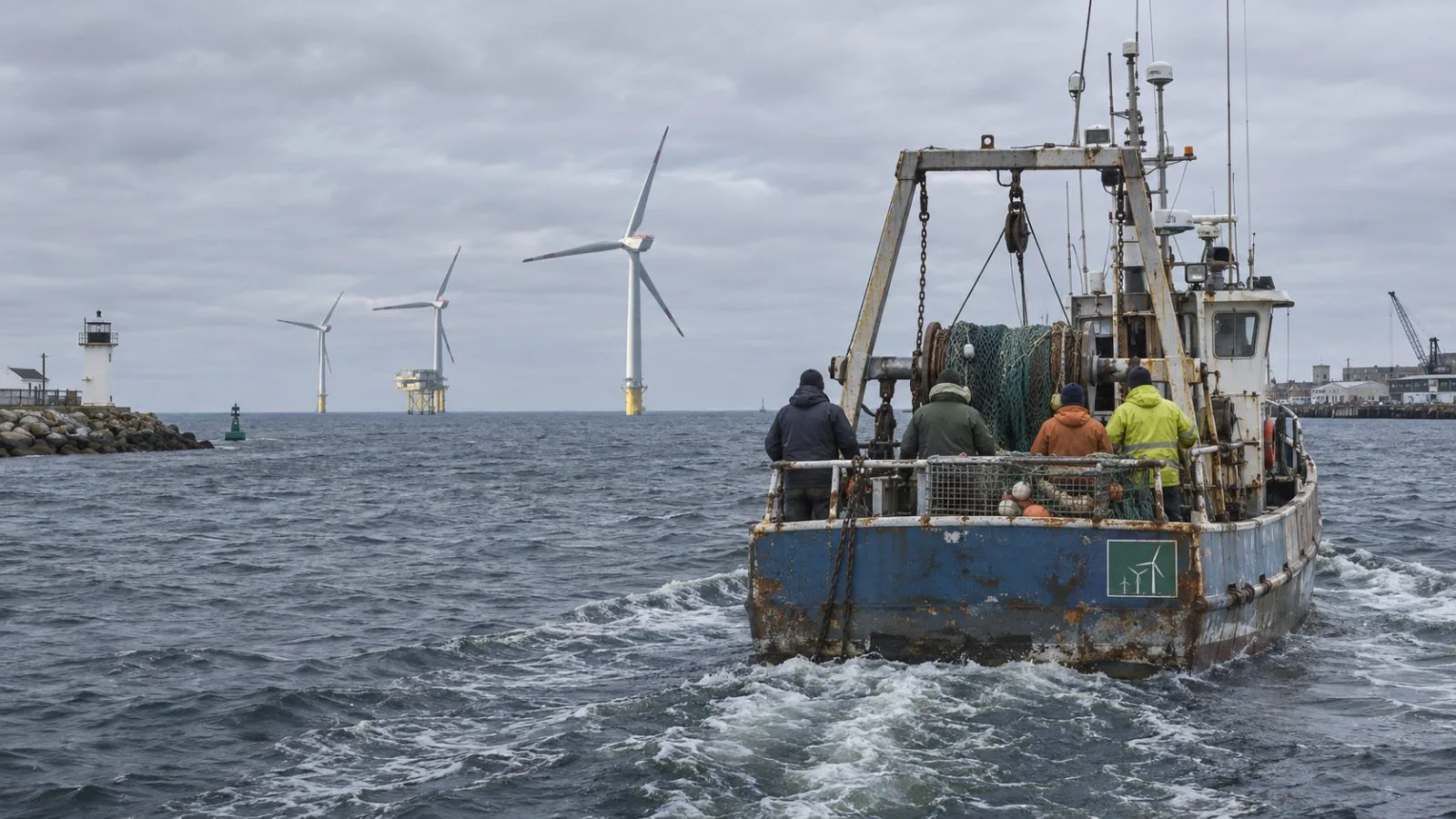
New England fishing crews are using offshore-wind contracts to supplement seasonal incomes, but policy uncertainty under President Donald Trump is putting that work at risk, The Guardian reported Nov. 20.
Sea Services North America, a cooperative founded in 2020 with about 200 fishers, provides marine-mammal monitoring, vessel observation and construction support. It pays each fishing boat $4,500 per day plus fuel, and says payments to vessel owners and fishers have totaled $34 million across several commercial wind farms.
Capt. Kevin Souza recently spent 12 days with a three-person crew supporting Revolution Wind, a 65-turbine project south of Rhode Island. He called the work a “godsend.”
The income is particularly important to scallopers, whose federal limits restrict them to 36 fishing days a year. Capt. Jack Morris, who owns a fleet that includes the Pamela Ann, said offshore contracts help crews cover household costs after the fishing season.
Morris also said the activity supports mechanics, welders, carpenters, electricians and painters. Stacy Alexander-Nevells, who runs a 19-boat operation with her father, said the contracts helped keep vessels and workers active when fishing revenue varied.
The arrangement remains contested. Some commercial fishers have sued wind companies, arguing that construction could interfere with traditional fishing grounds and harm marine ecosystems.
Trump has opposed additional offshore projects. An executive order issued in January 2025 halted construction at five East Coast developments; courts later permitted work to resume. The Associated Press reported that the administration is also pursuing a plan costing nearly $4 billion to buy back offshore leases.
That uncertainty has made developers less willing to propose new projects, The Guardian reported. Sea Services CEO Gordon Videll said assignments are becoming less frequent and that construction could take years to restart after current projects finish. Souza said the gaps between jobs have grown.
Revolution Wind installed its last turbine in September, Canary Media reported. The Guardian reported that hundreds of fishers could soon lose an income stream as existing projects wind down, while Videll argued that the cooperative’s experience shows fishing and offshore wind can coexist.