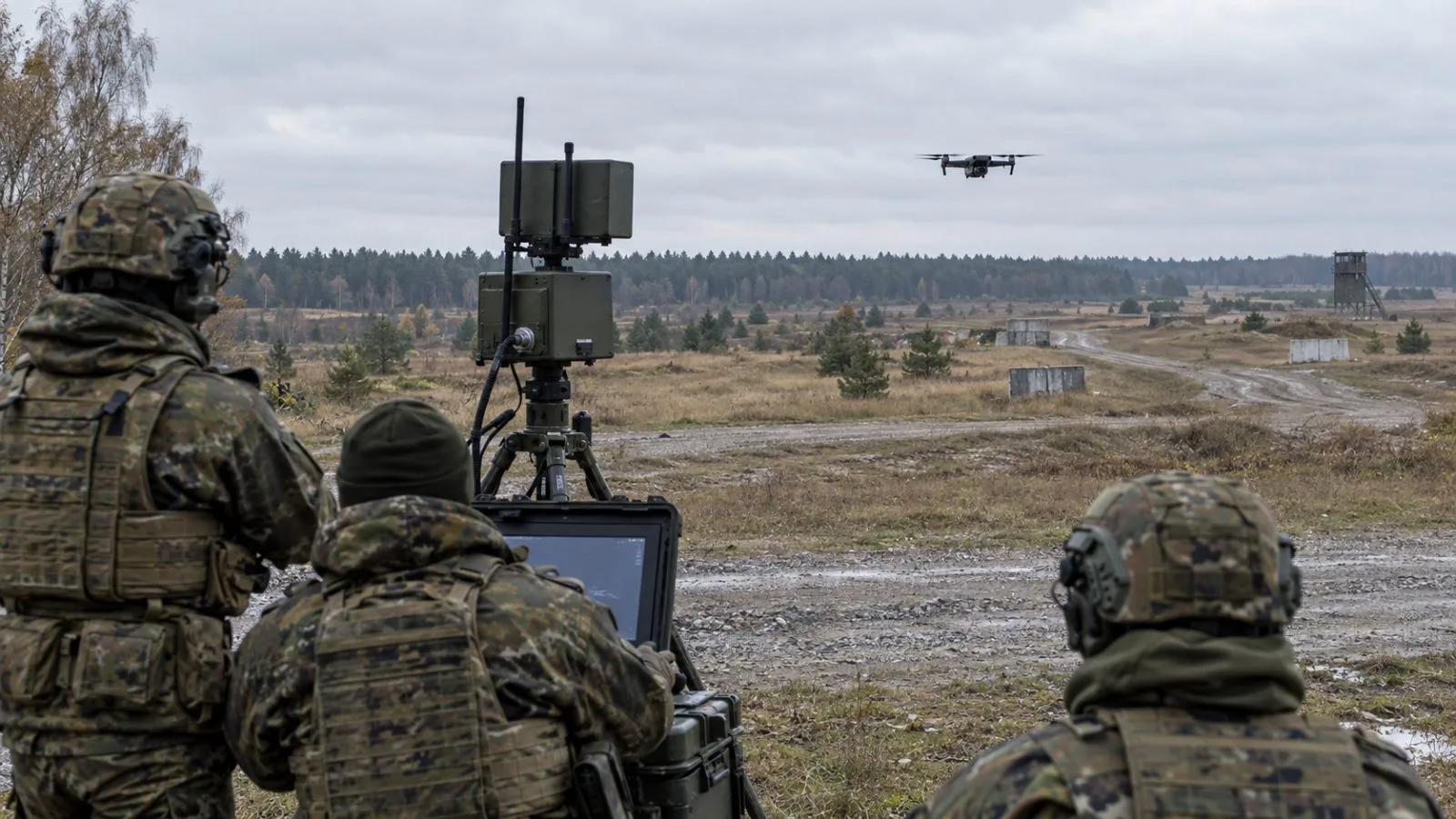
A new four-part index is designed to help European governments find gaps in their ability to counter drone threats, with Germany selected to test the method.
New Age Defence and the Better Regulation Delivery Office (BRDO) developed the Drone Security Index. The Kyiv Independent reported Oct. 30 that it had been unveiled.
The index assesses prevention, detection, counteraction and recovery, each on a scale from zero to 100. Every area carries a 25% weight in the overall result. New Age Defence says the assessment uses 37 indicators, including 12 designated critical. The total score is the arithmetic mean of the four component scores, with results grouped into five readiness levels, from very low to very high.
New Age Defence says the measure is meant to help governments and defense companies identify capability gaps and set adaptation priorities. The group argues that European countries need a shared way to assess drone preparedness informed by the war in Ukraine, where widespread unmanned systems have had strategic impact. The method covers intentional or unauthorized use of unmanned systems in air, ground, surface and underwater domains, including risks such as crime, sabotage, terrorism and armed aggression.
The project page displays 129 incidents in 18 European Union countries from January 2022 through October 2026. It attributes the total to the Everywhere Warfare Tracker, a tool developed by partner Sahaidachnyi Security Center using verified open-source intelligence.
Germany is the pilot country. New Age Defence says the assessment will combine public information with consultations involving government, military, academic and industry experts. Recommendations will cover two periods: one to two years and three to five years.
Taras Yemchura, head of BRDO’s Defense Policy Sector, told The Kyiv Independent that governments should use the index to guide planning rather than compare national scores. New Age Defence chief Kateryna Mykhalko told the outlet that a focus on modern warfare could support defense cooperation, joint ventures and arms exports.
BRDO says the initiative is being developed through EU4UA Defence Tech. The European Union funds the project, which BRDO is carrying out with Brave1. New Age Defence says it will publish country results after the Germany pilot.