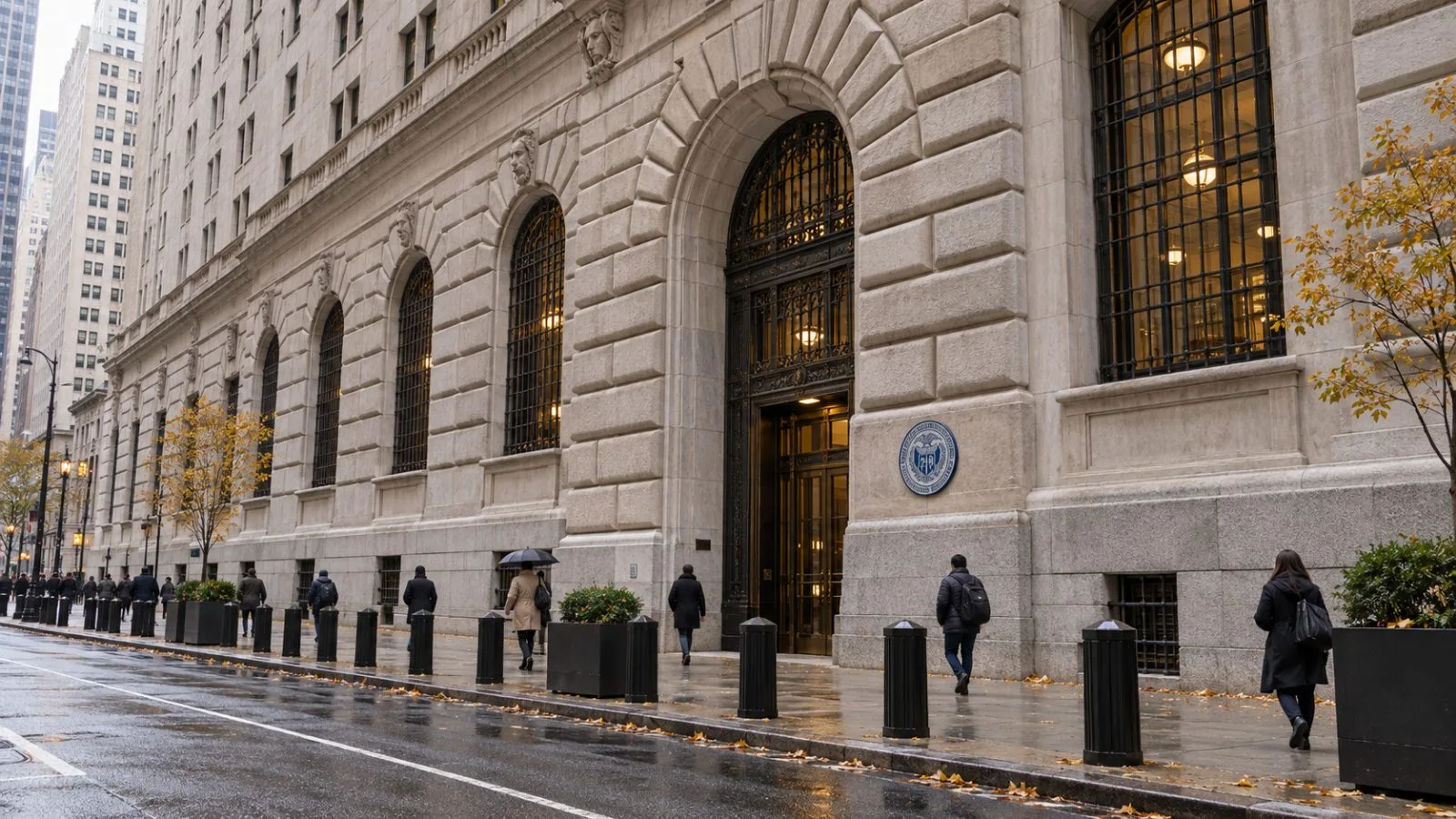
Banks with equity below 2% of assets faced an almost 70% chance of closure within a year, research published by the Federal Reserve Bank of New York on Nov. 2 found.
Supervisors also helped determine those capital levels, the authors said in “How Do Banking Supervisors Deal with Failing Banks?” They did so by requiring banks to recognise losses. The publication appeared in the New York Fed’s Liberty Street Economics series.
The authors found that stricter supervision reduced the cost of bank failures but also reduced lending in the short term. Their analysis covered all commercial bank examinations from 2000 to 2023 and included a comparison with failures between 1865 and 1935.
One of the authors is Sergio Correia, a senior economist at the Federal Reserve Bank of Richmond. The others are Stephan Luck, a financial research advisor at the New York Fed, and Emil Verner, a finance professor at MIT Sloan School of Management.
Of 557 commercial bank failures since 2000, only 28 occurred on days other than Friday, the authors found. Friday is the Federal Deposit Insurance Corporation’s preferred closure day. Purchases by other banks were typically arranged before banks formally failed, the authors said.
By contrast, historical failures were spread roughly evenly across weekdays, the authors found. They interpreted that difference as evidence that supervisory decisions now largely determine closure timing, while owners or depositors typically determined it before federal deposit insurance.
Banks reporting equity above 5% of assets almost never failed, the authors found. Equity, the difference between a bank’s recorded assets and liabilities, provides a cushion against losses. Closure probabilities rose rapidly below that threshold, the authors found.
Supervisory assessments also closely followed reported capital at troubled banks, the authors said. Banks with equity below 4% of assets almost always received one of the two weakest grades under the supervisory rating system, which assesses six aspects of financial health.
The authors found that banks became much more likely to revise previously filed financial statements during on-site examinations and the following two months. Over the five years before failure, a typical failing bank’s equity-to-assets ratio fell 8 percentage points. Revisions accounted for nearly 3 percentage points of that decline, the authors found.
During the 2008 financial crisis, otherwise similar banks were assigned stricter supervisors in a way the authors described as nearly random. Supervisors who gave worse ratings for the same financial condition caused banks to recognise more losses, report less equity and become more likely to fail, they found.
That stricter supervision lowered failure costs for the deposit insurer but reduced credit in the short term, the authors found. Allowing troubled banks more time could preserve lending and permit recovery if asset values improved, they said. The authors did not determine the best degree of supervisory strictness and said their views do not necessarily represent the New York Fed’s position.