
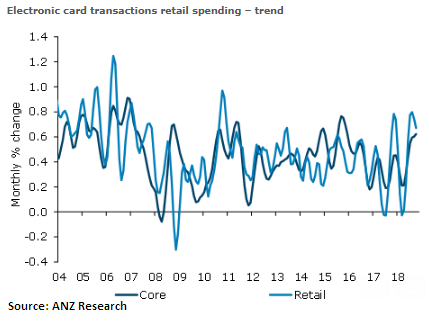
New Zealand’s retail spending on electronic cards increased 0.1 percent m/m in October (seasonally adjusted), on the back of two consecutive monthly rises in excess of 1 percent, supported by the Families Package.
Small gains were made in consumables (0.1 percent m/m), durables (0.4 percent) and hospitality (0.2 percent), with apparel falling 1.2 percent. These moves netted out with “core” retail spending flat in the month – in level terms this maintains last month’s 1.1 percent rise.
Vehicles transactions were the weakest link, down 2 percent m/m. Rising fuel prices could have weighed here and were evident in fuel spending, up 1.4 percent m/m. Indeed, higher petrol prices could be suppressing retail spending more broadly.
On that front, there could be some alleviation in November. Prices at the pump have recently come off record highs, as global oil prices have moderated (WTI has declined more than 20 percent from October highs) and the NZD has lifted.
Looking through the volatility, trend growth in core retail spending was steady at 0.6 percent m/m (where it’s been since August after accelerating from April), but there has been a slowing trend in the vehicles component.
This mixed picture is consistent with the ANZ Consumer Confidence Index, which slipped in October on the back of consumers’ increased wariness about their future financial position, but also showed that households still think now is a good time to buy a major household item (but perhaps not a vehicle).
"Overall, the vibe of today’s data is “steady to moderating” heading into Q4, but we caution that these data can be volatile on a monthly basis and don’t always provide a good steer on real private consumption within GDP," ANZ Research commented in its latest report.

