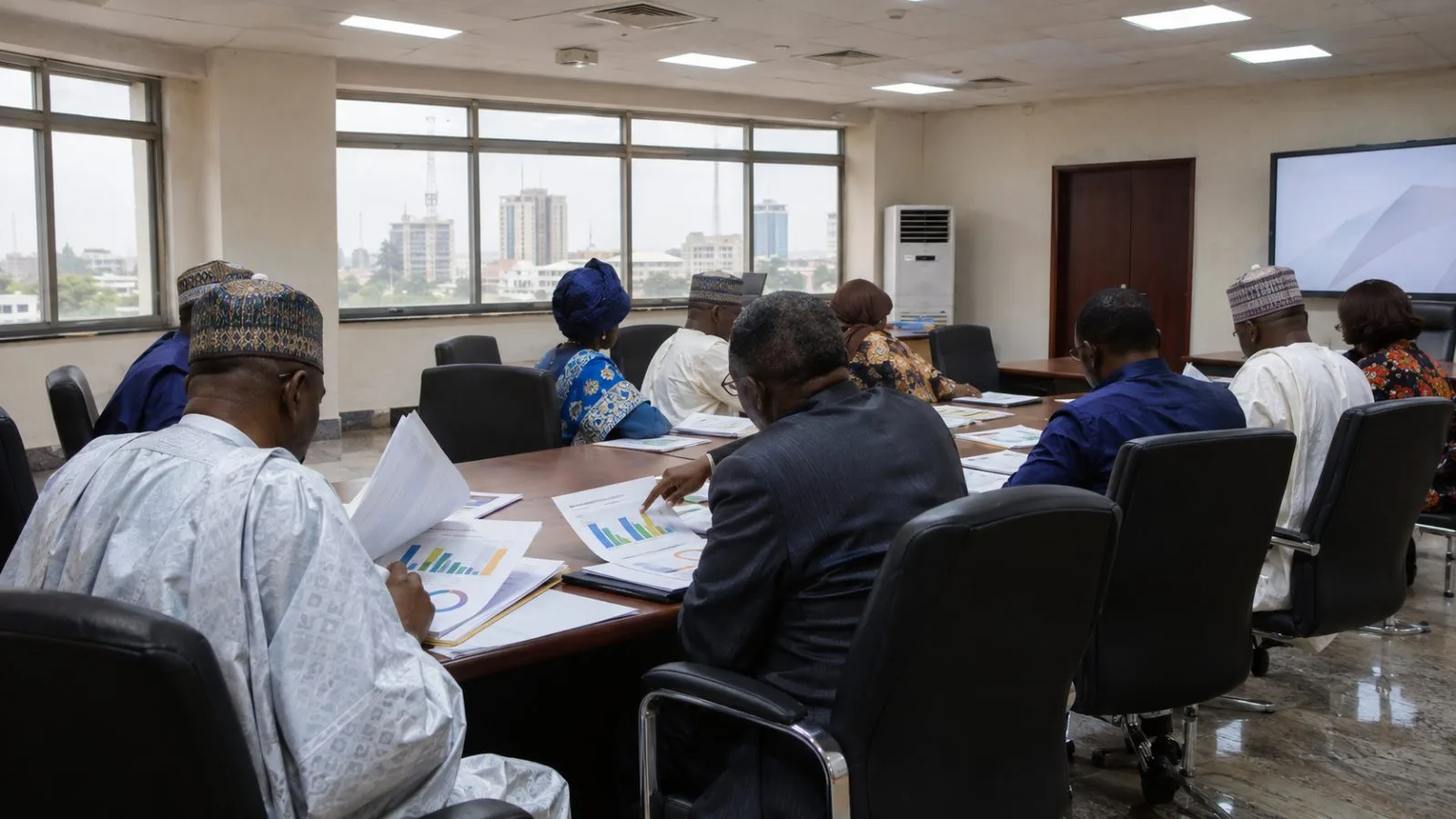
BusinessDay and Vanguard reported that the World Bank held a two-day review of the $500 million HOPE-GOV education and health program in Lagos on Tuesday and Wednesday, Nov. 10-11, amid delivery concerns; Lagos Television said representatives from six southwestern states were expected to attend.
Vanguard reported that Nigeria’s Federal Ministry of Budget and Economic Planning, the World Bank and Lagos State organized the mission. BusinessDay said discussions included operational bottlenecks and possible changes to targets and verification procedures. Lagos Television reported that representatives from Lagos, Ekiti, Ogun, Ondo, Osun and Oyo were expected to attend.
The World Bank approved the credit on Sept. 26, 2024; the Lagos review was not a new financing decision. The bank says HOPE-GOV aims to improve financial and workforce management in basic education and primary health care, including how teachers and health workers are recruited and deployed. The program site traces its design to Nigeria’s completed State Fiscal Transparency, Accountability and Sustainability initiative, which it says helped improve accountability between federal and state governments.
The Federal Ministry of Budget and Economic Planning says $480 million is allocated to results-linked financing for states, while $20 million covers coordination, verification, monitoring and evaluation, and technical assistance. States qualify for incentive payments after independent agents verify agreed results, the ministry says.
The program operations manual sets a June 2029 goal for 20 states to draw the full Universal Basic Education Commission (UBEC) matching grant and execute at least 80% of their basic-education budget plans.
A World Bank mission document dated Jan. 12, 2026, noted delays in the program becoming effective. It recorded $3 million in disbursements as of Nov. 15, 2025, all from the $20 million support component; none of the results-linked allocation had been disbursed by that date.
The World Bank’s November 2025 mission document said a preliminary review found that many state plans appeared to lack detail on recruitment, wage funding and staff assignments to hard-to-reach areas, even where officials had mapped education and health workers. BusinessDay reported that Year Zero results had been verified, with verification for the first implementation year expected in early 2027.