Nigeria’s confirmed Ebola Bundibugyo case has fueled online claims of election-related movement curbs, while health authorities monitor 44 contacts and investigate the patient’s exposure ahead of the 2027 vote.
Premium Times reported that some X users alleged the government might use the outbreak to restrict movement after Christmas, potentially affecting voting. The official announcements describe public-health measures and preparedness funding but do not connect them to election activity.
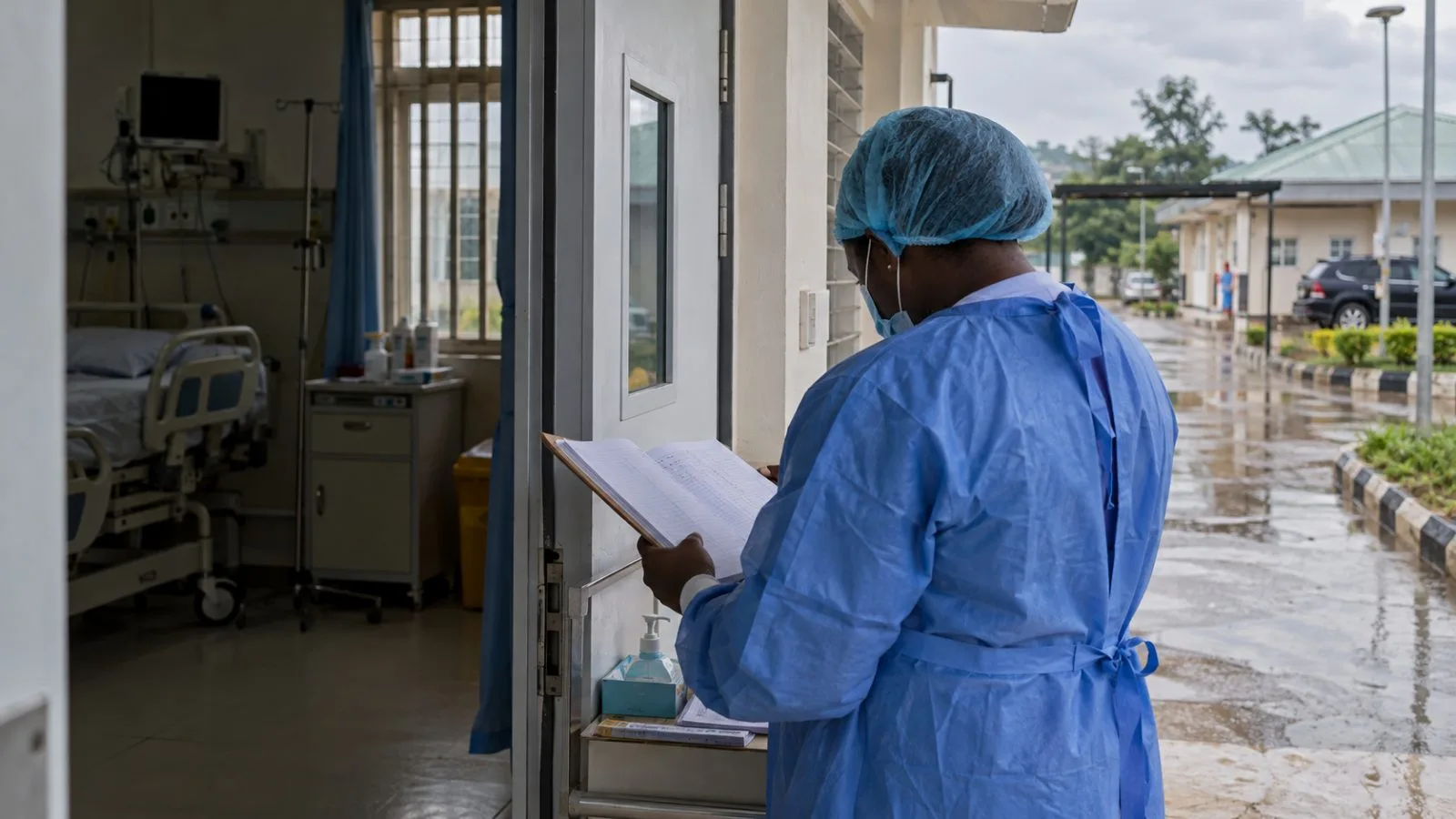
The World Health Organization (WHO), citing Nigeria’s Federal Ministry of Health and Social Welfare, said the woman developed symptoms on Oct. 7, four days after arriving in Nigeria. She went to a private Abuja facility on Oct. 11, and testing confirmed the disease on Oct. 20. She was isolated and receiving care.
As of Oct. 20, 44 people had been identified for monitoring. WHO said efforts to locate anyone else who may have been exposed were continuing. Nigeria’s contact-tracing effort is part of the response as investigators work to determine where the patient contracted the virus.
Uganda’s Ministry of Health said the woman had traveled to eastern Democratic Republic of the Congo for business and passed through Uganda without symptoms. The ministry said that transit alone did not show where she became infected. Her likely exposure remains under investigation.
The Independent National Electoral Commission lists Jan. 16, 2027, for the presidential and National Assembly elections, followed by governorship and state assembly elections on Feb. 6. In a June 9 announcement, the State House said President Bola Ahmed Tinubu approved an Ebola preparedness task force and ordered the immediate release of 10 billion naira to strengthen the Nigeria Centre for Disease Control and Prevention and emergency response. The announcement did not state how much had been disbursed.
WHO records say Nigeria’s 2014 Ebola response involved 19 laboratory-confirmed cases, one probable case and eight deaths. The agency declared transmission over on Oct. 20, 2014. WHO has described the current response as including isolation, contact monitoring and infection-control measures intended to protect health workers and communities. Investigators continue to trace contacts and establish the patient’s travel history and likely exposure.