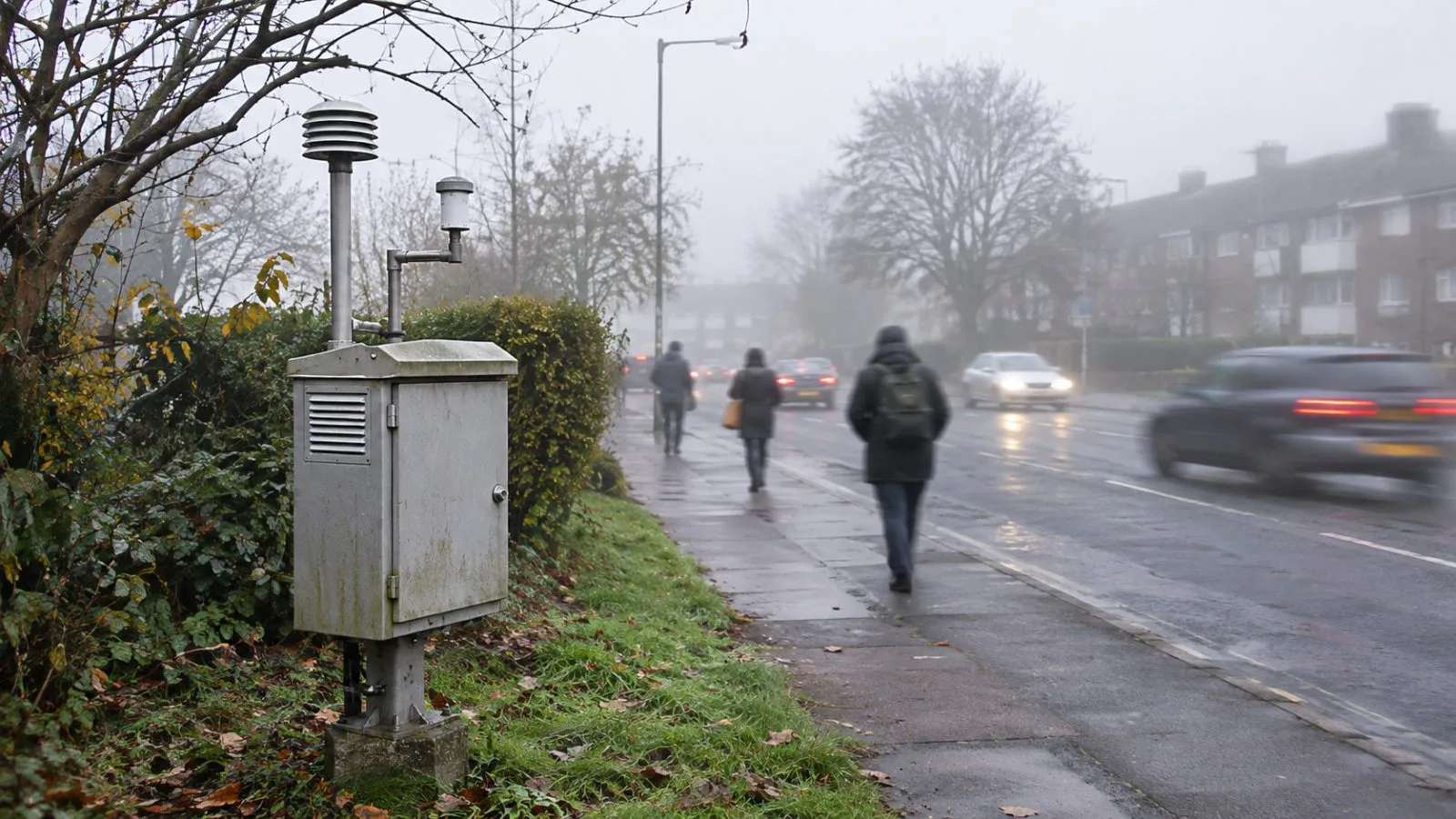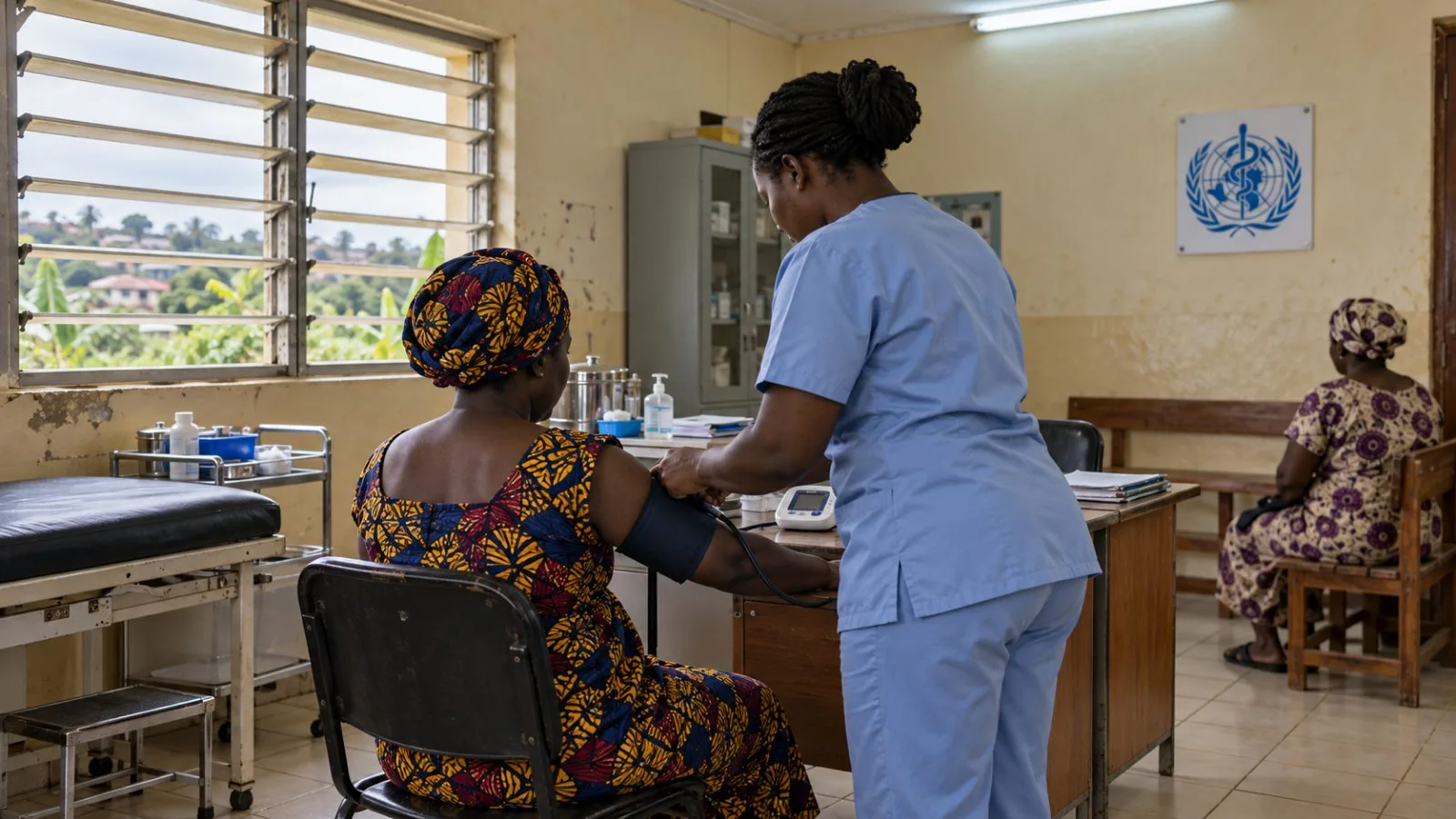
A peer-reviewed model estimated that meeting the World Health Organization’s annual PM2.5 guideline could reduce mortality by 9.43 million in one year across 136 low- and middle-income countries. The analysis, published in Environment International, projected a 22.97% decline in annual mortality.
The figure is a modeled change during one year and includes deaths postponed within that period; it does not represent permanent prevention. The study’s uncertainty interval was 6.8 million to 11.7 million. It reflects uncertainty in the concentration-response functions, and the authors said it likely understates total uncertainty because other sources were not included.
WHO revised its air-quality guidelines in 2021; the annual mean guideline values are 5 micrograms per cubic meter (μg/m³) for PM2.5 and 10 μg/m³ for nitrogen dioxide (NO2). In the separate NO2 scenario, the study estimated 1.1 million fewer deaths, a 2.79% reduction, with an interval of 706,000 to 1.6 million. The authors said estimates for different pollutant and health-outcome pairs should be considered independently, not added together.
Under the PM2.5 scenario, the model also projected fewer new cases in a year: 2.82 million for chronic obstructive pulmonary disease (COPD), 1.10 million for dementia, 7.3 million for ischaemic heart disease and 2.3 million for stroke.
The researchers valued the reduction in mortality risk at Int$8.4 trillion, equal to 10.7% of the countries’ combined GDP. They used a value-of-statistical-life measure, which is distinct from direct medical savings and is not a forecast of health-budget savings.
A University of Cambridge announcement reported separate annual estimates under the PM2.5 scenario. It put productivity gains at $18.1 billion for COPD, $17.9 billion for stroke and $5.3 billion for coronary heart disease, and medical-cost reductions at $8.6 billion for dementia, $11.8 billion for coronary heart disease and $5.9 billion for stroke.
Cambridge’s announcement linked air-pollution pressures in low- and middle-income countries to urban growth, economic expansion and increased vehicle use. Dr. Haneen Khreis of the University of Cambridge said the countries have a “critical opportunity to shape healthier futures” as their populations and cities grow.