Figures cited by energy executive Anthony Agbo put Nigeria’s September cooking-gas stock cover at 15.9 days, below the 30-day safety minimum, underscoring pressure on supply and household affordability.
In an opinion article published by BusinessDay on Nov. 16, Agbo, chief executive of Unigas Global Energy Ltd., cited figures he attributed to the Nigerian Midstream and Downstream Petroleum Regulatory Authority (NMDPRA). The figures put daily receipts at 4.7 kilotonnes and daily consumption at 5.2 kilotonnes; Agbo said consumption was 33% above the regulator’s benchmark. Domestic producers accounted for 96% of September receipts, according to his account.
That domestic share did not insulate customers from price pressures, Agbo argued. His article said Nigerian LPG prices remain exposed to global benchmarks, foreign-exchange costs, freight and distribution. He said domestic production also requires storage, stronger transport links and buffer stocks to maintain steady supply.
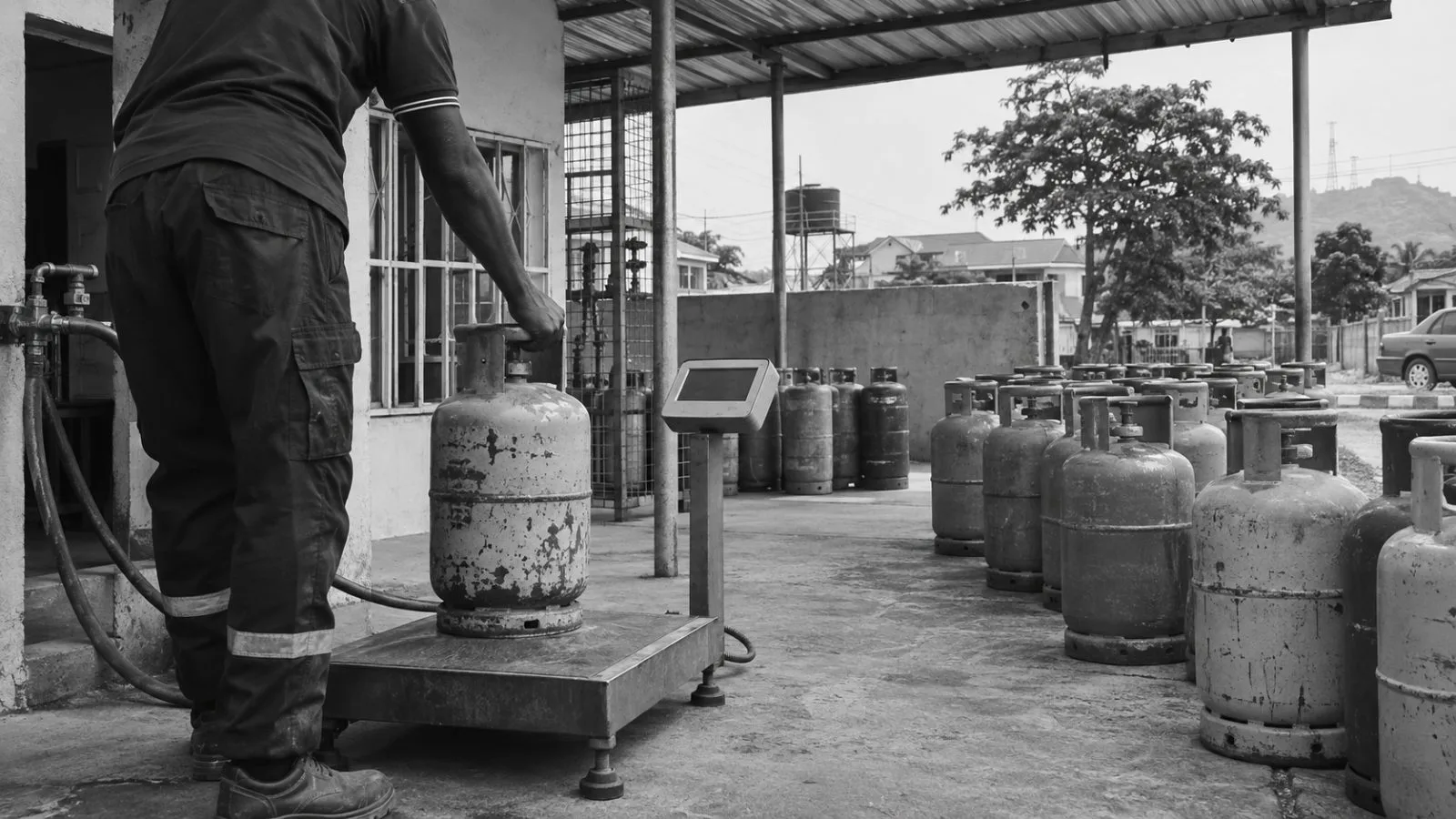
The article put Abuja retail prices at 1,800 naira per kilogram during the week of Nov. 16, making a 12.5-kilogram refill 22,500 naira. It cited prices as high as 2,400 naira per kilogram in some areas earlier this year, compared with 1,000 naira, a 140% increase. Agbo warned that when refills become unaffordable, households may return to traditional fuels, reversing health and environmental gains from LPG. He said rural women face particular respiratory-health costs.
To address supply continuity, Agbo proposed commitments from NLNG, Dangote and Seplat to serve the domestic market, alongside maintenance planning and strategic storage to rebuild cover toward 30 days. He called for faster development of the OB3 and AKK gas pipelines and LPG storage and distribution projects under the Midstream and Downstream Gas Infrastructure Fund. For a longer-term solution, he said private capital should be involved in refinery investment, with government focused on regulation and reducing investment risk.
Agbo pointed to NLNG’s Train 7 as a possible supply addition. He described the expansion as 94% complete with a late 2027 goal, and said it could raise the company’s domestic LPG capacity by 50%.