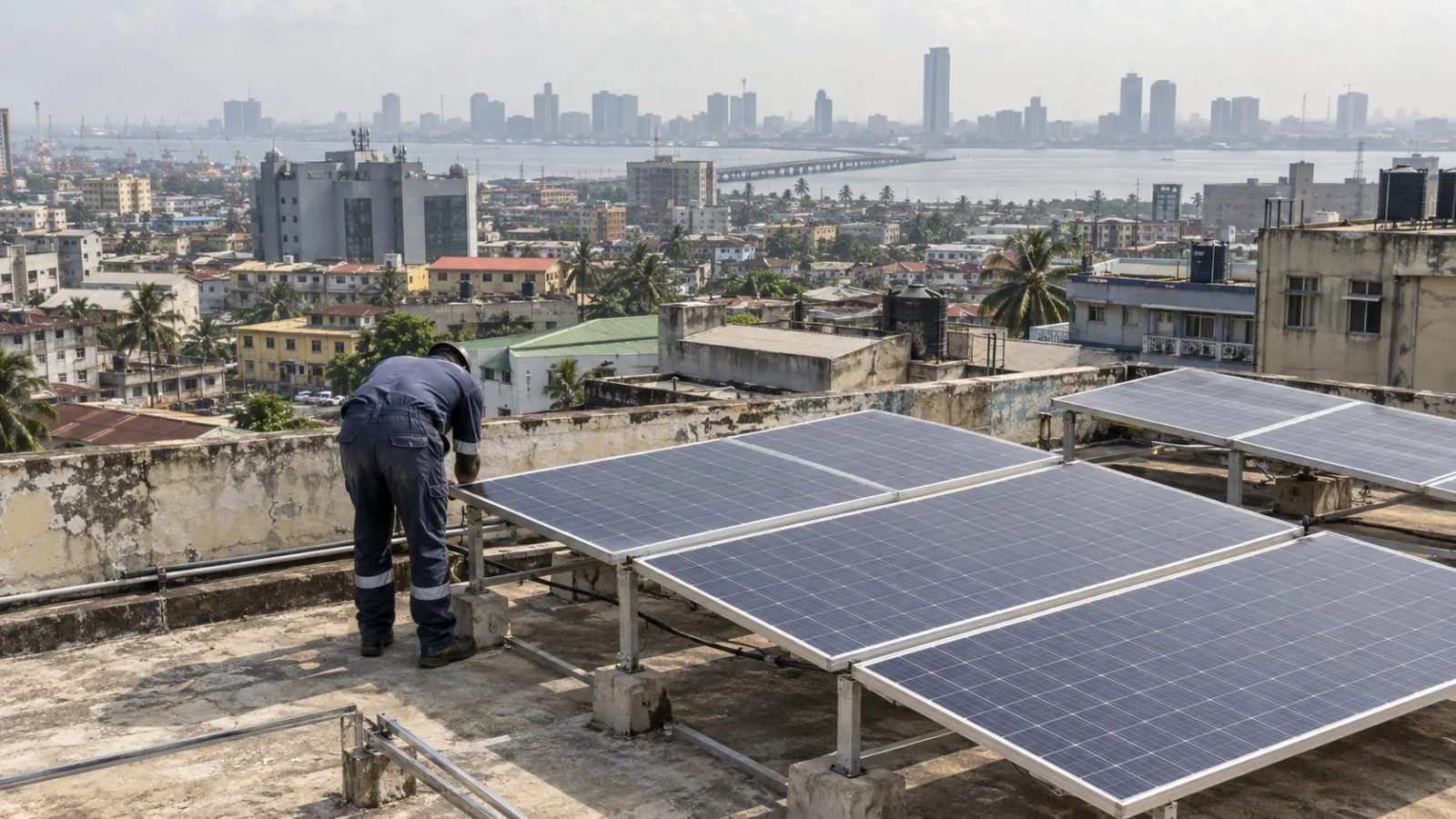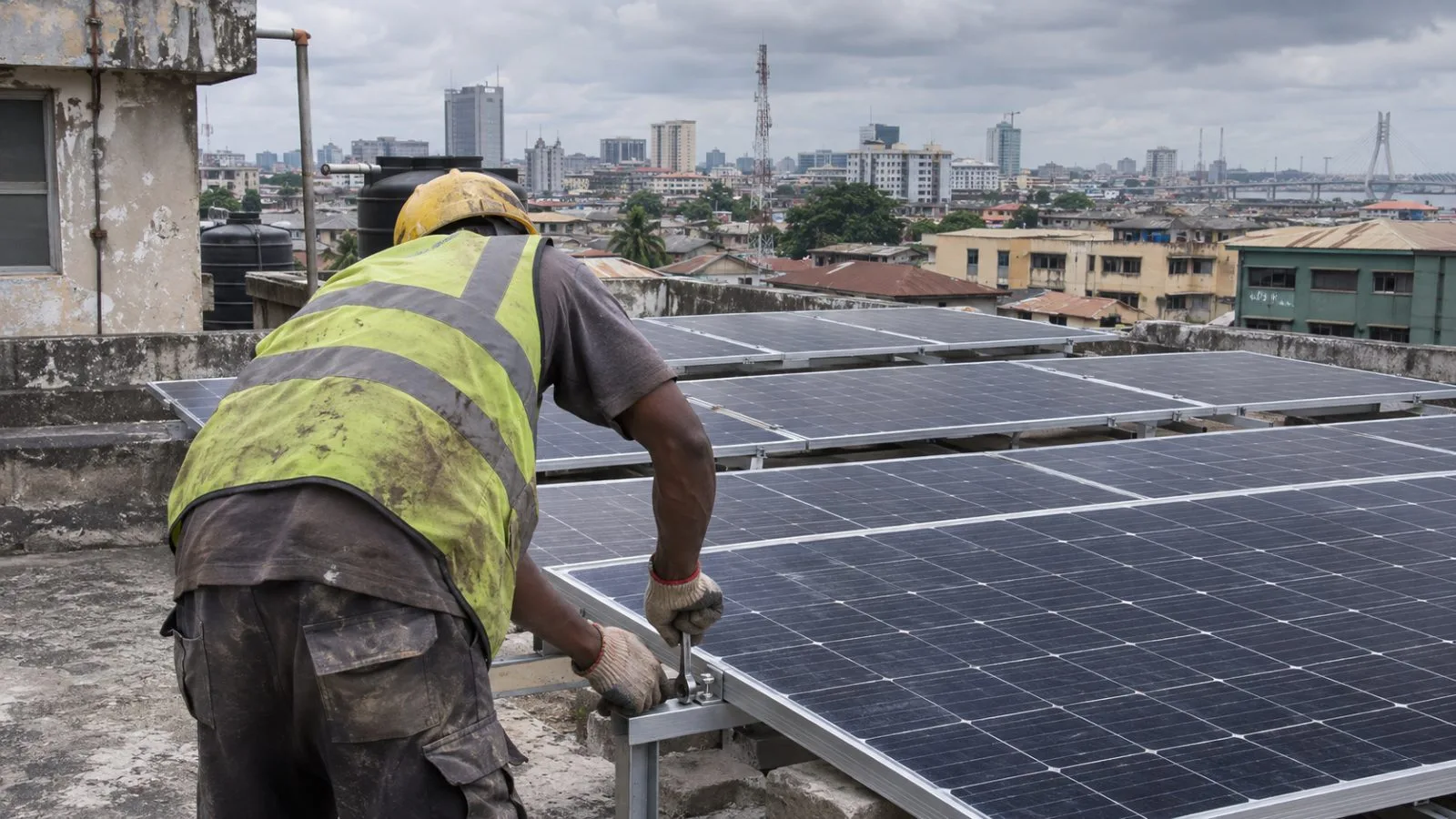
Nigeria’s rising petrol costs are sharpening the appeal of solar for generator users, while a ZE-Gen report identifies upfront costs and inflexible financing as barriers to switching.
The National Bureau of Statistics (NBS) reported that petrol averaged ₦1,596.25 per liter in May 2026. That was 55.31% above May 2025 and 4.13% higher than April 2026. The figure is a national survey average, not a price at an individual station.
ZE-Gen’s January 2026 summary estimates that 41 million small businesses and 17 million households use petrol or diesel generators, with fuel spending estimated at $8 billion a year. ZE-Gen says its research combined 12 months of smart-meter data collected by the Access to Energy Institute with market analysis by Open Capital. Its report covers generator use across households, small businesses, schools, health facilities and hotels.
In the survey, fuel-price spikes contributed to 20% of respondents stopping generator use. Separately, 5% had shifted to solar. Every surveyed customer expressed interest in clean-energy alternatives, and more than 99% said accessible financing was essential.
ZE-Gen modeled a solar generator rated at up to 2.5 kilowatts, paired with 1 kilowatt of panels and a 2-kilowatt-hour battery, as potentially meeting up to 85% of surveyed customers’ energy needs. The result applies to the study’s surveyed customer base.
BusinessDay reported Nov. 6 that fish farmer Chinasa Asonye switched to solar after monthly fuel and generator upkeep costs approached ₦400,000.
NBS foreign-trade releases put the 2025 import value of photovoltaic cells assembled into modules or panels at about ₦435.5 billion. The figure measures import value; it does not show how many systems were installed or how many customers switched to solar.
Lily Beadle, program director at ZE-Gen, said, “Technology alone won’t solve Nigeria’s energy challenge – innovation must be combined with understanding the customer.”