Households in Nigeria paid about 72% of the country’s current health expenditure out of pocket in 2023, leaving families exposed to care costs as policymakers seek to expand access to treatment. The World Health Organization (WHO) reported the share and said heavy reliance on direct payments can cause people to delay or miss care and push households into financial hardship.
WHO estimated life expectancy at birth at 62.9 years in Nigeria in 2023, compared with 73.3 years worldwide. The figures show a gap of more than 10 years, though they do not identify a single cause.
The country faces substantial burdens from both infectious and chronic disease. WHO estimated that communicable, maternal, perinatal and nutritional conditions caused 62% of deaths in Nigeria in 2023. Noncommunicable diseases accounted for 31.6%, and injuries for 6.4%.
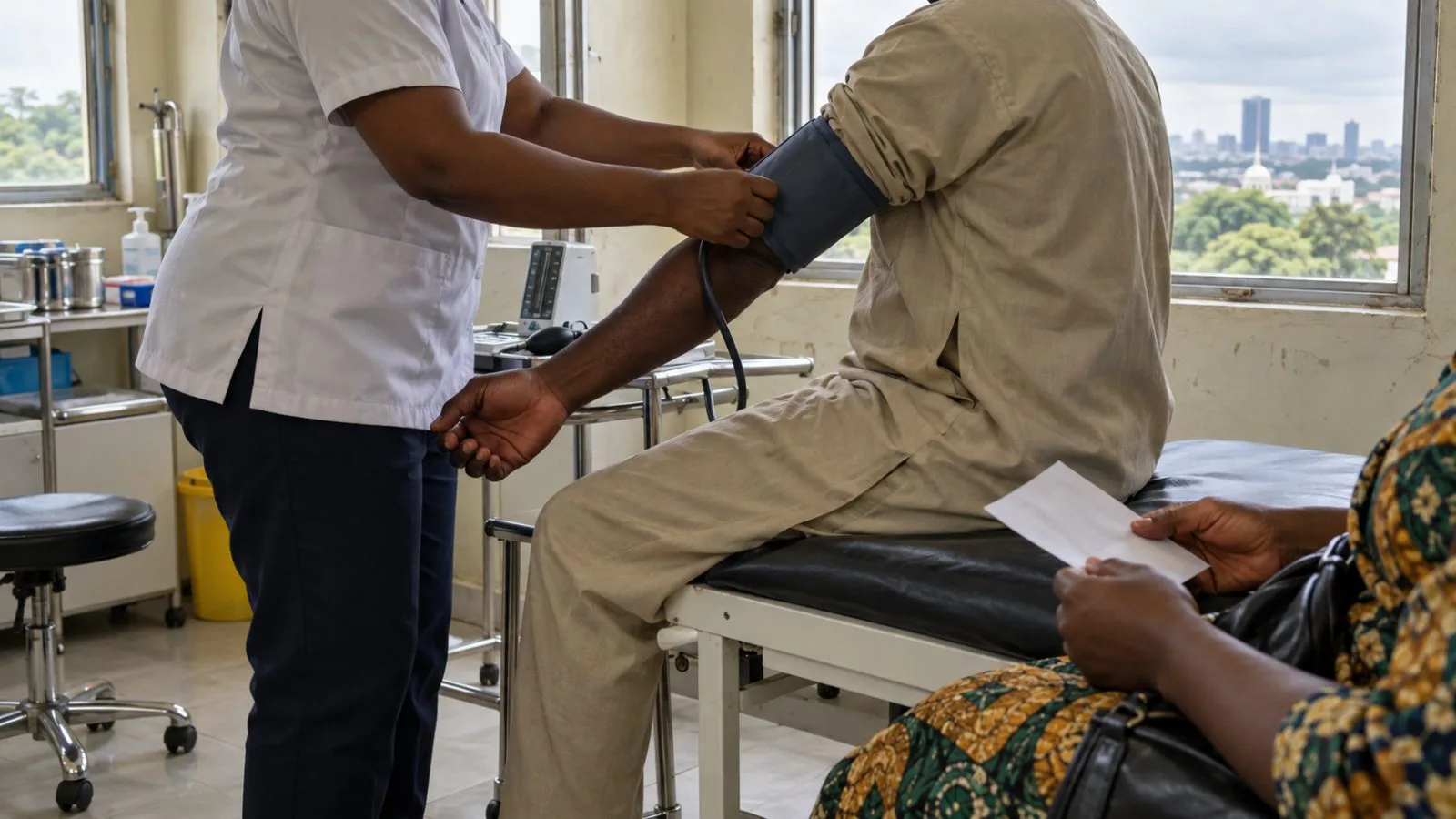
Hypertension illustrates the challenge of sustained care. A WHO profile estimated that 22 million Nigerian adults aged 30 to 79 had the condition in 2024, while 13% of those with hypertension had their blood pressure under control.
Using costs collected at 15 facilities, researchers estimated annual program costs of $16 per adult primary care user across the three study areas, with estimates of $11 in Kano, $16 in Ogun and $21 in Abuja, in 2023 U.S. dollars. The calculation uses estimated adult primary care attendance across the three areas, including users without hypertension.
In commentary published by BusinessDay on Oct. 20, the Healthcare Federation of Nigeria’s editorial team urged greater access to routine prevention and earlier diagnosis, including fewer barriers related to cost. That is the team’s proposed response to gaps in care, rather than an established explanation for the life expectancy gap.
Nigeria launched its Health Sector Renewal Investment Initiative in December 2023, with primary care and financial protection among its priorities. The National Health Insurance Authority (NHIA) said Sept. 25 that more than 23 million Nigerians were enrolled in the national health insurance system. The enrollment figure measures insurance coverage; it does not show how many people received preventive care.