


 Apple Supplier Luxshare Faces US Patent Probe, Sees Limited Impact
  Apple Names Steve Smith M&A Chief in Leadership Shakeup
  Tencent Shares Fall as $5 Billion AI Bond Sale Weighed
  OpenAI Annualized Revenue Hits $50 Billion, Below Earlier Estimates
  Samsung, SK Hynix Shares Plunge as China Chip Competition Grows
  Canton Network Expands in South Korea With Major Partnerships
  Samsung, SK Hynix Shares Fall as China's CXMT Advances DRAM Technology
  Amazon Cuts More Jobs as AI Investment Expands
  FAA Warns US Airlines Over Saudi Arabia Flight Risks
  Hong Kong’s Second Solana ETF Launches With Lower Fees
  Russia Approves Sberbank for Crypto Exchange Services
  Nasdaq Faces Pullback to 26,225 Despite Bullish Outlook, UBS Says
  US Suspends Microsoft, Adobe From Green Card Program
  Visa Wins China Approval to Prepare Domestic Payments Expansion
  Meta Launches Muse Wonder AI Models, Shares Rise 3.7%
  Oracle Uses Trucked Natural Gas to Power AI Data Centers Amid Pipeline Delays
  Moonshot AI Executives Seek Settlement Ahead of Hong Kong IPO


 Add as a preferred source on Google
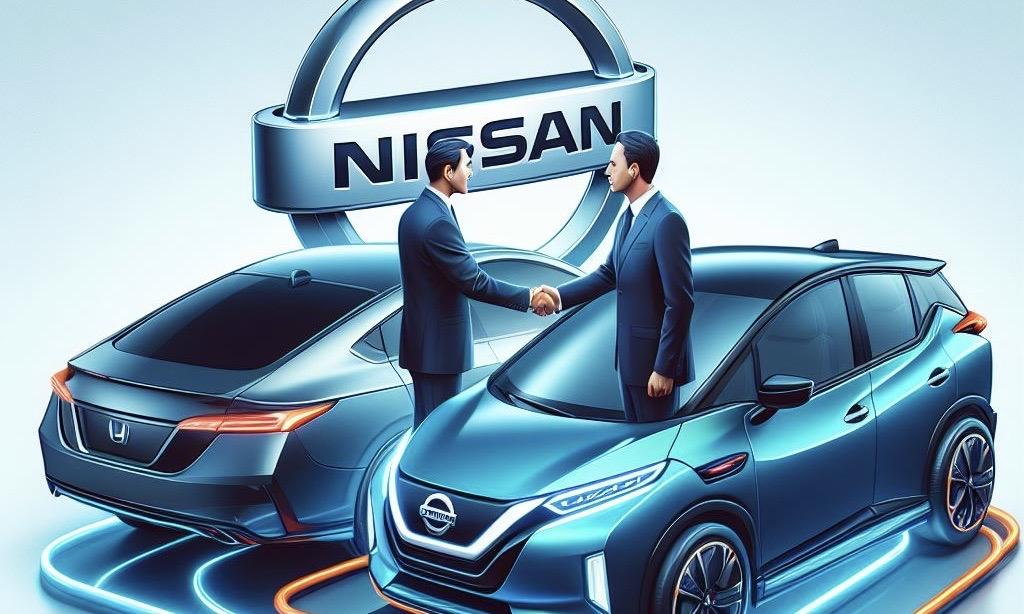
Japanese automakers Nissan and Honda join a strategic partnership to advance electric vehicle projects, aiming to bolster their presence in the rapidly evolving global automotive landscape.
Strategic Alliance: Nissan and Honda Unite for Electric Vehicle and Technology Ventures
Nissan and Honda's executives officially launched the partnership on Friday, announcing a non-binding agreement to establish electric vehicle and automotive intelligence projects, per Teslarati.
According to Nissan Chief Executive Makoto Uchida, efficiency and execution are essential to the partnership. He believes that speed and timely project completion will lead to a successful collaboration.
"We don't have time," the Associated Press stated, "It is significant that we have reached this agreement based on a mutual understanding that Honda and Nissan face common challenges."
Although Nissan and Honda are two significant players in the affordable combustion engine vehicle segment, neither company has significantly impacted the EV segment.
Companies are beginning to develop baseline programs for the future development of EVs, while other companies are thoughtfully making the transition to electrification.
"It is important to prepare for the increasing pace of transformation in mobility in the mid-to-long-term, and it is significant that we have reached this agreement based on a mutual understanding that Honda and Nissan face common challenges," Uchida added.
Driving Innovation: Honda and Nissan's Partnership Accelerates EV Development in Japan
Companies that stay caught up too far risk becoming irrelevant or worse. Honda's Toshihiro Mibe states that the company's "synergy" should provide a solid foundation for developing effective, efficient, competitive EV models:
"In this period of once-in-a-century transformation in the automotive industry, we will examine the potential for partnership between Nissan and Honda. Our study criteria will be whether the synergy of the technologies and knowledge that our companies have cultivated will enable us to become industry leaders by creating new value for the automotive industry."
Japanese companies need to catch up in EV development. Tesla and BYD have outperformed their competitors in the sector.
Toyota, the world's largest car manufacturer and a Japanese company, has hesitated to commit to a large-scale EV transitional effort, instead referring to a more hybrid-based push in its strategies thus far.
Honda and Nissan's newly announced partnership demonstrates they are serious about committing to an EV push. It may help offset some of the lag Japanese companies have unfortunately experienced. Two heads are better than one, and their combined automotive development expertise could result in a faster global output of competitive EV models.
Photo: Microsoft Bing







