Climate projections for the northeast Atlantic show biodiversity moving in different directions across marine groups by mid-century, a pattern researchers say could alter food webs that sustain fisheries.
The Centre for Environment, Fisheries and Aquaculture Science (Cefas), which led the work, projects about a 12% rise in diversity among fish and seabed invertebrates by 2050. Its estimates point to a 3% decline for phytoplankton and a 7% drop for zooplankton. These figures cover broad organism groups, and the researchers report that outcomes differ by location across the region. The results show no single direction of change across all the marine groups studied.
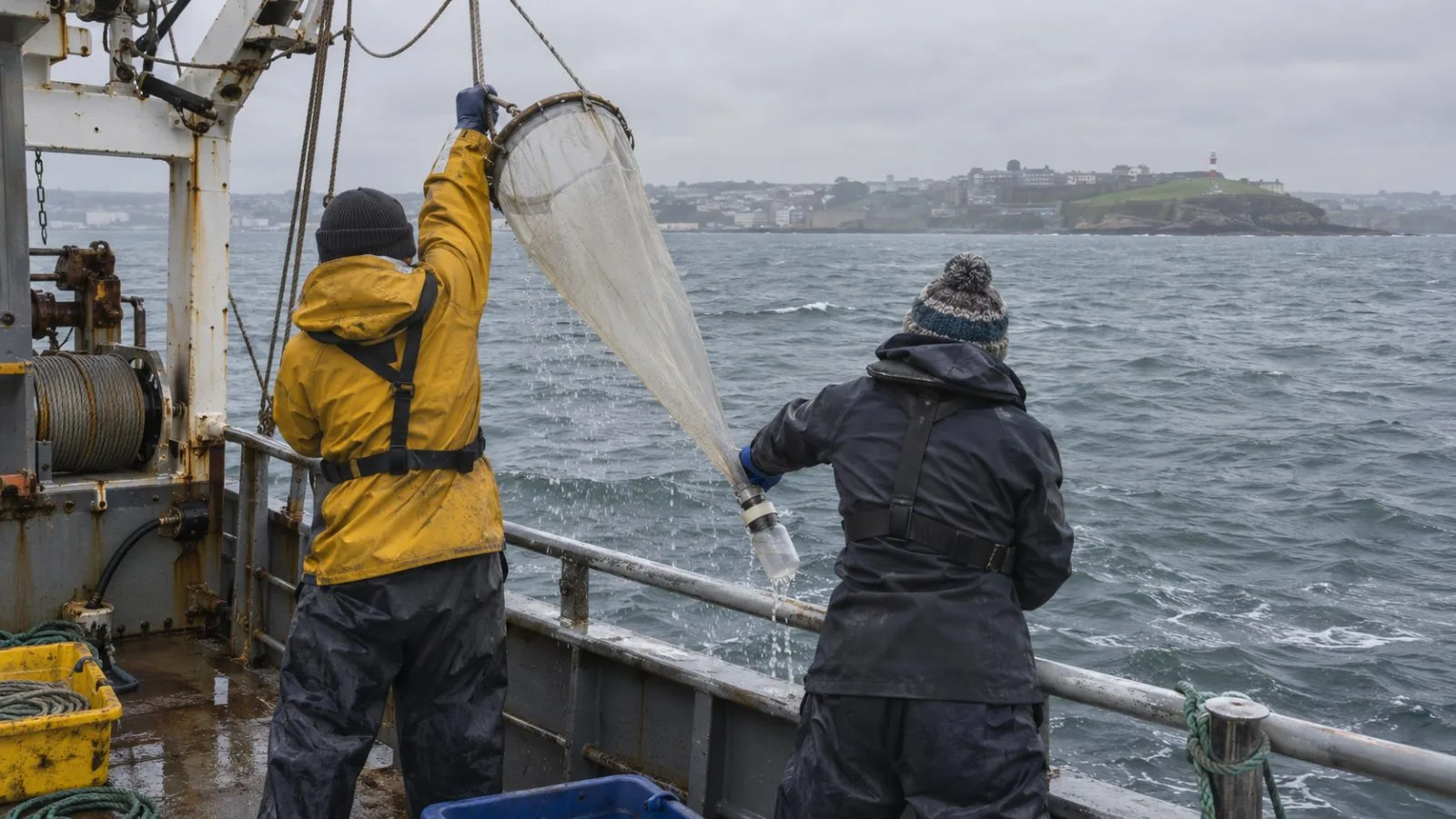
Researchers examined phytoplankton, zooplankton, seabed invertebrates and fish using long-term marine survey records and Bayesian additive regression trees to estimate biodiversity patterns through 2100. The findings appeared in Science Advances. The paper’s main results use the SSP2-4.5 pathway, with alternative scenarios presented in supplementary material. Cefas’ release gives the mid-century percentages without assigning them to a particular pathway. The figures are projections, not measurements of biodiversity in 2050.
The study links these shifts to the movement of energy from prey to predators in marine food webs. Declining diversity among prey organisms, including zooplankton, could weaken that transfer, the researchers say. They describe a possible food-security threat under a specific condition: if biodiversity gains are concentrated among predators, prey communities could become less diverse. That would create a mismatch between food-web levels and could put fisheries that depend on plankton production at risk. The study does not present that outcome as an automatic consequence of the projections.
The Guardian reported that the researchers submitted their work to a U.K. government review of marine protected areas. The review is considering fisheries-management measures, the outlet reported.