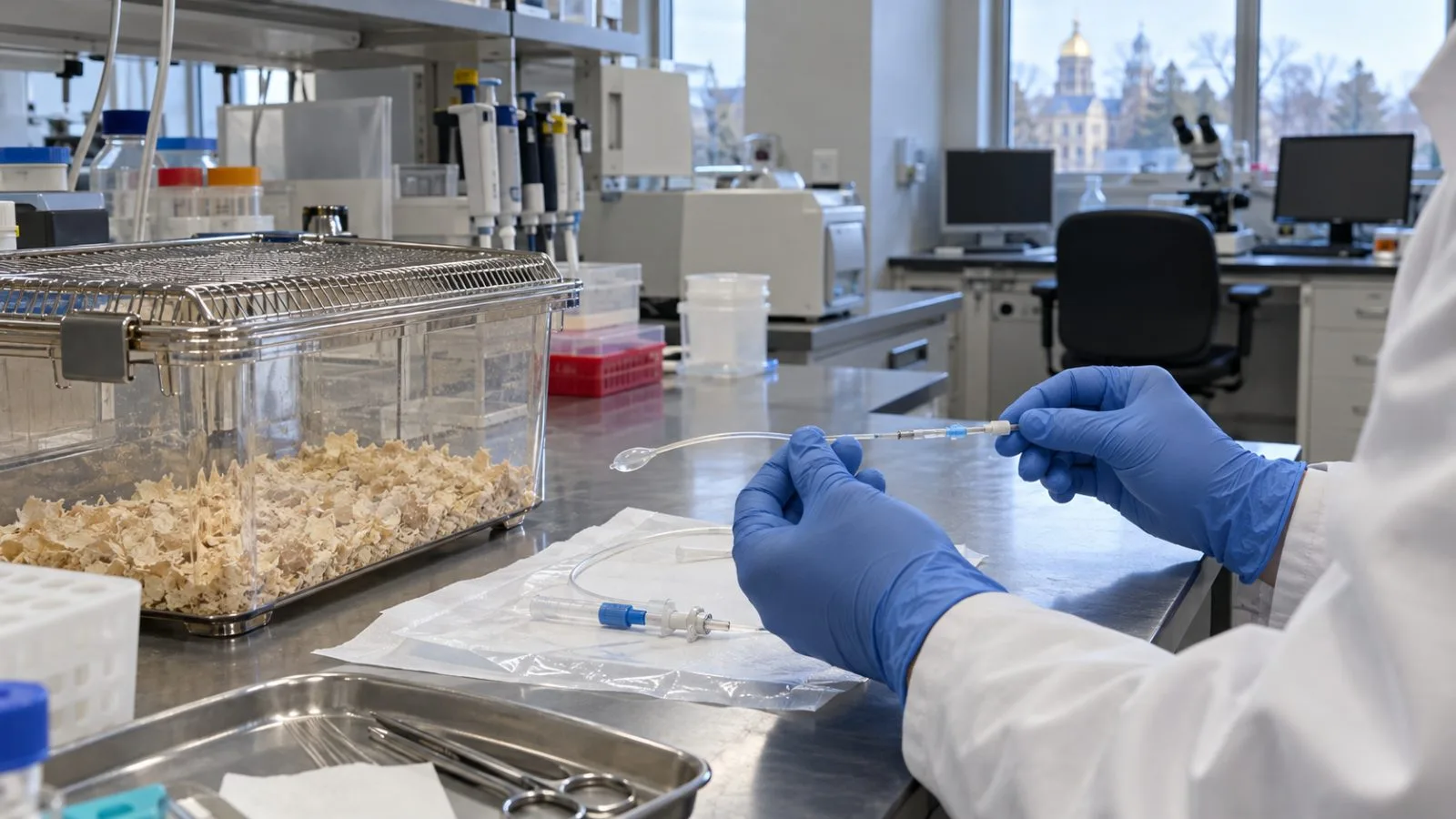
A silicone coating tested by University of Notre Dame researchers reduced bacterial and fungal buildup on urinary catheters in mice, offering a preclinical approach to limiting infections linked to the devices.
The 2022 study says catheter-related inflammation can bring the protein fibrinogen into the bladder. Fibrinogen can collect on a catheter and give microbes a surface to attach to. The liquid-infused silicone is designed to make the surface slippery and limit that attachment, rather than kill microbes.
In the 2022 mouse study, coated catheters had lower microbial colonization, both on the devices and in bladders, across six uropathogens. A separate study published in 2026 found lower fungal burden on catheters and in bladders across three tested strains of Candidozyma auris, formerly known as Candida auris.
The Centers for Disease Control and Prevention (CDC) estimates that urinary catheters are used by 15% to 25% of hospitalized patients during their stay. About 75% of urinary tract infections that develop in hospitals are associated with a catheter. CDC guidance recommends using catheters only when needed and removing them as soon as they are no longer necessary.
Microbiologist Ana Flores-Mireles, an associate professor of biological sciences at Notre Dame, said, “The problem is that we need [catheters], but they also predispose us to infection.” She estimated that applying the coating would add about $1 per catheter. A Notre Dame feature on the research says earlier antibiotic catheter coatings had mixed results and raised concerns about resistance.
The studies report mouse and laboratory results, not outcomes in patients. The 2022 paper calls for further research on effects on bladder tissue and the immune response, as well as whether material swelling could affect manufacturing.