Global oil prices jumped sharply on Thursday as escalating tensions in the Middle East and shipping disruptions in the Strait of Hormuz raised fears of tightening energy supplies. The ongoing U.S.–Israeli conflict with Iran has intensified concerns over global crude oil availability, pushing benchmark prices significantly higher.
U.S. West Texas Intermediate (WTI) crude oil futures climbed $6.35, or 8.51%, settling at $81.01 per barrel. This marked the highest closing level for WTI since July 2024. Meanwhile, international benchmark Brent crude rose $4.01, or 4.93%, to settle at $85.41 per barrel, extending its rally for a fifth consecutive trading session. Analysts noted that WTI rose faster than Brent, creating a rare divergence between the two benchmarks that typically move in tandem unless market conditions uniquely affect supply or demand.
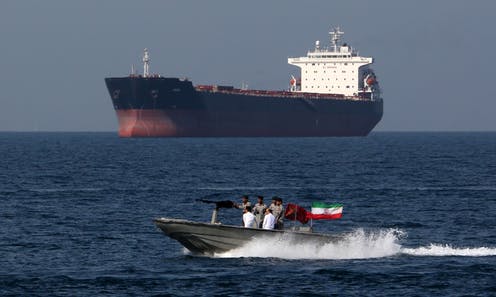
The surge in oil prices comes amid growing disruption to oil and natural gas shipments through the Strait of Hormuz, a critical chokepoint responsible for roughly 20% of global oil flows. Shipping traffic in the region has nearly halted as security risks escalate, leaving hundreds of oil tankers stranded. Data from ship tracking firms Vortexa and Kpler indicates that around 300 oil tankers remain stuck inside the Strait due to safety concerns.
The White House signaled that the U.S. Treasury Department may intervene in the oil futures market as part of potential measures to control rising energy prices. President Donald Trump said he remains focused on the ongoing military situation involving Iran and downplayed concerns about higher gasoline prices in the United States.
Energy supply disruptions are already affecting production across the Middle East. Iraq has reportedly shut down nearly 1.5 million barrels per day of crude oil output due to limited storage capacity after tanker shipments stopped. Qatar has also halted liquefied natural gas (LNG) production because LNG carriers cannot safely navigate the Strait of Hormuz. Analysts warn that Kuwait and the United Arab Emirates could face similar production cuts if the shipping bottleneck continues.
Market experts say the longer the disruption lasts, the greater the impact on global energy markets. Even if shipping lanes reopen soon, restarting oil production and restoring tanker logistics could take significant time. Meanwhile, attacks on oil tankers in the Gulf continue to add uncertainty. A Bahamas-flagged crude tanker recently reported hull damage after an explosion near Iraq’s Khor al Zubair port.
The conflict has also strained refined fuel markets. Several refineries across the Middle East, China, and India have temporarily shut down crude processing units due to supply constraints. As a result, U.S. diesel futures surged nearly 10%, briefly exceeding $3.60 per gallon during trading.
Analysts warn that continued instability in the Strait of Hormuz and further attacks on oil infrastructure could push global oil prices even higher in the coming weeks, increasing pressure on fuel markets and global inflation.