Tensions in the Middle East intensified Thursday as additional oil tankers were attacked in Gulf waters amid the escalating U.S.–Iran conflict, raising concerns about global energy supply disruptions and soaring oil prices. The attacks come as shipping traffic in the region slows and major energy producers struggle with production and export challenges.
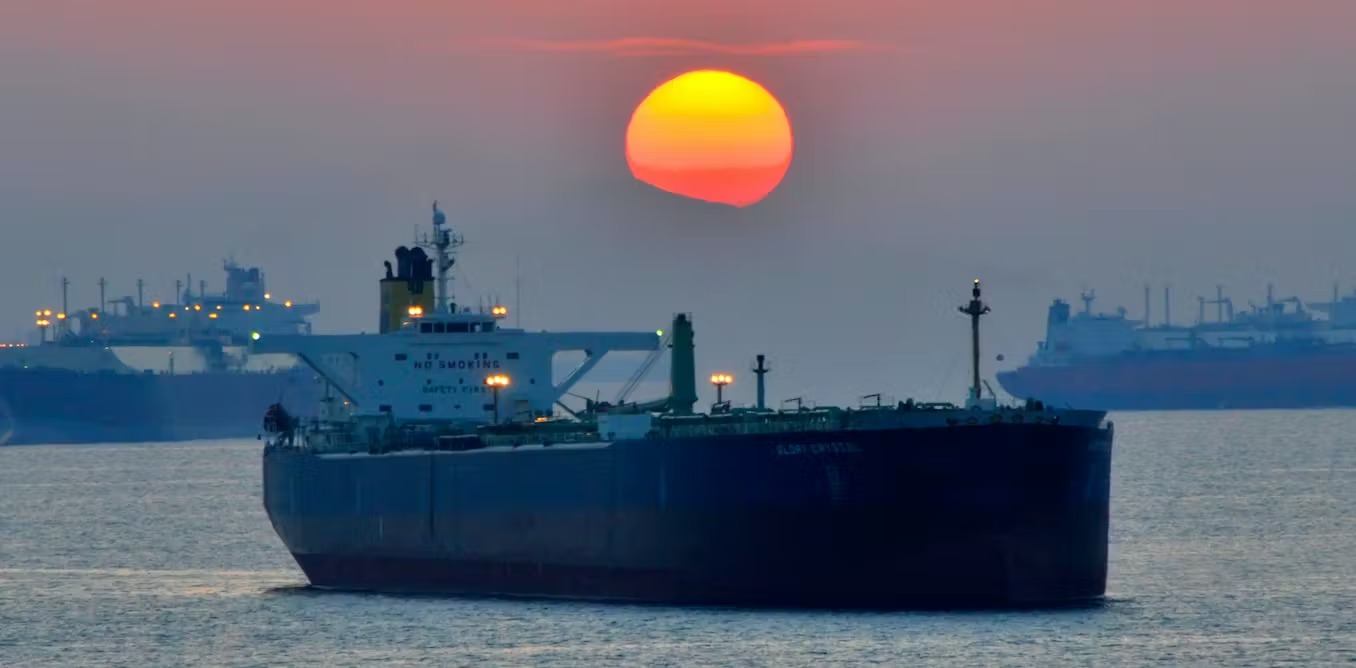
According to initial reports, a Bahamas-flagged crude oil tanker anchored near Iraq’s Khor al Zubair port was targeted by an Iranian remote-controlled explosive boat. A second tanker stationed off Kuwait suffered a powerful blast on its port side, causing it to take on water and spill oil. Since the conflict between the United States, Israel, and Iran erupted on Saturday, at least nine vessels have reportedly been attacked in Gulf waters.
The regional security situation worsened as Iran launched another wave of missile strikes toward Israel early Thursday. Iranian drones also entered Azerbaijan, injuring four people and increasing fears that the conflict could spread across additional oil-producing nations in the region.
Shipping data from MarineTraffic indicates that roughly 200 vessels, including crude oil tankers, LNG carriers, and cargo ships, remain anchored in open waters near major Gulf producers. Hundreds more ships are reportedly waiting outside the Strait of Hormuz, a crucial global energy corridor responsible for transporting roughly 20% of the world’s oil and liquefied natural gas supply.
To stabilize shipping activity and limit energy price spikes, U.S. President Donald Trump offered naval escorts and government-backed insurance for commercial vessels traveling through the region. Lloyd’s of London confirmed it is currently working with the U.S. government on potential insurance arrangements.
Meanwhile, energy infrastructure across the Middle East has begun to feel the pressure. BP evacuated foreign staff from Iraq’s massive Rumaila oil field after two unidentified drones landed within the facility. Iraq has also reduced oil production by approximately 1.5 million barrels per day due to storage limitations and shipping disruptions.
Refining operations in the Gulf have also been affected. One refinery in Kuwait has shut down while another reduced processing capacity. A refinery in Bahrain has also cut production.
Global energy markets reacted sharply to the growing instability. Brent crude oil prices climbed about 3% on Thursday, while U.S. West Texas Intermediate (WTI) crude rose roughly 4%. Since the conflict began, both benchmarks have surged approximately 16%.
European natural gas prices also jumped nearly 3% on Thursday and have increased about 60% this week. The situation worsened after Qatar, responsible for around 20% of global LNG supply, halted gas production earlier in the week due to security concerns. Industry analysts note that other major producers such as the United States and Australia have limited spare capacity to compensate for the supply shortfall.
The crisis could complicate Europe’s plan to refill natural gas storage ahead of winter. Although the European Union still receives some Russian gas, it aims to fully end pipeline imports by 2027 and ban new short-term LNG contracts starting in April 2026.
Asian energy markets are also feeling the strain. China has reportedly instructed domestic refiners not to sign new fuel export contracts and to attempt canceling shipments already scheduled, as authorities attempt to secure sufficient domestic energy supplies during the unfolding crisis.