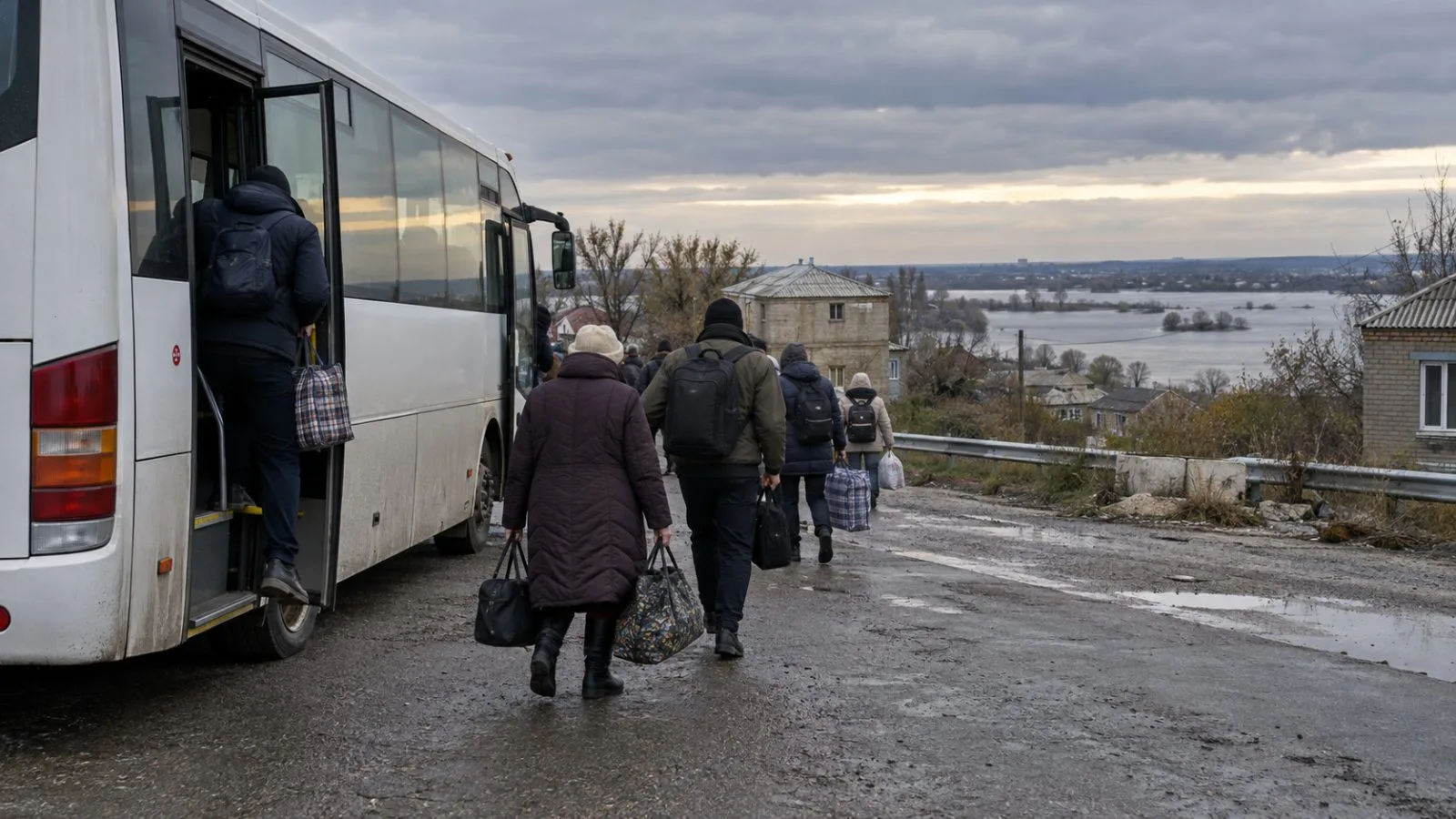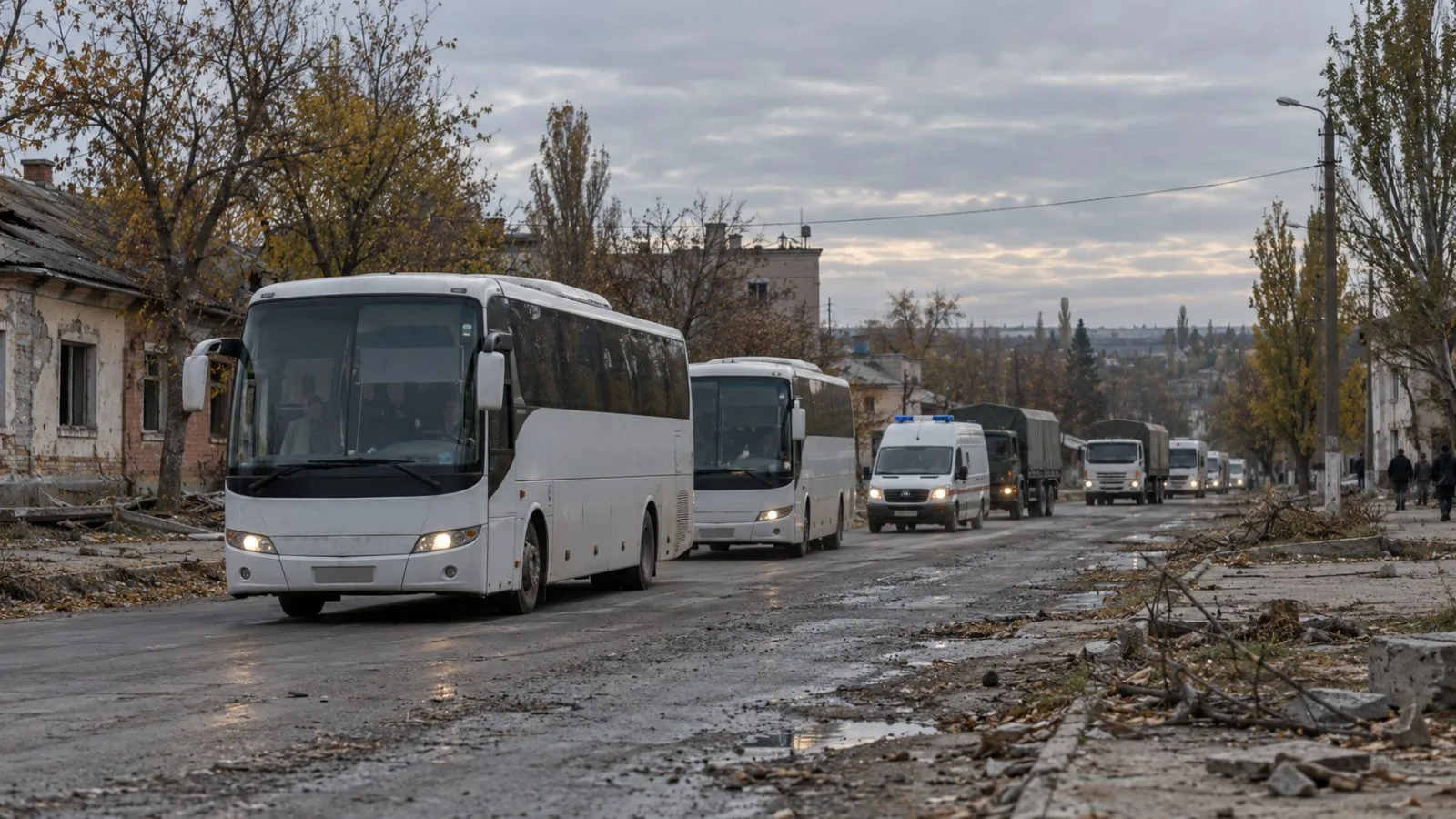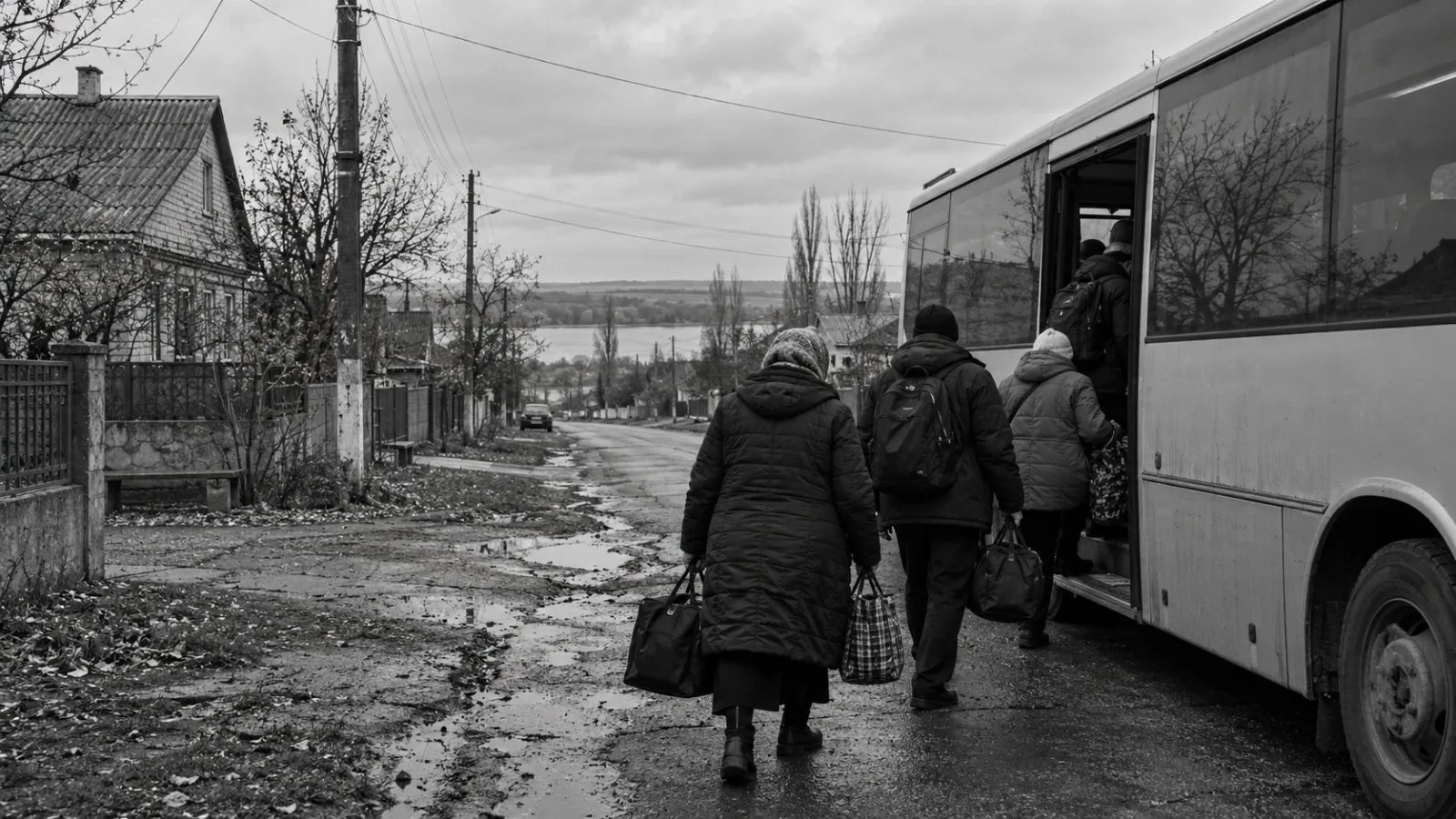
Evacuees from Russian-occupied Oleshky described hunger and deadly risks during their escape, AFP reported, revealing conditions in the southern Ukrainian city after an Oct. 30 humanitarian operation.
They reached Ukraine by bus on Oct. 31, AFP reported. Valera, 29, a former resident who withheld his surname, said residents were forced to eat grass and, in some cases, to shoot and cook dogs to survive. “People were cooking grass,” he said.
Ivan, 70, said his household grew vegetables and shared the food with neighbors, a way of getting by during a difficult month. He told AFP that a group of men who had cleared mines set out in cars and were blown up. A relative of his, Ivan said, lost four vehicles while trying to drive out.
Yelyzaveta Paliy, 19, said she last saw her father at the end of January 2024, when she left with her mother and sister while he stayed in Oleshky. AFP reported that the family reunited in Ukraine. The agency said relatives welcomed evacuees from the buses, with some families embracing in tears.
U.S. first lady Melania Trump cited Oleshky’s dire situation when she announced the truce on Oct. 23, describing the city as “on the brink of disaster.” The White House said Russia and Ukraine had agreed to suspend military action locally to let aid deliveries and civilian departures proceed. Ukrainian and Russian officials were present in Oleshky as aid was distributed and residents left on Oct. 30, AFP reported. The operation was a rare instance of cooperation between the warring sides, the agency said.
Kyiv estimated that about 2,000 people remained in Oleshky before the operation, down from 24,000 before Russia’s 2022 invasion. Neither Moscow nor Kyiv had specified how many people were evacuated, AFP reported.
AFP said Russian forces captured Oleshky in 2022 and intense fighting left residents hungry and unable to escape. EconoTimes previously covered the evacuees’ arrival in Ukrainian-controlled territory during the ceasefire.