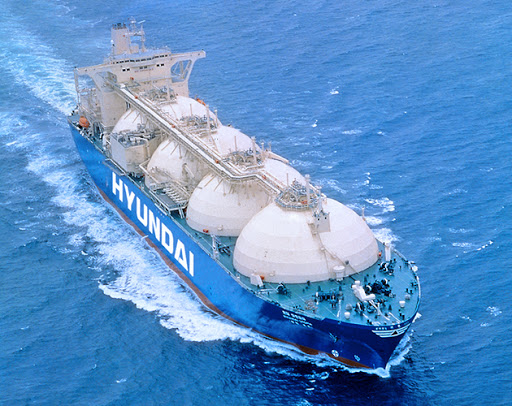
Hyundai LNG Shipping will hire up to six liquefied natural gas carriers owned by Malaysia-based Petronas LNG for 20 years beginning 2024.
The contract involves 174,000-cubic-meter LNG vessels and could be the largest in South Korea’s history in terms of cargo capacity.
Under the deal, Hyundai Heavy Industries will build the vessels. It was not disclosed how much Hyundai LNG Shipping would have to pay Petronas.
The vessels will transport LNG from Kitimat, British Columbia, to Asian countries including Japan and China under Petronas’ “LNG Canada” project.
Hyundai LNG Shipping suffered an operating loss of 7.4 billion won in 2020, up 86 percent on-year.
South Korean private equity firm IMM PE owns a 100 percent stake in Hyundai LNG Shipping.

Oil Price Forecasts Rise for 2026 as Middle East Supply Risks Persist
Asian Stocks Mixed as BOJ Holds Rates, Oil Prices and Fed Outlook Weigh on Markets
Kia Cuts EV Prices in Europe as Chinese Carmakers Intensify Competition
Starbucks Raises 2026 Outlook as Turnaround Strategy Boosts Sales and Earnings
Ukraine Faces Pressure to Introduce VAT on Low-Value Imports to Secure IMF Funding
China’s Ultra-Cheap EV Boom: Why Electric Cars Cost Far Less Than in the U.S.
Pershing Square Raises $5 Billion in Landmark U.S. IPO and Share Placement
U.S. Demand for Alternative Satellite Providers Remains Strong Amid SpaceX Regulatory Push
Kevin Warsh Advances Toward Fed Chair Role Amid Political Tensions
Oil Prices Rise Amid U.S.-Iran Tensions and Strait of Hormuz Deadlock
Toyota Global Vehicle Sales Decline in March Amid RAV4 Transition and Middle East Slowdown
AstraZeneca Q1 2026 Earnings Surge on Strong Oncology and Rare Disease Drug Sales
Taiwan Court Fines Tokyo Electron Unit $4.78M in Major TSMC Trade Secrets Case
DeepSeek Slashes AI Model Pricing to Boost Adoption and Challenge Global Rivals
U.S. Stock Futures Edge Higher Ahead of Big Tech Earnings and Fed Decision
Brazil Pension Fund Crackdown After Banco Master Collapse Raises Investment Concerns
Novartis Q1 2026 Earnings Miss Expectations as Generic Competition Pressures Sales 


