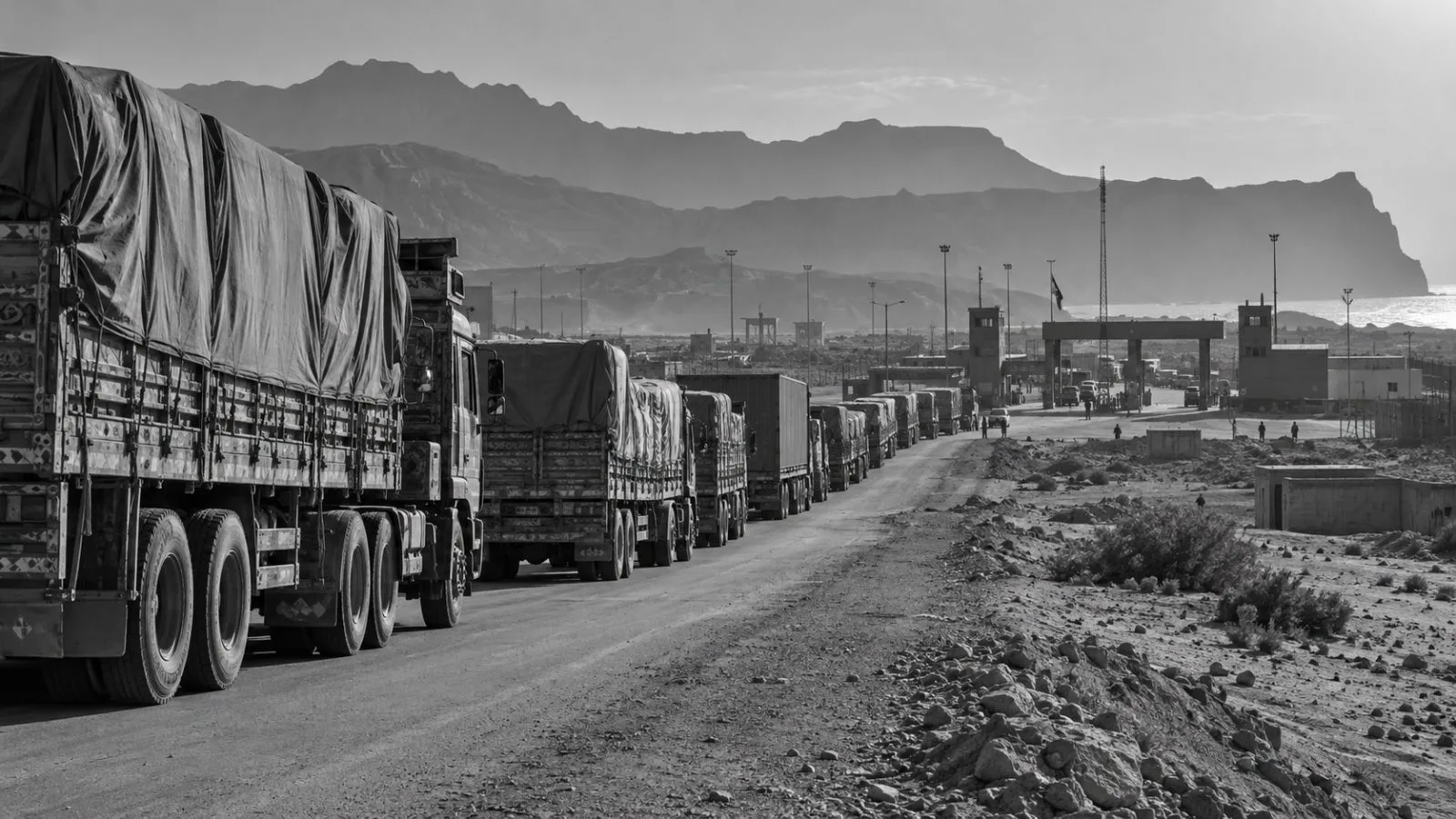
Pakistan has allowed limited freight traffic through its Gabd-Rimdan crossing with Iran, but thousands of trucks remain queued as Iran says Pakistani import paperwork is holding up liquefied petroleum gas shipments.
Border officials began admitting eligible cargo on Oct. 24, allowing consignments with notes dated Oct. 16 or earlier to cross. Businesspeople interviewed by AFP said vehicles were being admitted if their documents had been prepared before Oct. 16. On Oct. 26, Gwadar Chamber of Commerce and Industry President Mir Naveed Jan Kalmati told AFP he estimated 3,000 to 4,000 trucks were waiting in Iran. He put the queue on the Pakistani side at another 2,000 to 3,000 trucks. The figures are his estimates, not official counts.
Iranian Ambassador to Pakistan Reza Amiri Moghadam said on Oct. 25 that Iran had imposed no export restrictions, including on liquefied petroleum gas (LPG). He said changes to Pakistan’s E-Form import procedure were preventing traders from sending cargo across the border. Citing reports, he said several hundred LPG trucks had entered Pakistan and reached Gabd but had remained unloaded or uncleared for several weeks.
Pakistan suspended trade through Gabd-Rimdan and Taftan on Oct. 17. Balochistan adviser Shahid Rind cited security and smuggling concerns, while Iranian Foreign Ministry spokesperson Esmaeil Baqaei attributed the interruption to technical issues and precautionary measures.
The border halt disrupted an LPG supply route. The Gwadar chamber said the interruption reduced supply and raised prices. In June, Pakistan Customs said it had tightened clearance procedures at Gabd-Rimdan to address misdeclaration, unauthorized removal of goods and lost revenue.
Amiri Moghadam said Pakistan and Iran were consulting over the E-Form issue. He gave no date for routine trade to resume.