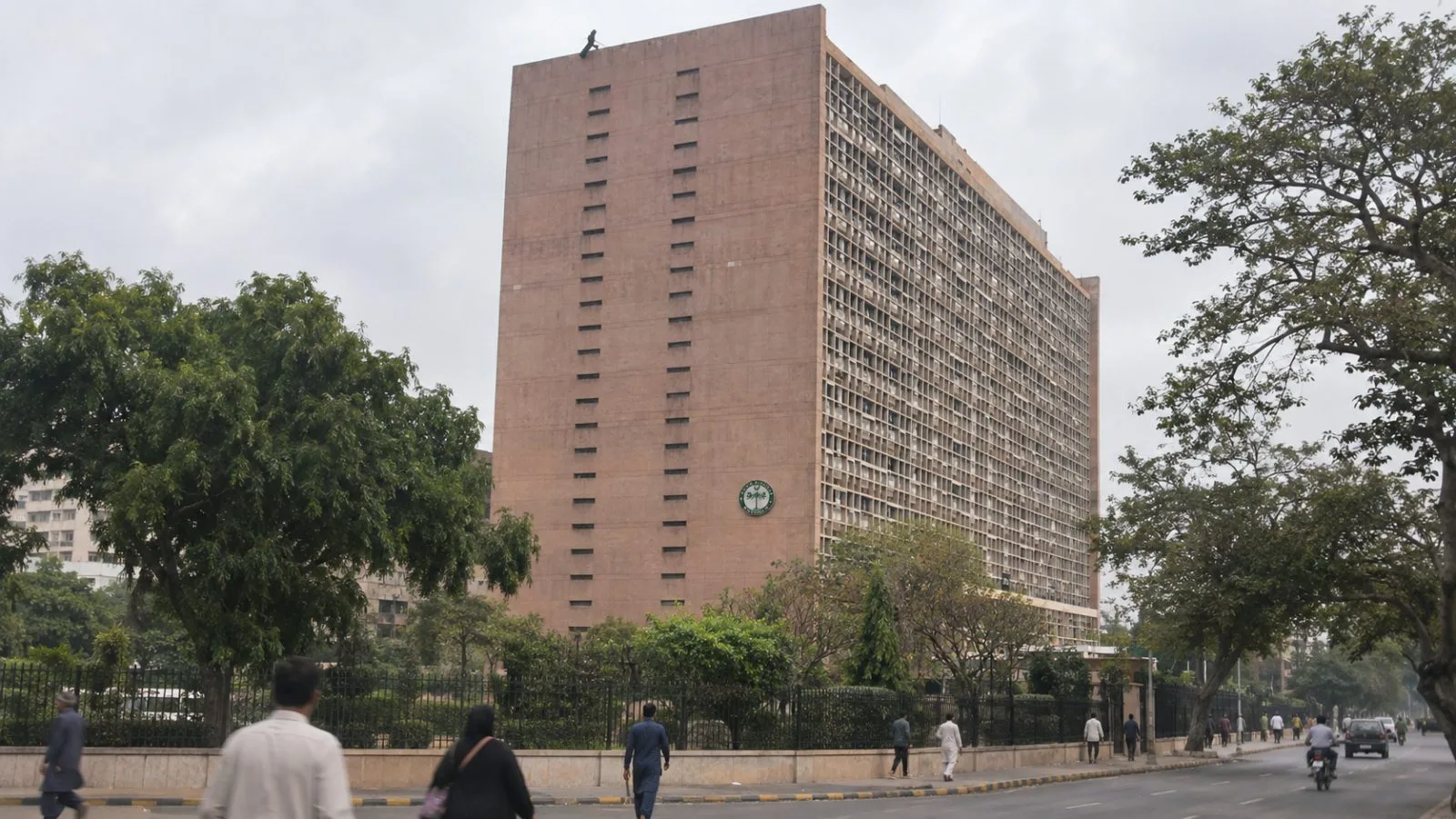
Pakistan’s central bank raised its policy rate to 12% as the Middle East conflict and domestic wheat supply problems worsened inflation risks despite a larger foreign exchange reserve buffer.
The State Bank of Pakistan (SBP) announced the 50-basis-point increase Oct. 26, making it effective the next day. Nine of the 10 members of its Monetary Policy Committee supported the move. The decision drew on September’s 10.3% inflation reading and the bank’s assessment of risks to prices.
After the decision, the Pakistan Bureau of Statistics (PBS) reported that consumer prices in October were 9.61% higher than a year earlier. That was slower than September’s increase but still above the SBP’s 5% to 7% medium-term inflation target. Transport prices rose 28.61% from a year earlier, while food and nonalcoholic beverage prices increased 7.74%.
Those price increases continued to weigh on households even as Pakistan’s reserves grew. The SBP held $21.52 billion in liquid foreign exchange reserves as of Oct. 23, compared with $18.38 billion at the end of June. Commercial banks held another $5.23 billion, bringing the country’s total to $26.75 billion.
Pakistan recorded a $874 million current-account deficit in the first quarter of fiscal 2026-27. The SBP said stronger economic activity lifted imports of non-energy goods, while higher prices added to the import bill. It forecasts growth of 3.5% to 4.5% for the fiscal year but said risks to that outlook have increased.
International Monetary Fund (IMF) staff and Pakistani authorities reached an agreement Oct. 7 that could make about $1 billion available through the Extended Fund Facility and $210 million through the Resilience and Sustainability Facility. Both amounts require approval from the IMF Executive Board. The fund has called for better targeted support for vulnerable households, lower energy-sector costs and steps to address debt rollover risks.
The SBP’s inflation monitor for October 2026 is scheduled for release no later than Nov. 5. Its next policy decision is scheduled for Dec. 14.