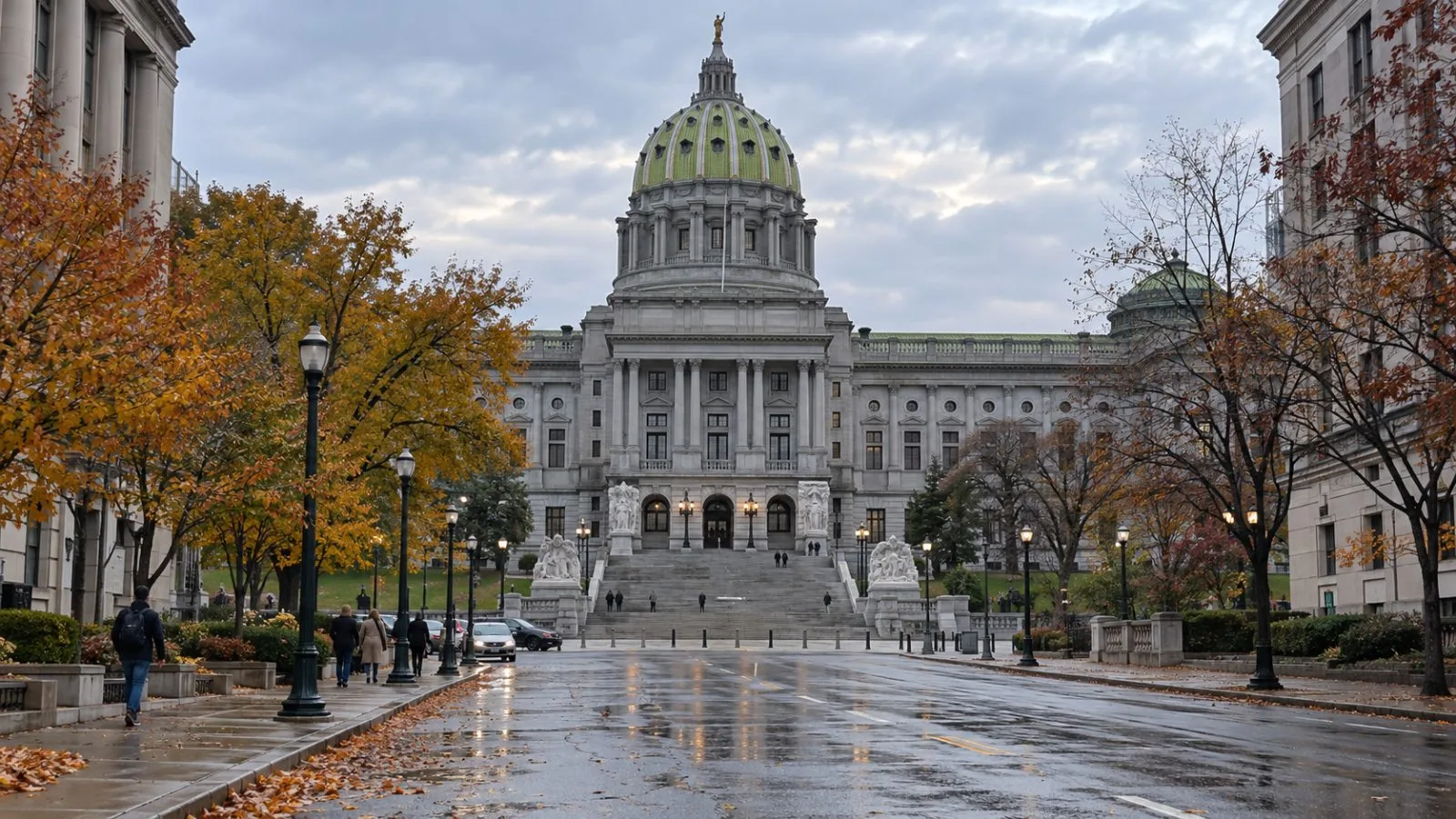
Pennsylvania’s Tuesday, Nov. 3, legislative elections will test whether Democrats can take control of a Republican-held Senate, a closely divided chamber with authority over state laws and spending.
The Pennsylvania Department of State lists the general election for Tuesday, Nov. 3. The National Conference of State Legislatures (NCSL) says 25 Senate seats and all 203 House seats are scheduled for election. NCSL’s Oct. 6, 2026, snapshot shows Republicans with 27 Senate seats and Democrats with 23; the House had 102 Democrats, 100 Republicans and one vacancy.
Democrats need a net gain of at least three Senate seats for a majority. Democrats currently control the House, and Gov. Josh Shapiro is a Democrat; the party could gain unified state control if it retains the House, wins the Senate and Shapiro is re-elected.
One measure at stake is House Bill 2189, which would amend the state’s Minimum Wage Act. The bill passed the House 104-95 on March 24. The Pennsylvania General Assembly’s bill record lists Sept. 30 as the latest action, when a resolution seeking to discharge the measure from a Senate committee was presented. In a campaign statement, Gov. Josh Shapiro supported a $15-an-hour minimum wage. Unified control would not guarantee passage of that bill or any other proposal.
NCSL’s Oct. 6 table lists 28 Republican-controlled legislatures, 18 Democratic-controlled legislatures and three divided legislatures among the 49 states it counts; Nebraska is excluded because its Legislature is nonpartisan. NCSL says more than 6,100 legislative seats are up for election in 46 states this year.
The Democratic Legislative Campaign Committee says its 2026 plans include $50 million in political investment and target 42 chambers. Its targets include Pennsylvania’s Senate and contests in Arizona, New Hampshire, Michigan, Wisconsin and Minnesota. NPR attributed part of Republicans’ state legislative advantage to gains in 2010 and subsequent redistricting. In an April 16 memo, the Republican State Leadership Committee said it was prioritizing seat defense amid what it viewed as a difficult cycle for state Republicans.
Voters will decide the Pennsylvania contests on Tuesday, Nov. 3.