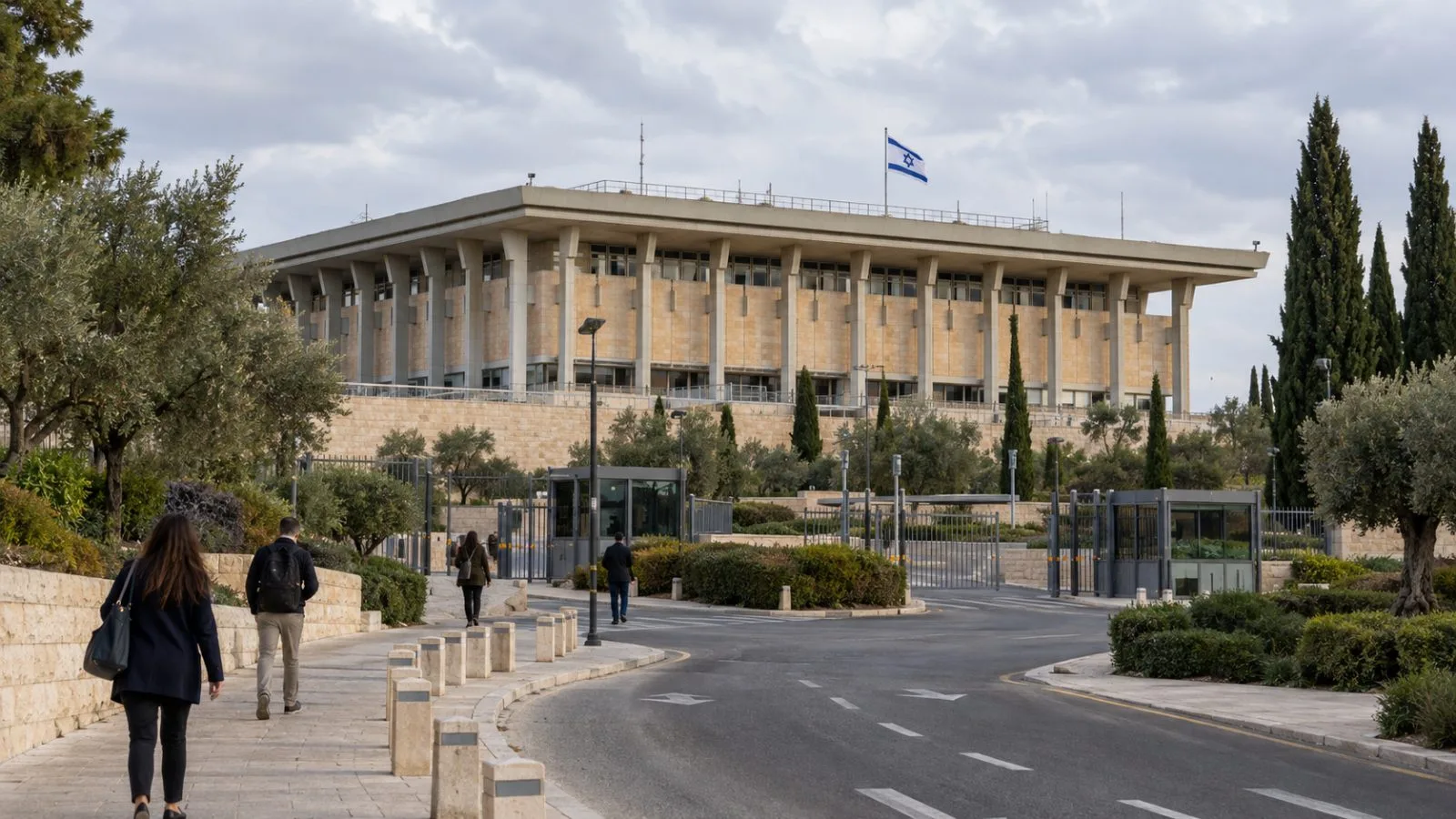
An Agam Labs-Hebrew University poll reported exclusively by The Independent puts the right-wing bloc at 52 to 54 seats ahead of Israel’s Oct. 27 vote, below the 61 needed for a Knesset majority. The Independent reported that the preliminary survey drew responses from 4,000 Israelis. The Knesset has 120 seats, and Israel’s proportional system has not produced a single party winning a majority outright, according to the outlet. These figures are survey projections, not election results.
In the poll’s leading scenario, Likud is projected at 19 seats, compared with 32 in the outgoing Knesset, while Shas is forecast at six, down from 11. The right-wing camp also includes Amcha, which is projected to pass the 3.25% threshold for representation. The Independent reported that Netanyahu’s current government held 60 seats, with one seat unaffiliated.
Yashar, led by Gadi Eisenkot, is projected to win 20 seats, the highest single-party tally. The survey projects a lower combined vote count for the liberal parties that could partner with Yashar than for the right-wing camp. Dr. Nimrod Nir, an Agam Labs researcher, told The Independent that another election remained among the possible outcomes. He also described an Arab-backed alternative government and a unity administration that would include Netanyahu and liberal parties.
Agam Labs modeled another scenario in which only one of two smaller parties, Amcha Israel and The Reservists, clears the entry threshold. If both miss it, the forecast puts right-wing groups at 51 to 54 seats, liberal groups at 50 to 54 and Arab parties at 15 to 18. If only one clears the threshold, Arab parties could gain enough seats to affect which camp can form a coalition.
An Oct. 19 Middle East Forum polling average put Netanyahu’s bloc at 54 seats, cooperating opposition lists at 52 and Arab-led parties at 14. Israel’s Central Elections Committee has scheduled the vote for Oct. 27.