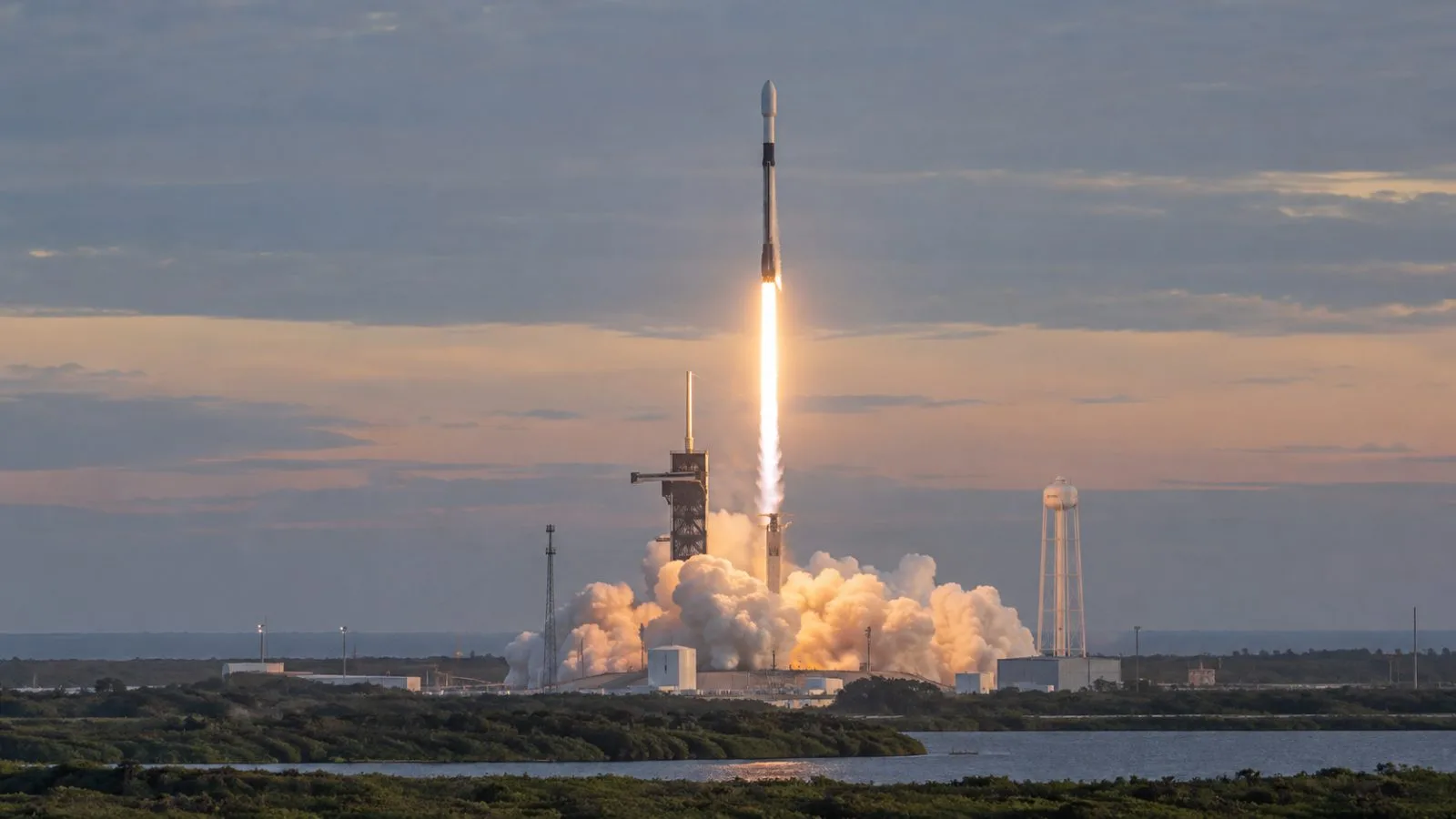
Portal Space Systems’ first free-flying Starburst spacecraft reached orbit on SpaceX’s Bandwagon-5 flight, giving the Washington company an opportunity to build flight experience for future vehicles and support Supernova development.
The Falcon 9 lifted off at 7:04 a.m. ET (11:04 GMT) Tuesday, Oct. 20. Portal said SpaceX confirmed Starburst-1’s deployment 56 minutes and 52 seconds later. Via Satellite reported that SpaceX confirmed all rideshare payloads had deployed.
Portal said the spacecraft began communicating with the ground, stabilized its orientation and deployed its solar array within hours of launch, leaving it with more power than it needed. The company says the design is intended to support close approaches to other spacecraft, or rendezvous and proximity operations, quick changes to tasking and orbital adjustments. Portal described the self-funded flight as a way to build experience for later Starburst vehicles and support development of Supernova.
The spacecraft carries Zenno Astronautics’ Supertorquer magnetic attitude-control system, TRL11’s Fovea M1 camera and Atomic-6’s Space Armor tiles, Portal said. The company also said its earlier Mini-Nova mission, launched March 30 aboard a Momentus Vigoride vehicle, tested spacecraft systems in orbit.
Portal’s Oct. 21 release described its Bothell manufacturing facility as 65,000 square feet. An Aug. 20 company announcement gave a different figure: 62,000 square feet. Jeff Thornburg, Portal’s co-founder and CEO, told GeekWire in August that the facility was planned to accommodate annual capacity for 16 Starbursts and 12 Supernovas.
Thornburg told Payload, “I feel like 80% success now,” the outlet reported Oct. 23. Payload also reported that talks with three potential commercial customers were nearing completion and that inquiries had increased since launch; it did not identify the customers or give contract values.
Portal has said its planned 2028 Motus Via Sol Falcon 9 mission will carry multiple Starburst spacecraft and the first Supernova. Its Oct. 21 update said Starburst-1 was waiting for its next mission objectives; Payload reported that ammonia propulsion activation was expected in the days after its Oct. 23 report.