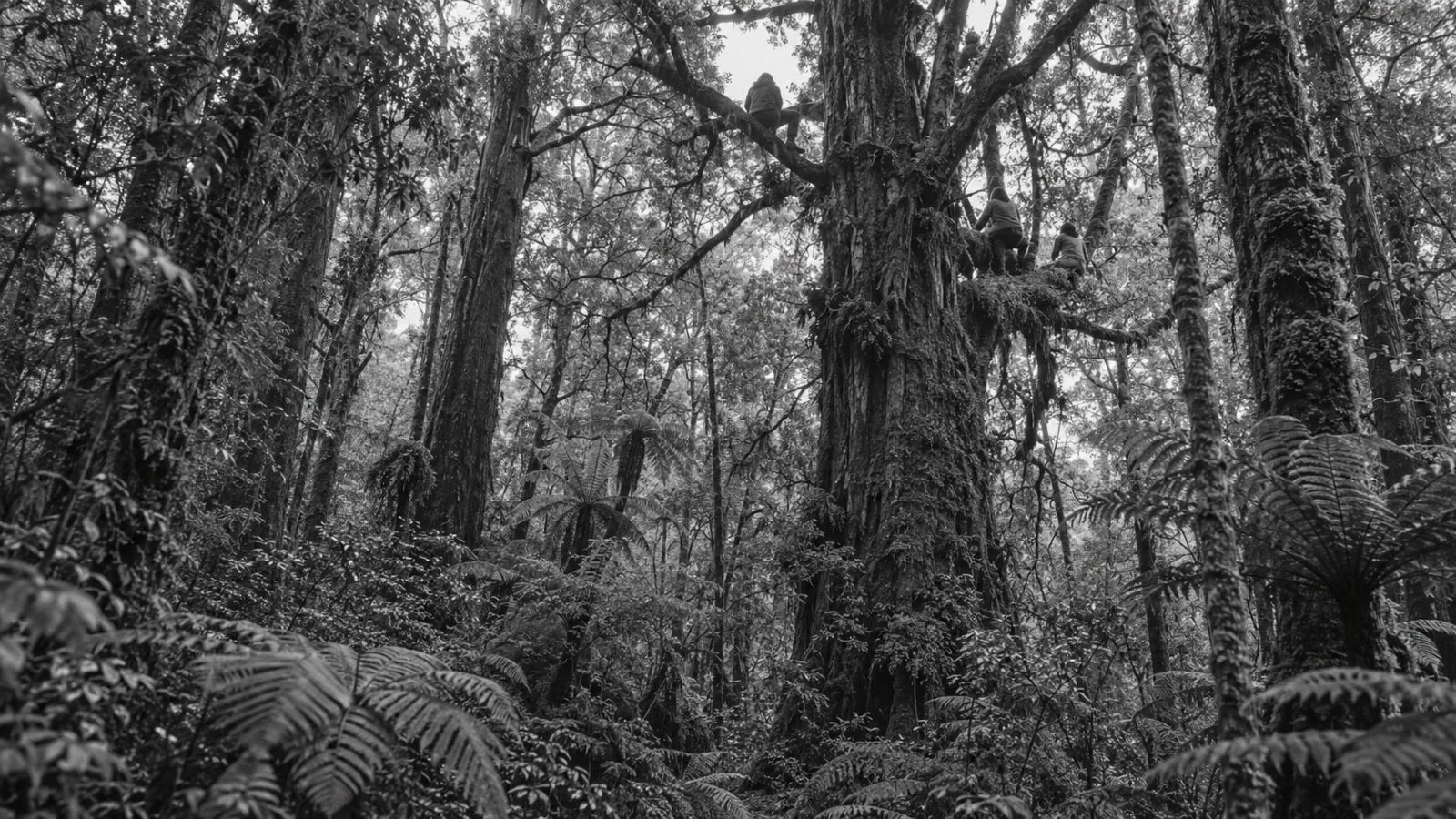
New Zealand’s 1978 occupation of Pureora’s tree canopy helped prompt a three-year logging pause in parts of the forest, and separate records document employment strains in nearby towns.
The Maraeroa A and B Blocks Claims Settlement Act 2012 says 46,000 cubic meters of native timber were removed from the Pureora area in 1977. The National Library of New Zealand dates protest photographs to Jan. 18, 1978, and records a meeting of the Native Forests Action Council and other groups the next day. New Zealand Geographic identifies botanist Stephen King as a protester and describes him as barefoot.
Forests Minister Venn Young announced the Central North Island Indigenous Forest Policy on Aug. 7, 1978. It established a three-year moratorium in Pureora’s North Block and Waihaha Forest south of Waihora Stream, with reconsideration scheduled for 1981. The policy cited kōkako research as one purpose of the pause, according to the Department of Conservation’s annotated bibliography.
A Sept. 5 notice in the New Zealand Gazette set aside Pureora and five other state forests as Pureora State Forest Park. Logging continued in two small outlying areas. A 1979 New Zealand Forest Service account, as reported by Forest and Bird, noted closures at three sawmills in the west Taupo region and a 6,000-cubic-meter annual limit on logging in the two outliers. The earlier maximum had been 60,000 cubic meters of logs a year.
The 2012 settlement act records descendants’ reports of unemployment, towns becoming unviable and families leaving after the logging decision. The Department of Conservation connects the tree occupation with the government’s logging pause and says logging later ended throughout the park.
Historical accounts give different end dates. DOC’s annotated bibliography puts the last limited logging work in the Waihora catchment in 1983 and identifies that as the year logging ended park-wide. Te Ara and New Zealand Geographic give 1982, while a 1987 study in the New Zealand Journal of Forestry Science gives 1981.