


 Mike Rogers Calls for End to US-Canada Tariff War
  Fed’s Hammack Says Bond Yield Surge Is Not Driven by Inflation Fears
  Deere, CNH and AGCO Stocks Fall as FTC Launches Farm Equipment Probe
  Gold Prices Rise as Dollar Weakens, Treasury Yields Ease
  Bitmine to Stop Ethereum Buying After Reaching 5% ETH Supply
  US Treasury Yields Ease After Strong 10-Year Auction as Global Bonds Struggle
  Cardano Price Surges 10% as ADA Targets $0.30
  RBA Hikes Interest Rate to 4.60% as Inflation Risks Rise
  Strategy’s STRC Nears $100, Raising Prospects for Major Bitcoin Buys
  Evernorth XRPN Nasdaq Listing Delayed to October 12
  UK House Prices Flat in September as Mortgage Rates Weigh
  BOJ Raises Interest Rate to 31-Year High as Yen Weakens
  Australia Consumer Confidence Plunges as RBA Rate Hike Hits Households
  Trump Demands Powell Resign Over Fed Renovation Cost Overruns
  Ethereum Price Drops Below $2,600 as Long Liquidations Hit 4-Month High


 Add as a preferred source on Google
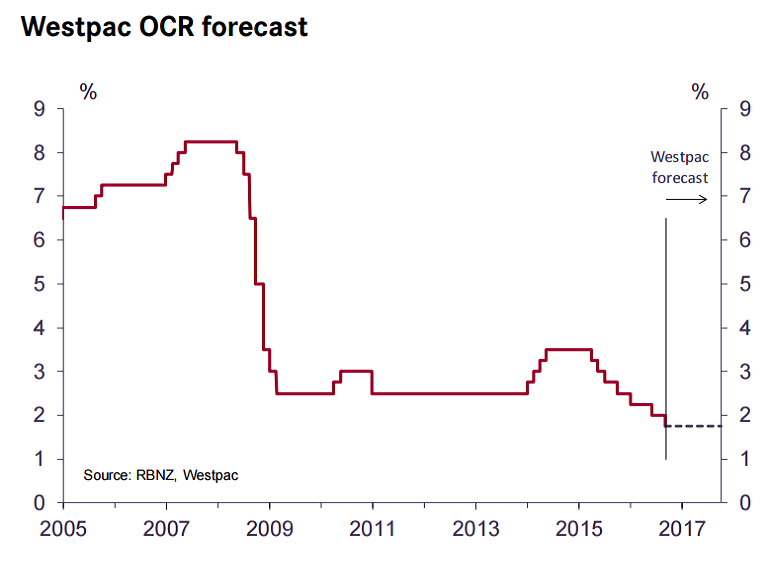
The Reserve Bank of New Zealand at Thursday's Monetary Policy meeting cut the Official Cash Rate to a new record low of 1.75 percent as widely expected and signalled it has probably done enough to return inflation to target as economic growth quickens. Downside risks to the domestic economic outlook have been dissipating and the RBNZ remains conscious of the risks of over-stimulating the economy and housing market, as well as the associated risks for the exchange rate.
The central bank shifted to a more neutral stance amid signs that the New Zealand economy is on increasingly solid footing, with positive signs in the household and business sectors, continued strong population growth, and gains in commodity prices. The Kiwi saw a knee-jerk spike to 0.73 levels initially following the interest-rate cut, but quickly pared gains before falling back to be little changed.
RBNZ Governor Graeme Wheeler said that the central bank remains worried about market instability and U.S. political upheavals, adding that heightened global market volatility in the wake of Donald Trump’s unexpected U.S. election win could trigger further rate cuts.
New Zealand “is not an economy that is crying out for urgent stimulus to boost inflation,” said Nick Tuffley, chief economist at ASB Bank Ltd. in Auckland. “From here we continue to expect the RBNZ will remain on hold, which is the RBNZ’s current stance.”
On the technical charts, 'Bearish Bat' pattern formed on NZD/USD dailies. We see scope for downside in the pair. 5-DMA is biased lower, along with Stochs and RSI. Strong support is seen at 0.7214 (20-DMA). Violation there could see further downside. NZD/USD was trading at 0.7222 at around 12:45 GMT.







