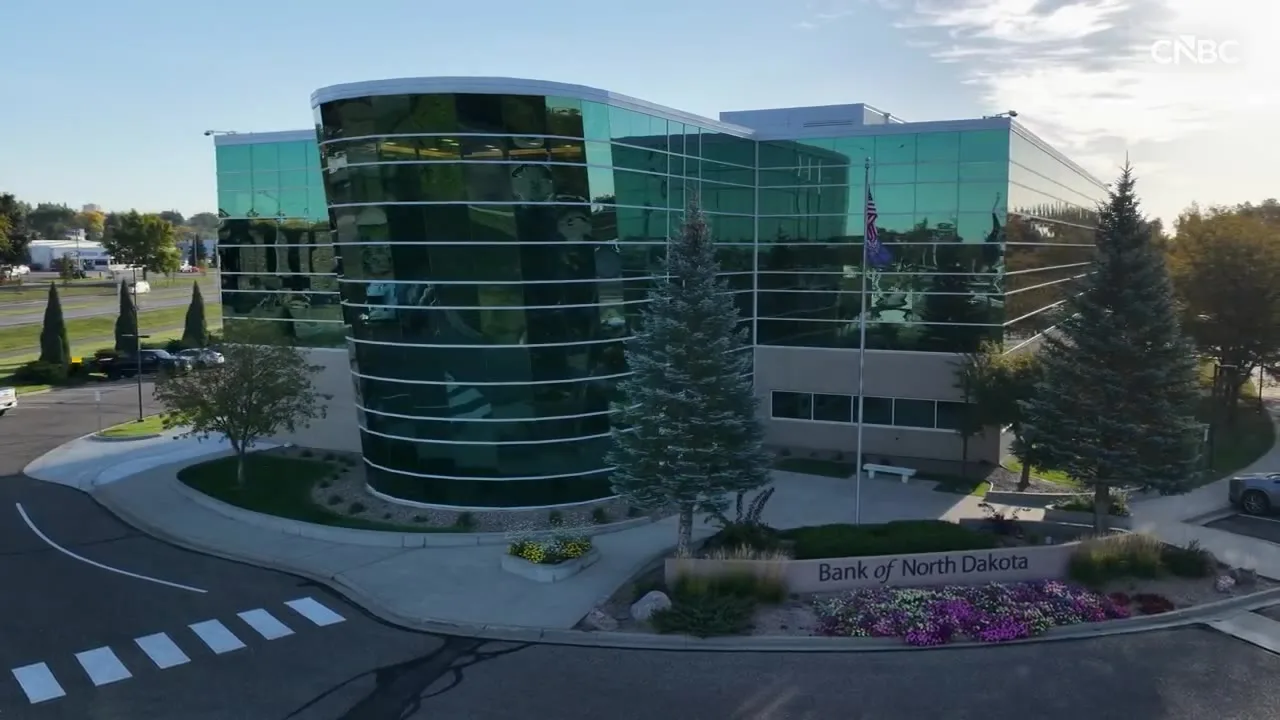
Rainbow Energy Center plans to build 430 megawatts of data centers powered by North Dakota’s Coal Creek Station, the company’s chief executive, Stacey Snider, said in an interview published Oct. 29.
The development would put new electricity demand alongside a coal plant that previously faced closure. The company bought the facility in 2022 with financing assistance from the Bank of North Dakota.
“We wouldn’t be here today without you,” Snider said, describing his message to the bank at their meetings. He outlined the development in CNBC’s “The ‘Socialist’ Bank Thriving In Trump Country.”
The plant’s planned closure had put more than 600 jobs at risk, CNBC reported. The facility supplies electricity for about 1.7 million people in Minnesota.
Snider said the company owns about 45,000 to 50,000 acres. He identified land for the proposed data centers, which would use the plant’s electricity to support artificial intelligence.
“We have decades of coal reserves surrounding Coal Creek Station,” he said. The plant sits near deposits of lignite, a soft form of coal.
The Bank of North Dakota bought $150 million in bonds issued by a state infrastructure authority to help finance the acquisition. The financing also combined conventional loans, grants and assistance to reduce interest costs.
Snider said obtaining financing outside the state would have been more difficult, linking that difficulty to previous federal administrations’ approach to coal. The remarks gave no construction schedule or opening date for the proposed data centers.
The bank also provided a $70 million credit line for the Theodore Roosevelt Presidential Library in Medora, whose cost CNBC put at $450 million. The interest-free financing allowed construction to proceed before pledged donations arrived.
The Bank of North Dakota reported assets of $10.6 billion in June 2026. Residents can open accounts with as little as $50, while the state deposits government money at the bank.
The bank uses deposits to finance disaster assistance and student loans, among other lending. It returns part of its earnings to the state’s general fund, the account used to pay for government operations.
Those transfers have totaled almost $1.9 billion over the bank’s lifetime, CNBC reported. The bank’s deposits carry a full state guarantee rather than federal deposit insurance.
The governor, legislature and state industrial commission have roles in overseeing the bank. That structure puts elected officials in a position to influence an institution that finances businesses and public projects.
The bank grew out of an early 20th-century movement among farmers seeking relief from shipping charges and lending rates imposed by businesses outside North Dakota. Those farmers formed the Nonpartisan League.
Massachusetts and Washington state are considering similar banks. North Dakota’s experience also leaves a question for potential imitators: how to establish a profitable bank before using its earnings to finance particular public goals.