TrendForce says rising memory costs are giving phone makers an incentive to use reballed memory, forecasting 7% to 9% smartphone-market penetration in 2027 as manufacturers seek lower-cost components.
The firm estimates the practice will account for 3% to 4% of smartphone-market penetration in 2026, compared with its 7% to 9% forecast for 2027. It expects reballed parts to remain a modest share of annual LPDRAM bit consumption, a separate measure from the penetration rate.
Most available reballed memory is 4GB LPDDR4X, TrendForce says, and is mainly used in 4G smartphones priced below CNY 1,299. The firm says reusing the parts can help manufacturers rein in production costs and preserve shipment volumes.
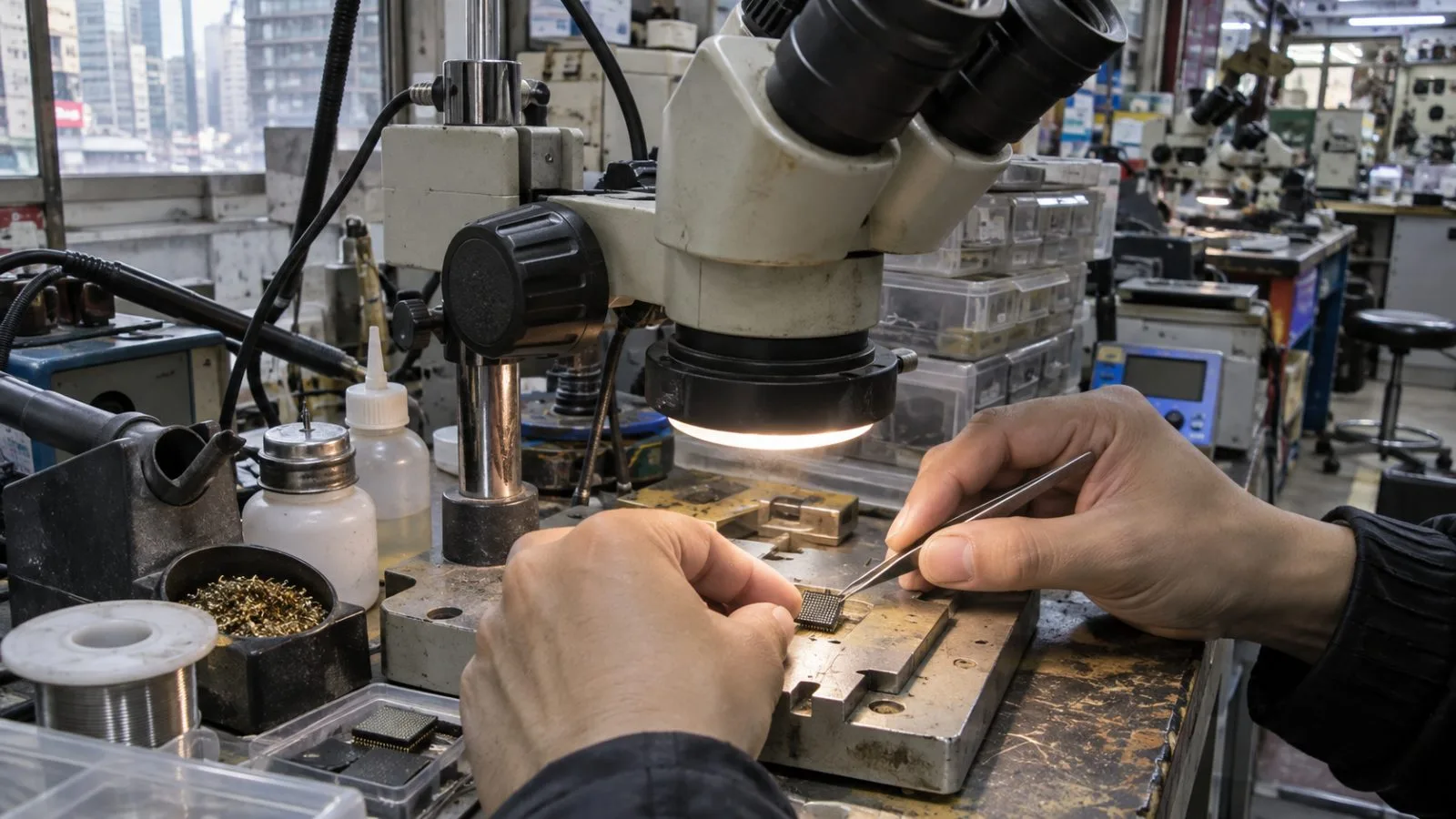
Reballing replaces the solder spheres that connect a chip package to a circuit board. A technical paper by researchers at the University of Maryland and Hong Kong University of Science and Technology, hosted by IPC, describes reclaiming components from defective or discarded assemblies as one use of the process. TrendForce warns that uncertain quality could pose reliability and repair risks.
Counterpoint Research said Nov. 11 that memory made up 54% of the bill of materials for a low-end smartphone, compared with 20% in the third quarter of 2025. Its figures show memory prices more than doubled from the third quarter of 2025 through the first quarter of 2026, then rose 80% to 90% in the second quarter and 15% to 30% in the third quarter of 2026.
Counterpoint links the increases to demand for high-performance memory for AI and data centers, alongside a shift in manufacturing away from older platforms. It also said higher component costs are pushing up phone prices, leaving price-sensitive consumers in emerging markets especially exposed.
TrendForce expects DRAM prices to rise faster in the first quarter of 2027. Counterpoint forecasts slower increases through that quarter, with prices stabilizing by mid-2027.