
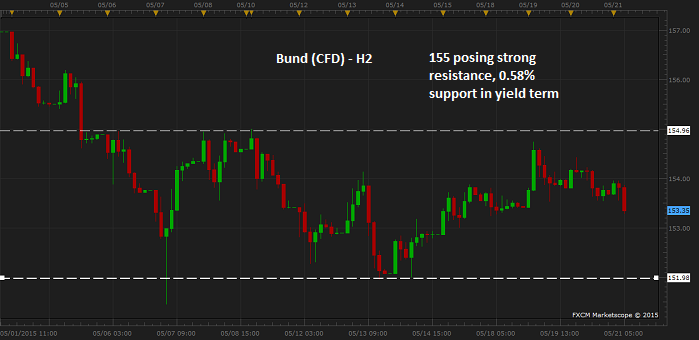
While Euro has fallen after ECB official indicated higher rate of asset purchase during summer, Bund continue to pose resilience and so far consolidating, suggesting possibilities of further selloffs.
- Yield has softened somewhat since 14th May, however that is not enough to say that downtrend has resumed. Bund selloff in May had pushed 10 year yield to 0.78% on 14th and 30 year yield at 1.436%. As of now 10 year yield is hovering at 0.64% and 30 year at 1.25%.
What is keeping yields so resilient?
- Inflation is very low as of now. German April HICP inflation was only at 0.3% on yearly basis, while Euro zone core inflation remained at 0.6% y/y in April. However inflation pattern suggests that downside pressure on prices have ebbed significantly suggesting that higher inflation might occur in longer term.
Naturally longer end German yield is showing resilience, while shorter end remains well below negative. German 2 year yield as of now is 0.21%.
Frontloading purchase is not enough to push yields lower, since bet is on inflation not faster windup of the program.
Today ECB president Mario Draghi is scheduled to speak today 17:30 GMT.
- His comments will be closely watched, however it remains a question what might Mr. Draghi has to offer to push yields lower and moreover does he even want to do that?


