Reuters reported that an agency sharing an address with Iran’s Ministry of Defense and Armed Forces Logistics (MODAFL) was linked to $2.3 billion in military-hardware imports from January 2025 through June 2026, within a network of thousands of MOD-named agencies.
The agency, MOD 346428, was among more than 5,000 agencies Reuters identified with Israeli-American risk consultancy 240 Analytics. Reuters said the agencies share a Tehran address with MODAFL. Their records list Feb. 11, 1979, as their incorporation date, although Reuters reported that most were established in 2013.
The investigation examined Iranian bank and government records, corporate filings and about 19,000 import records. Reuters also reported at least $2 billion in imports for the wider network since January 2025, but did not explain how that figure relates to MOD 346428’s $2.3 billion total through June 2026.
Reuters said 97% of the shipments it reviewed were settled “without currency transfer.” Reuters reported that intermediaries paid for purchases using funds held abroad, including proceeds from oil sales.
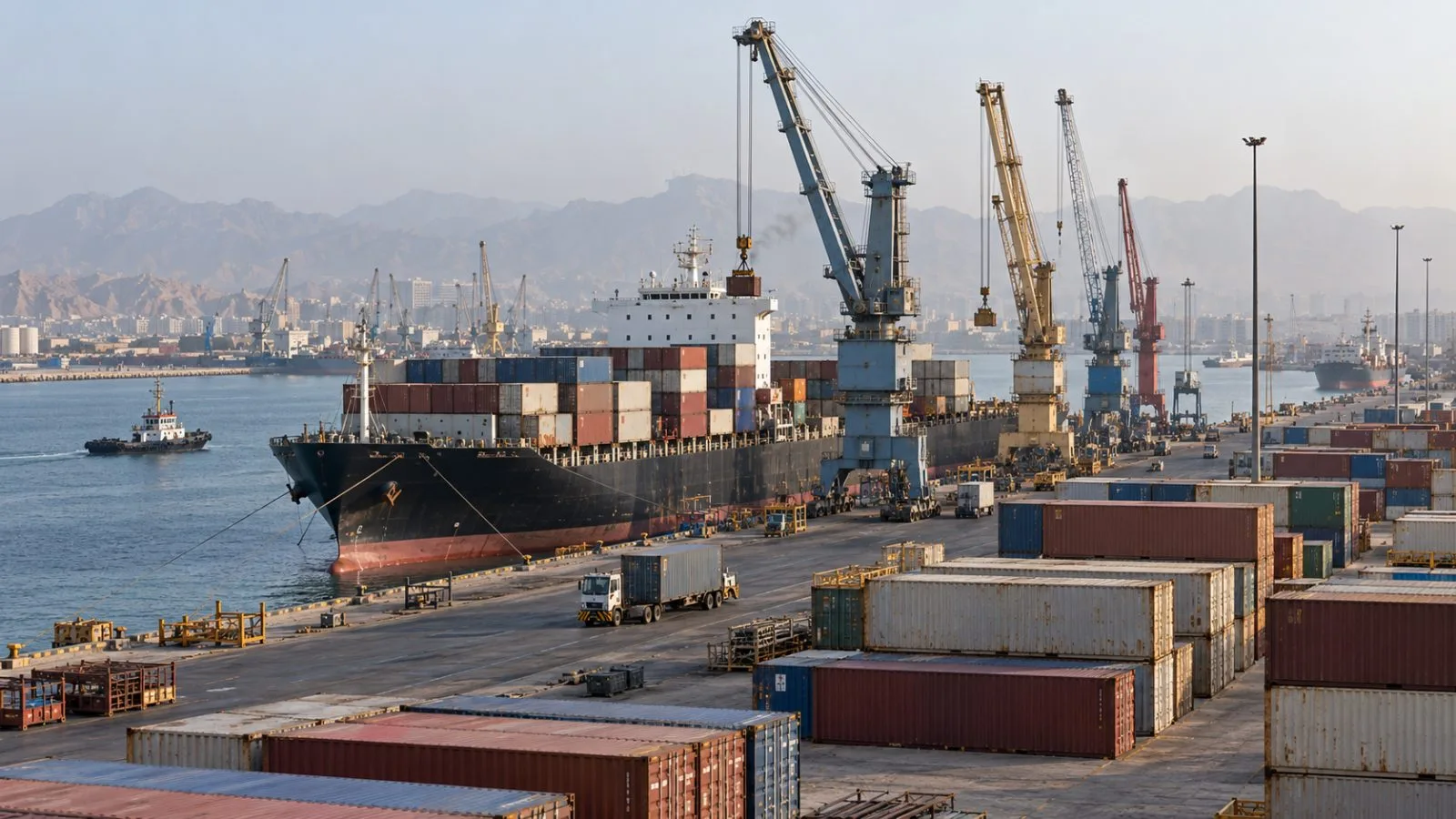
Import records cited by Reuters listed a vessel carrying 93 metric tonnes of unwrought Chinese titanium arriving in Bandar Abbas on Feb. 9, 2026. Records also listed 268 tonnes of nitrocellulose and 276 tonnes of other chemicals from China in the month before the war began Feb. 28. Reuters said some materials could be used in missile and drone programs, while many imported goods have civilian uses.
The agency was also linked to 435 Iveco trucks. Reuters traced some to a customs lot outside Tehran and matched three vehicle identification numbers to import records. The investigation did not establish that all the trucks were used as missile launchers.
The U.S. Treasury Department’s Office of Foreign Assets Control (OFAC) designated Sahara Thunder in April 2024, calling it the “main front company” overseeing commercial activities for MODAFL. Reuters identified Sahara Thunder as one end user of the procurement network and said it found no evidence that the numbered agencies it identified had themselves been individually sanctioned by Western governments.
Peter Salisbury, an adjunct assistant professor at Columbia University, told Reuters: “This data clearly shows the Iranian ecosystem’s adaptability and its ability to find new routes.”