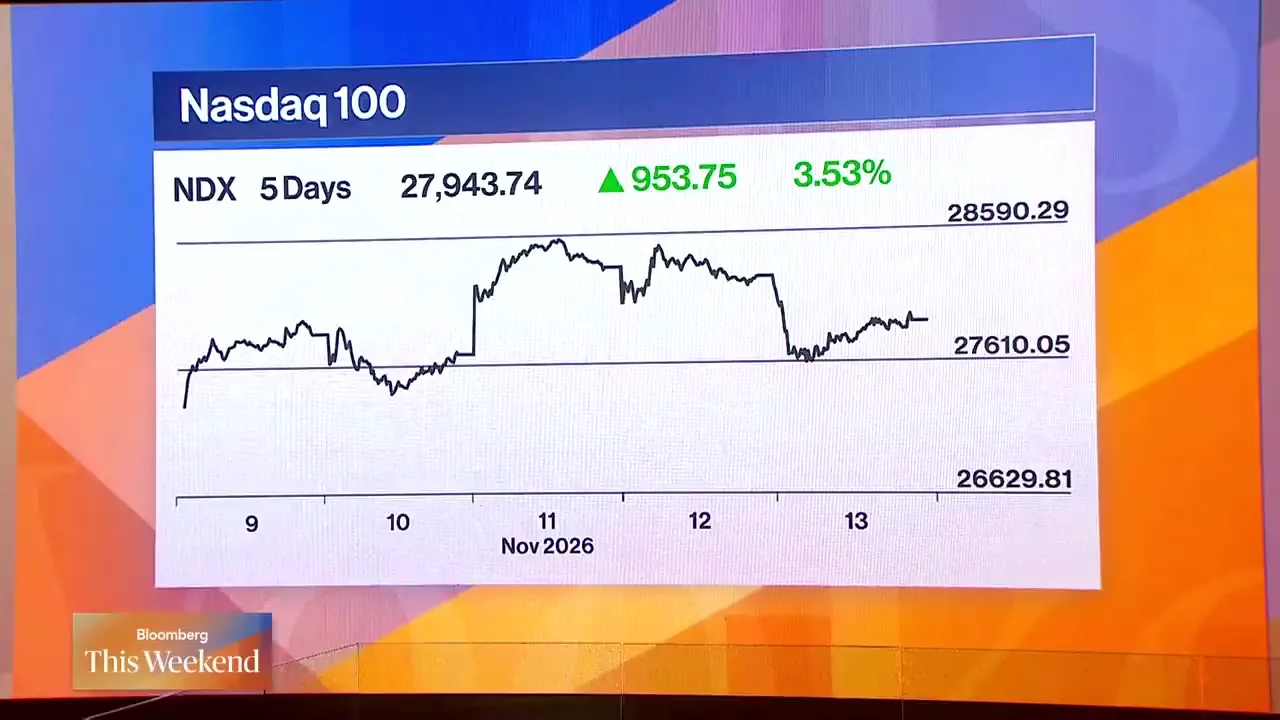
The S&P 500 stood 3.3% below its record despite recent technology-stock turmoil, Barry Ritholtz, founder and chief investment officer of Ritholtz Wealth Management, said in an interview.
The Nasdaq was about 10% below its high, a larger decline that he contrasted with the broader index's losses. He rejected the argument that trouble concentrated in one company represented the entire market.
Ritholtz spoke on Bloomberg Television's “Looking Beyond Tech’s Recent Market Turmoil,” published Nov. 14. His comments moved from market declines and historical comparisons to the limits of board oversight when a company's shares perform well.
“We never know, but we try and make the best probabilistic assessments we can,” he said. He argued that concerns about the market's dependence on a small group of companies had persisted for about five years without proving correct.
He described departures by major technology executives as events that can produce temporary share-price declines followed by recoveries. He cited Apple and Alibaba, while describing Microsoft's rally after Steve Ballmer's departure as an exception to that pattern.
Turning to elections, he said markets had risen by the following June after every U.S. midterm election since 1950. He put the average gain at about 15%, with increases ranging from about 2.5% to 29% across 19 instances.
He invited checks of those calculations and said he compared answers from several artificial intelligence services before placing some reliance on a historical figure. He did not identify the market index used for the election comparison.
On corporate governance, he said founders had received special treatment over the past 20 years. That sometimes involved supervoting shares, which give their holders greater control over company decisions than ordinary shares.
He cited Meta as an example of a company where a board could do little about missteps. Elsewhere, he said, directors could become too deferential to a charismatic founder or an executive responsible for much of a company's growth.
“Companies survive the loss of a founder,” he said. “They survive a loss of a CEO.” He argued that strong share-price gains could discourage directors from challenging the person running the business.
He illustrated that argument with a chief executive presiding over gains of 700,000%, without establishing a period for the increase. Directors in that situation would resist interfering with the person associated with those returns, he said.
He contrasted listed companies with Vanguard, which he described as closer to a mutual organisation. He said most earlier chief executives served decade-long terms, while the immediate predecessor to Salim Ramji was replaced after 18 months.
He left open when investors or directors would demand better conduct from a successful executive. His conclusion was that rising share prices could encourage boards to look away from problems.