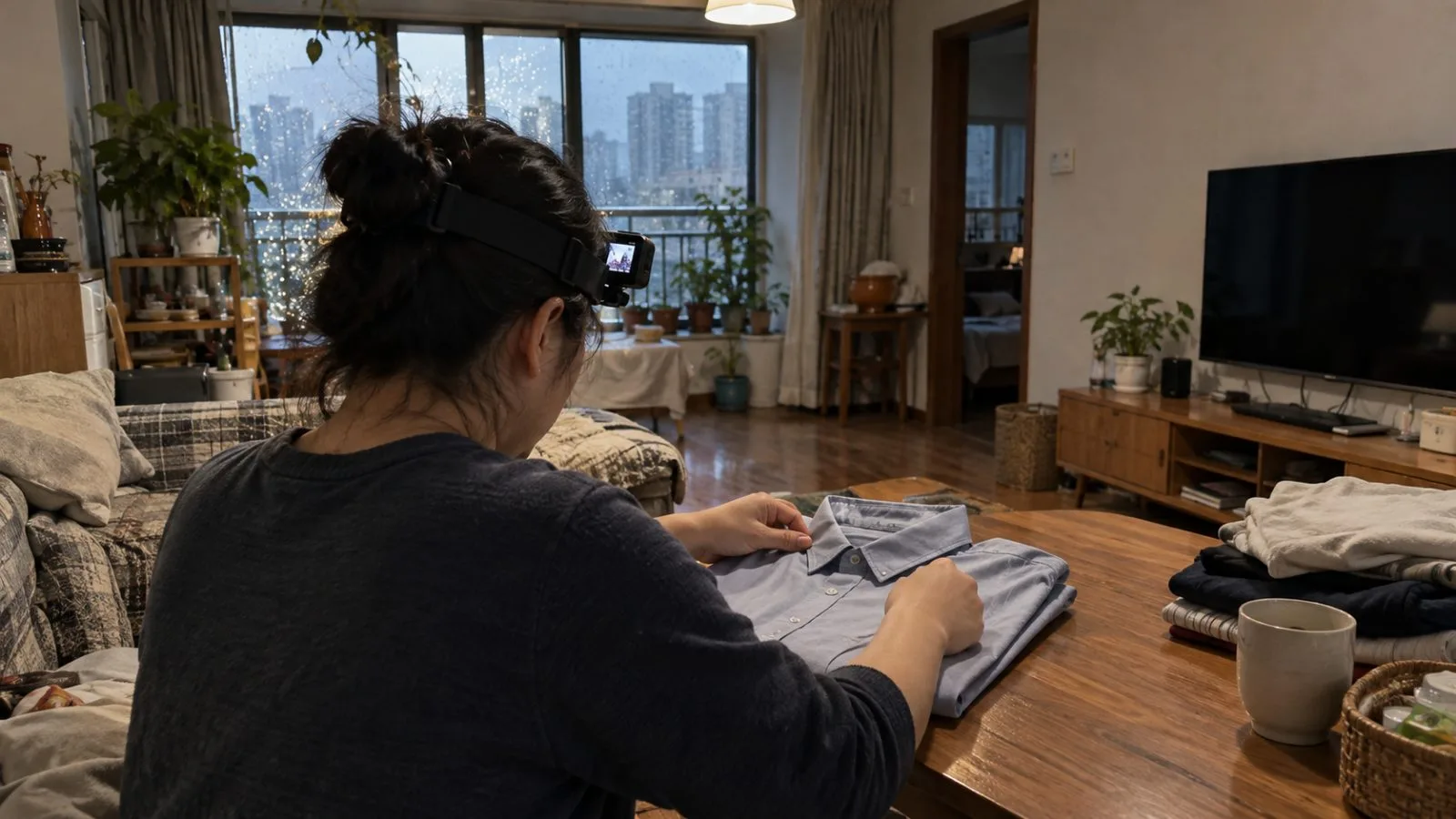
An unnamed industry expert told ChinaTalk that preparing footage for robot training costs 500 to 700 yuan an hour, compared with about 100 yuan to capture it. The estimates point to a challenge for suppliers: customer-specific data can be costly to produce and difficult to sell again.
ChinaTalk reported that buyers may specify recording conditions, from lighting and backgrounds to particular movements. It said exclusive intellectual-property terms for tailored footage may prevent sellers from offering the same recordings to other customers. The outlet also described vendors as having limited bargaining power.
Rest of World reported that Gao Bo was paid 20 yuan per hour to record household chores for six hours a day.
The EgoScale paper describes a large human-video dataset used in robot-hand research: 20,854 hours of footage spanning 9,869 scenes, 6,015 tasks and 43,237 objects. The researchers say most recordings came from real-world settings.
The paper reports that the final system’s average success rate was 54% higher than a no-pretraining baseline, using a robotic hand with 22 degrees of freedom. For shirt folding, it reports an average success rate of up to 88% after one robot demonstration.
Those results came from several training stages. The footage was recorded with head-mounted cameras and processed to estimate camera motion and hand trajectories. Researchers then used matched human and robot demonstrations before training on robot tasks, so the reported gains do not show what human video alone can achieve.
Dr. Iris Wang, a researcher and entrepreneur at Tsinghua University, told ChinaTalk: “The market decides the direction of the industry and innovation, not the other way around.”
On using human video to prepare robots for arbitrary environments, robotics professor Alan Fern of Oregon State University told Rest of World: “It’s just very unproven.”