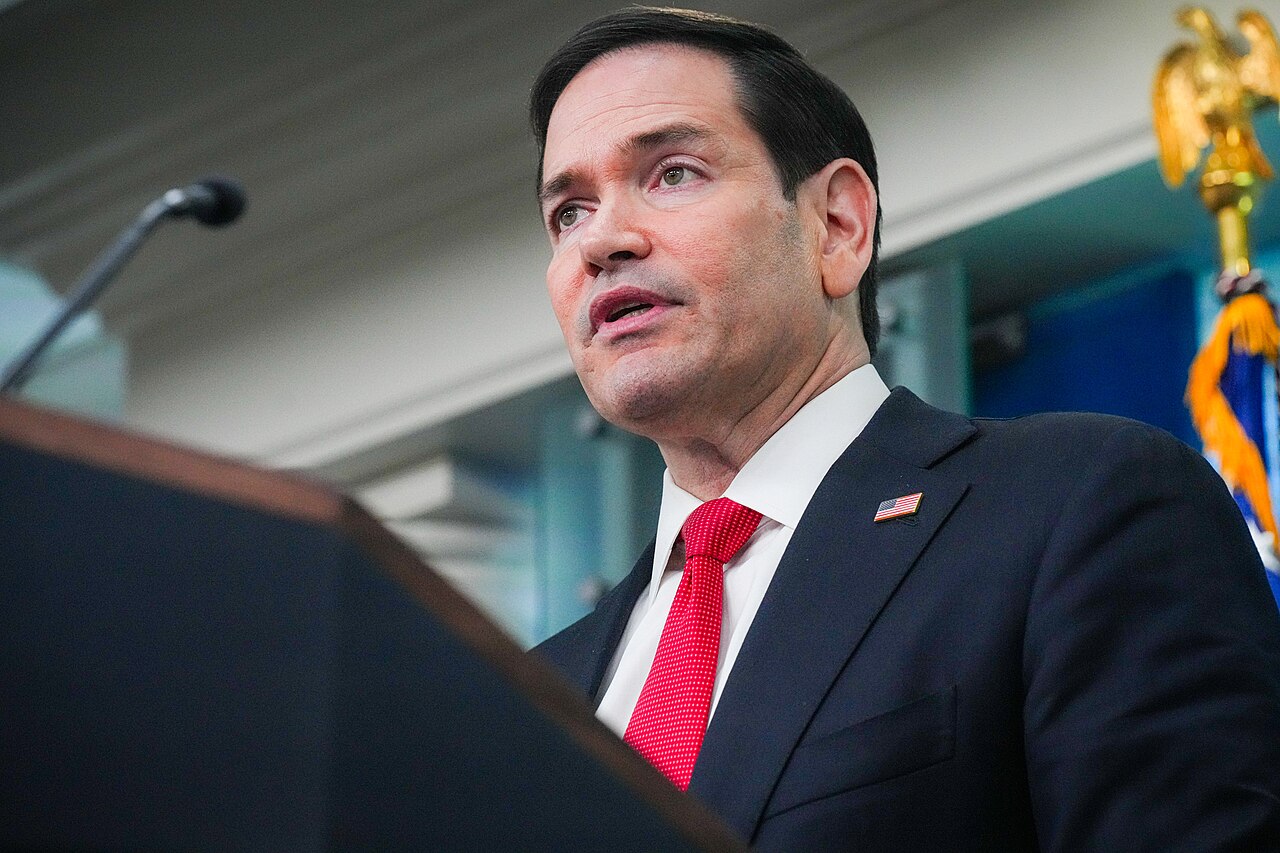
U.S. Secretary of State Marco Rubio has directed American diplomats to push back against claims that the United States has a “kill switch” capable of shutting off access to U.S. technology products, according to a State Department cable reviewed by Reuters.
The guidance comes after the Trump administration’s brief decision in June to restrict foreign access to Anthropic’s most advanced AI models, Mythos and Fable, citing national security concerns. Although the restriction was lifted later that month, it sparked criticism from allies, raised concerns over U.S. control of artificial intelligence, and fueled calls for greater technological independence in Europe and Asia.
The July 16 cable instructs U.S. diplomats to counter claims that Washington can arbitrarily disable critical technologies. It argues that temporary pauses or a 30-day cybersecurity testing period for powerful AI models should not be viewed as a “kill switch,” emphasizing that there is “no government magic button” controlling American technology.
The State Department referred questions to an opinion piece by Under Secretary of State for Economic Affairs Jacob Helberg, who criticized efforts to replace U.S. technology with domestic alternatives. He described such “autarkist measures” as counterproductive and harmful to innovation.
Rubio’s guidance also urges diplomats to oppose “digital sovereignty” policies that could restrict U.S. technology companies through localization rules, network usage fees, or country-specific regulations. Instead, diplomats are encouraged to promote American AI platforms as secure, reliable, and supported by resilient supply chains with minimal security risks.
The cable further argues that building competing AI ecosystems from scratch requires significant resources and time, positioning U.S. AI companies as the most advanced and practical choice for governments and businesses worldwide.
However, analysts say convincing allies may prove difficult. Edward Fishman of the Council on Foreign Relations said recent U.S. actions, including tariffs, sanctions, and temporary AI restrictions, have raised concerns among partners that dependence on leading American AI firms such as Anthropic and OpenAI could become a geopolitical vulnerability.
European Parliament member Aura Salla echoed those concerns, saying repeated actions by the Trump administration have weakened trust and reinforced Europe’s push to reduce reliance on U.S. technology, despite Washington’s assurances that no AI “kill switch” exists.