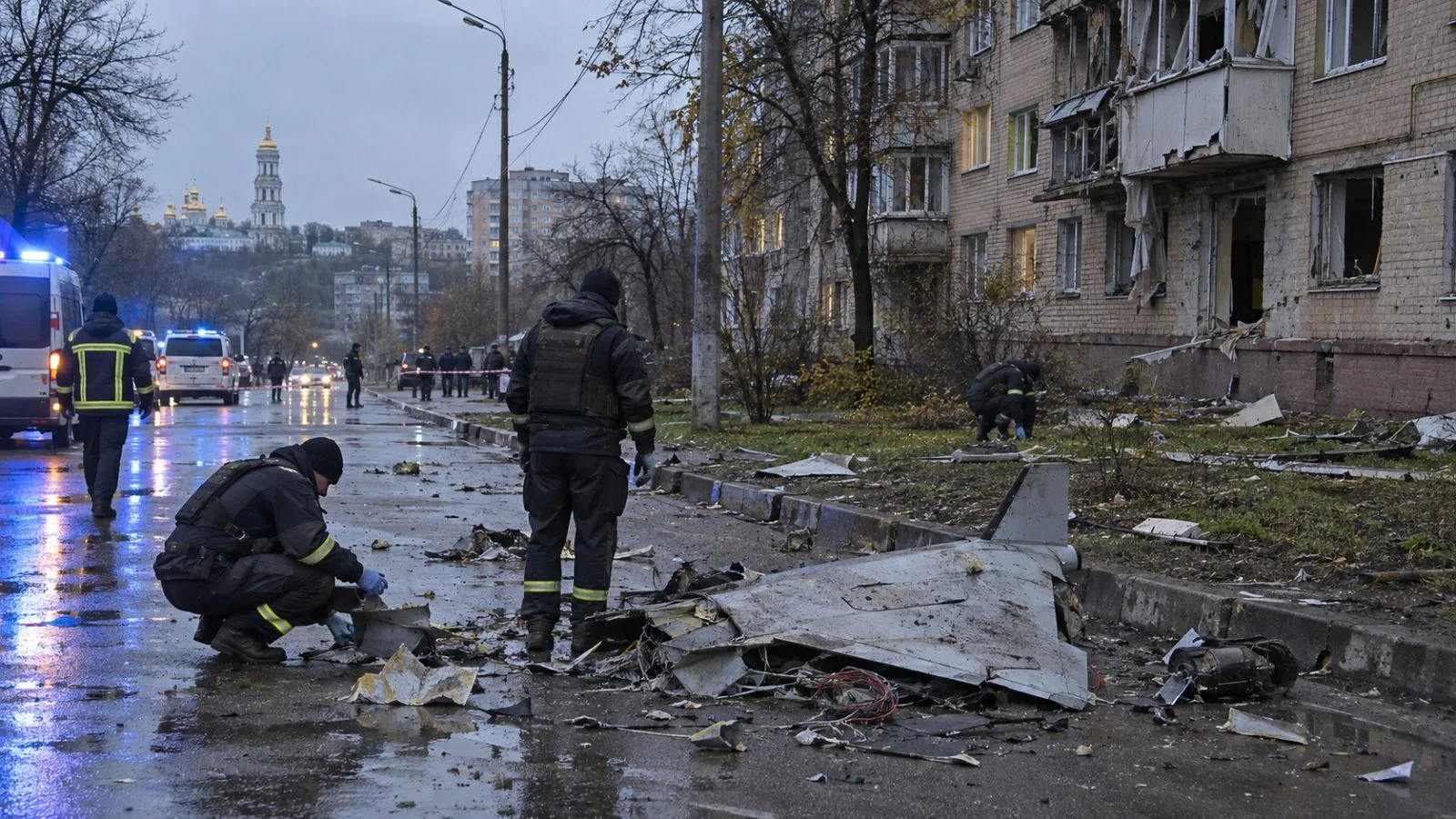
Russian drones traveled more than 19,000 kilometers over Kyiv between Aug. 1 and Oct. 20, 2026, according to an analysis by Ukrainian investigative outlet Texty.org.ua. The distance was nearly half the Earth’s circumference and more than four times the 4,300 kilometers recorded during the same period in 2025.
Texty reconstructed individual flight paths from reports by monitoring channels and counted only the sections inside Kyiv’s city limits. It identified 634 drones over the capital during the 2026 period, compared with 252 a year earlier.
The average route over Kyiv also lengthened to 30.5 kilometers from 17 kilometers in 2025, Texty said. Texty linked the longer routes to Russia’s use of jet-powered Shahed drones, which it said changed course more frequently than conventional drones.
Ukrainian officials have highlighted the shorter interception time posed by faster attack drones. President Volodymyr Zelenskyy said Aug. 30 that nearly 1,500 Russian drones had been used over four days, including about 800 jet-powered aircraft. Ukraine’s Defense Ministry says jet-powered drones can travel at about 400 km/h, reducing the time available for interception.
Ukraine is developing interceptor drones and other air-defense systems. Ukrainian officials say aviation, surface-to-air missiles, electronic warfare and unmanned units are being used against Shahed-type threats.
Texty said drone activity over Kyiv declined somewhat in November, but presented possible reasons—including improved Ukrainian defenses or a shift toward attacks on energy infrastructure outside the city—as assumptions for future analysis.