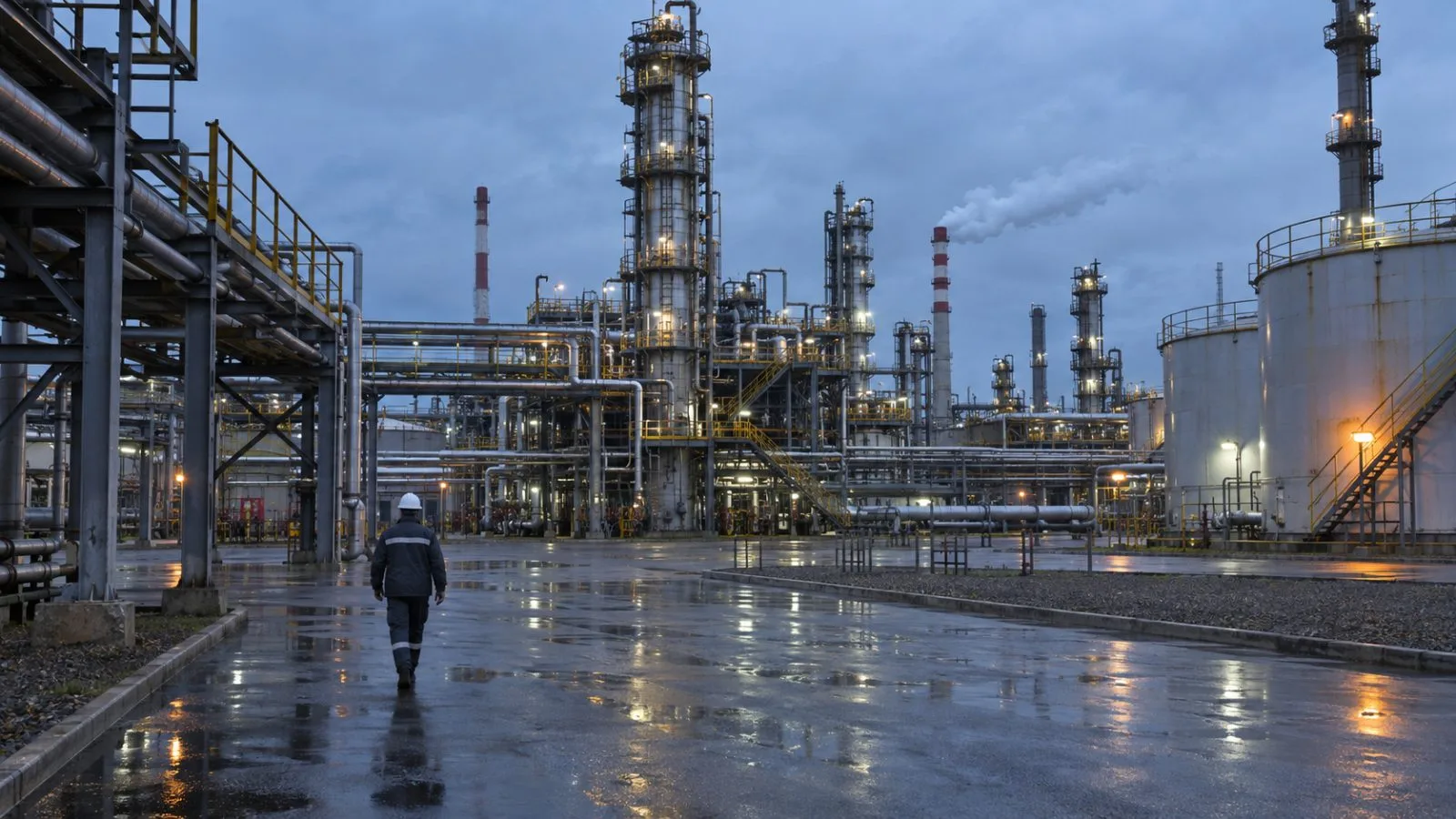
Russia’s oil refining slowdown is adding pressure to fuel markets as Ukrainian forces contest the battlefield initiative, while an Institute for the Study of War fellow urges allies to sustain Kyiv’s campaign.
The International Energy Agency (IEA) put Russian refinery throughput at 3.8 million barrels daily in June 2026, roughly 30% lower than a year earlier and its weakest level in over two decades. It estimated gasoline output was 20% below 2025 levels and diesel production nearly 30% lower.
The IEA also reported repeated damage, repair and security costs for refiners, fuel restrictions and shortages affecting Russian consumers, and lower diesel exports adding pressure to international fuel markets.
The Institute for the Study of War (ISW) says Ukrainian forces have challenged Russia’s ability to set the pace of operations since late 2025. Its mapped estimates show Russian net territorial gains close to zero since March 2026, alongside Ukrainian counterattacks in the Kupyansk, Oleksandrivka and Lyman directions. The institute bases these figures on its monitoring and mapping; they are not totals agreed by both sides.
Ukraine’s Defense Ministry separately claimed that more than 51% of Russia’s refining capacity was disabled. The Associated Press reported that it could not independently verify the ministry’s figure. The IEA’s throughput and product-output data do not establish what share of installed capacity was offline.
In an opinion essay published Nov. 3 by The Kyiv Independent, Nataliya Bugayova, a Modern Warfare Fellow at ISW, argues that Ukraine’s battlefield resistance and pressure on Russian energy infrastructure can work together to restrict Moscow’s options. She says the United States and Europe should resource Ukraine’s deep-strike campaign, while European governments should fund the Ukrainian military leadership’s operational planning into next year. She also calls for faster development of defenses against Russian jet-powered drones.
Bugayova points to Russia’s nuclear warnings during Ukraine’s 2022 advances in Kharkiv and Kherson, arguing that Western caution over arms transfers gave Moscow a way to limit further battlefield setbacks.
Separately, Russia’s Finance Ministry said it planned foreign-currency and gold purchases worth 279.42 billion rubles from Oct. 7 to Nov. 6. It forecast 289.46 billion rubles in additional oil-and-gas revenue for October and reported that September revenue was 10.04 billion rubles below its baseline. The announced purchase period runs through Nov. 6.