A Rutgers-led team recovered a complete West Nile virus genome from excreta produced by one of two laboratory-processed mosquito groups, demonstrating a possible route for broader surveillance without testing its field performance.
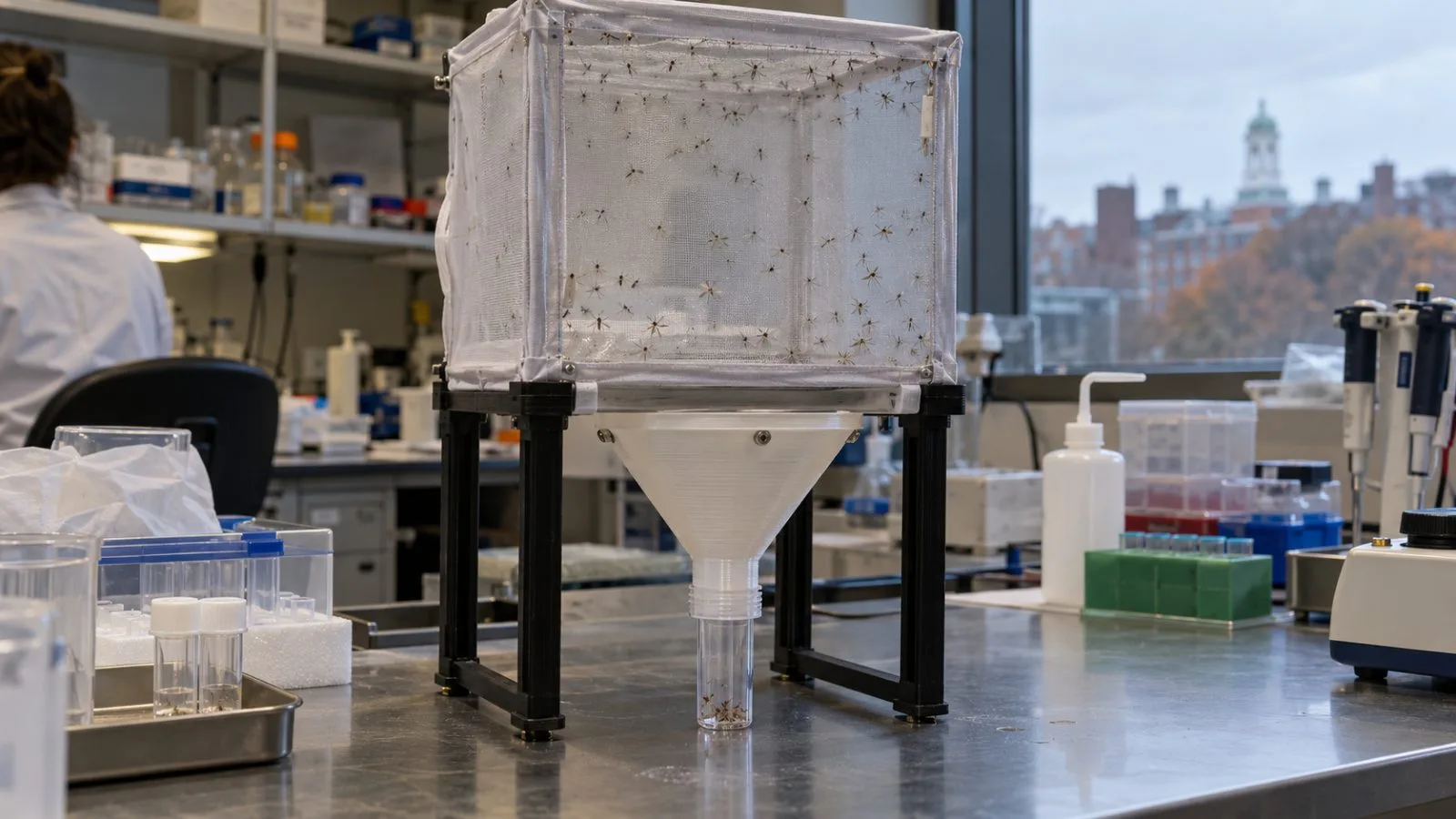
Published July 28, 2026, in Microbiology Spectrum, the study describes a 3D-printed funnel with a water-repelling interior that guided liquid into a collection tube. Rutgers entomologist Dana C. Price, a co-author, called the device a “mosquito toilet.”
Researchers trapped wild Culex mosquitoes at an urban yard in New Brunswick, New Jersey, on Sept. 12, 2021, and again on Sept. 21, 2022. They kept the catches as separate groups of 50, fed the mosquitoes dyed 10% sucrose solution and held them above the funnel for 18 hours in a lab. Each tube gathered about 45 to 55 microliters of liquid excreta.
The 2022 sample produced the West Nile virus genome, with read coverage above 900×. A confirmatory PCR test was positive for that sample and negative for the 2021 sample. The analysis also found six genetic scaffolds, or assembled sequence fragments, with top matches to Hedwig and/or Asum viruses. The researchers described this as the first report of Hedwig-like viruses from the Americas, but the study does not show that those viruses cause disease. It also detected genetic material from trypanosomatid parasites and sequences the authors considered potentially novel.
A 2018 study had also detected Ross River and West Nile virus RNA in mosquito excreta. The Rutgers team applied broad genetic sequencing to search for a range of material, including sequences researchers did not target in advance. The study says conventional mosquito surveillance involves identifying and pooling insects, with careful handling to preserve genetic material. The researchers see potential value for public-health surveillance in remote or resource-limited areas.
The experiment covered one New Jersey location, and researchers transferred the mosquitoes to the funnel in a laboratory. Excreta alone cannot establish whether a virus infected the mosquito or whether the mosquito could transmit it. The paper also refers to an additional DNA library from a “2020 sample,” although its methods date the collections to 2021 and 2022; it does not reconcile the references.
The researchers say they are working toward devices for field use. The study did not assess how the method performs in routine surveillance or across other locations.