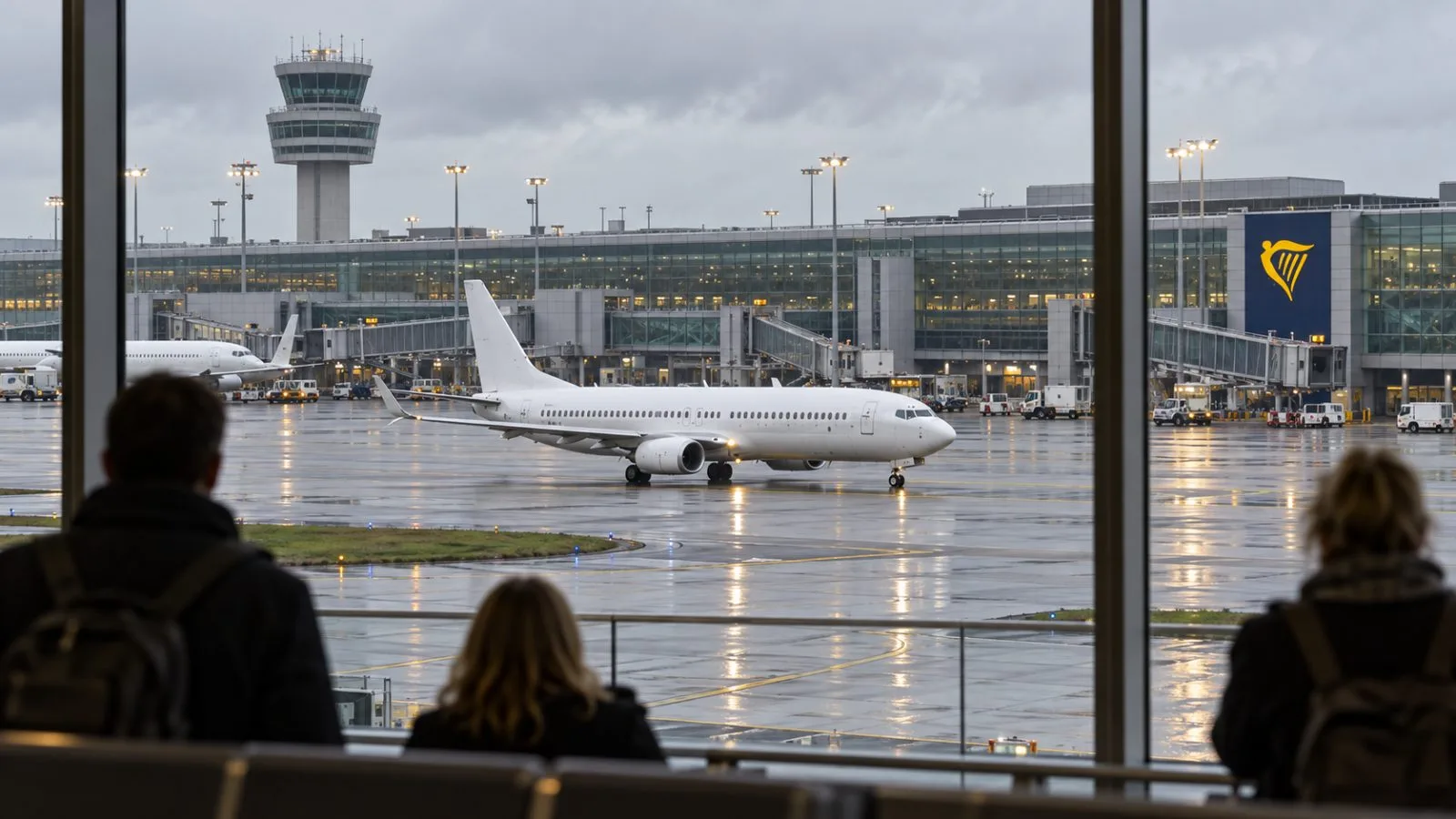
In an Oct. 20 Euronews interview, Ryanair CEO Michael O’Leary called for a carbon levy on every flight landing in or departing from Europe, challenging the scope of EU carbon charges.
In that interview, O’Leary called European Commission President Ursula von der Leyen “useless” and the European Parliament a “ship of fools.” He argued that the bloc’s climate rules add to the cost of flying.
The European Commission says the EU’s Emissions Trading System (ETS) applies under the same conditions to all airlines operating a covered route, regardless of nationality. It mainly covers flights within the European Economic Area, plus departures to the United Kingdom and Switzerland. Coverage depends on the route flown.
European Union Aviation Safety Agency (EASA) data show that flights longer than 4,000 kilometers generated 46% of carbon dioxide emissions from departures at EU and European Free Trade Association airports in 2023, although they accounted for 6% of those departures.
Separately, Ryanair announced 1.1 million fewer seats and 20 fewer routes in its Belgium winter 2026 schedule, along with plans to move six aircraft from Brussels Charleroi and Zaventem. The airline says Belgium’s departure tax prompted the reductions and that it will shift capacity to lower-cost destinations elsewhere in Europe.
Ryanair cited a €7 per-passenger tax for 2027. Belgium’s published tax code instead lists €5 for destinations more than 500 kilometers from its reference airport and €10 for nearer destinations. A law published May 30 raises the €5 rate to €10 on Jan. 1, 2027.
The Commission has separately proposed extending carbon pricing from 2029 to some flights departing EU airports for destinations within 5,000 kilometers of Frankfurt Airport. The proposal awaits consideration by the European Parliament and Council. The Belgian tax change is due Jan. 1, 2027, and the Commission aims to reach an agreement on its proposal in the first quarter of 2027.