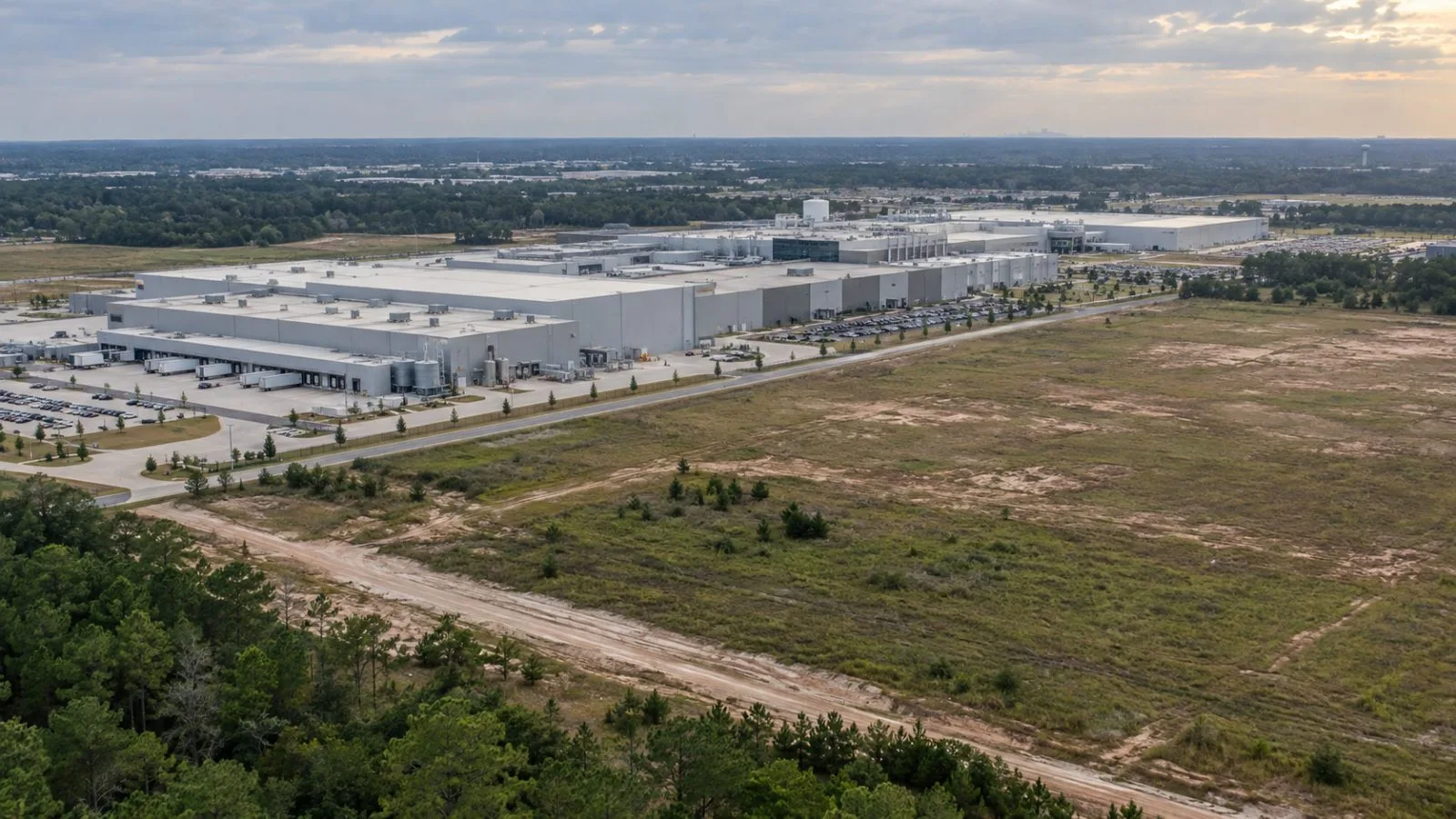
SEG Solar plans a $950 million heterojunction (HJT) cell plant in Texas after signing a land agreement near Houston, adding cell production beside its module operations and expanding manufacturing at its Tomball campus.
The proposed site is next to Tomball #1, a module facility SEG lists at 4 gigawatts (GW) of capacity, and Tomball #2, a 4.6-GW module manufacturing facility under construction. The cell plant would add production of a component used in solar modules at the same location. SEG says its campus plans aim to bring cell, module and key-component manufacturing together.
The company’s broader plans for the campus also include warehousing, a research and development center, a certified testing laboratory, and future production lines for ethylene-vinyl acetate (EVA) and junction boxes.
SEG says the proposed cell facility would produce 4 GW of cells annually and cost $950 million. The company expects the project to create more than 700 local jobs. Texas Politics reported Oct. 29 that SEG had not disclosed a detailed construction schedule or public funding for the project.
In June, SEG said it was evaluating U.S. locations for a dedicated HJT cell facility. The company now says Texas-made modules using HJT cells produced in the United States would help developers and asset owners meet domestic-content requirements and improve project economics. Those are SEG’s expected benefits. SEG Solar CEO Jim Wood said the project would give customers “a more domestic supply chain with clearer sourcing.”
SEG is targeting operations for a 2-GW first stage in 2028, followed by a second 2-GW stage in 2029. The two phases account for the plant’s full planned annual capacity. The company has not provided a construction start date.