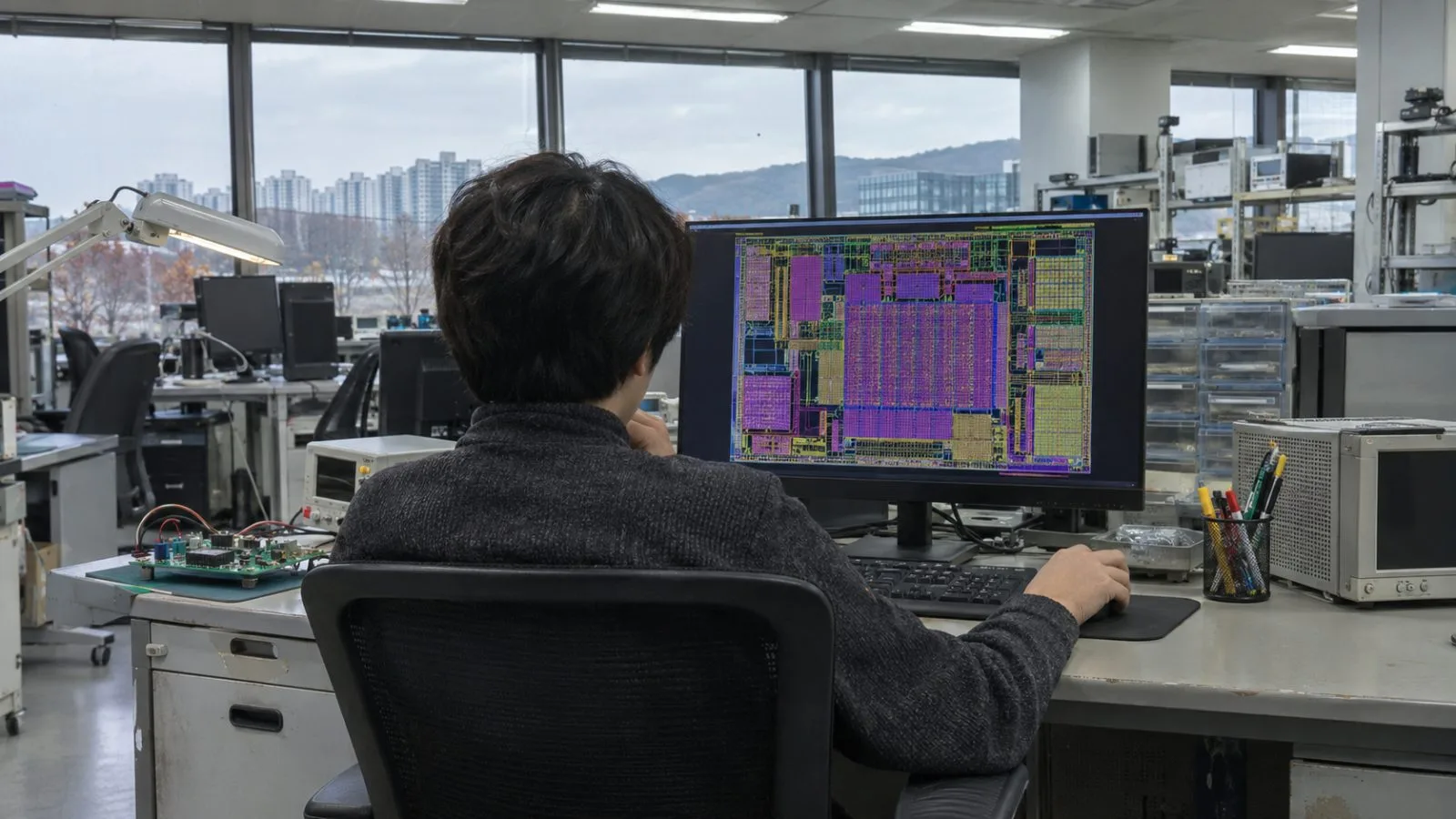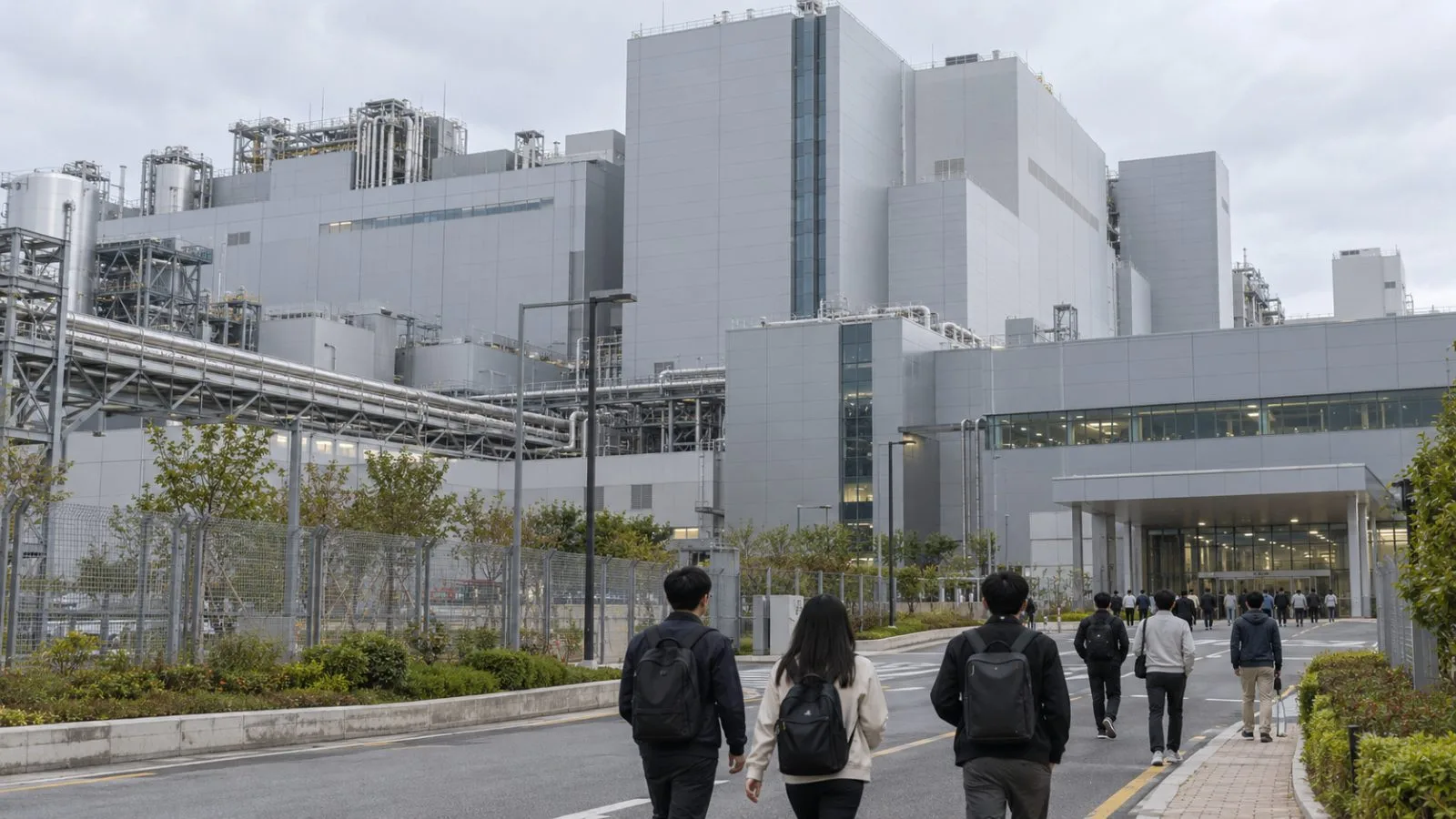
SK Group is positioning semiconductor capacity as the starting point for a broader AI business, with factories, power infrastructure and services expected to support further chip investment, The Korea Herald reported Sunday.
The report said SK’s plan begins with its AI chips enabling more factories designed for AI computing. Building those facilities would increase demand for electricity, infrastructure and services; growth in those areas could create further opportunities for semiconductor investment. SK also plans to expand into AI models and applications and join a “token economy” for trading AI computing resources and services.
For global AI infrastructure, the strategy links chip capacity with power needs and services. At the seminar, SK Group Chairman Chey Tae-won said, “No one can do everything alone in the AI era,” and called for global partnerships.
Chey presented the strategy at SK’s 2026 CEO Seminar, which ran Nov. 12-14 at Icheon’s SKMS Research Institute in Gyeonggi Province. Among about 50 attendees were SK Supex Council Chairman Chey Chang-won and Executive Vice Chairman Chey Jae-won.
Executives agreed to continue Portfolio Rebalancing 2.0, which seeks to reduce inefficient operations and concentrate on core businesses. The Korea Herald also reported that SK plans to apply AI more broadly across its operations, with the aim of raising productivity and profitability.
The report described AI projects across several affiliates. SK hynix is updating its smart fabs with AI and digital twin technology. SK Innovation introduced an ontology-based process map at its Ulsan CLX complex that connects equipment and operational data to support production yields. SK Telecom is automating network and service operations, while SK Gas uses AI to assess market conditions and make operating knowledge easier to use in decisions.