


 Epic Games Delays Disney Shooter, Shifts to AI-First Development
  European Auto Stocks Rise as EU-China Trade Deal Targets Hybrid Imports
  Oracle Uses Trucked Natural Gas to Power AI Data Centers Amid Pipeline Delays
  Samsung, SK Hynix Shares Plunge as China Chip Competition Grows
  Solidigm Taps Goldman, Morgan Stanley for $10 Billion US IPO
  Elon Musk Accuses Indian Telecom Giants of Blocking Starlink Launch
  Anthropic Launches Claude Dashboards and Motion AI Tools
  Nvidia’s China AI Chip Market Share Falls to 34% as Huawei Gains Ground
  Zcash Plans Quantum-Resistant Security Upgrade for January
  Most Americans Oppose Election Betting on Prediction Markets, Poll Finds
  Amazon in Talks to Acquire AI Startup Decart for $7 Billion
  Hong Kong’s Second Solana ETF Launches With Lower Fees
  TSMC Profit Set to Surge 65% as AI Chip Demand Drives Record Earnings
  Canton Network Expands in South Korea With Major Partnerships
  Apple Supplier Luxshare Faces US Patent Probe, Sees Limited Impact


 Add as a preferred source on Google
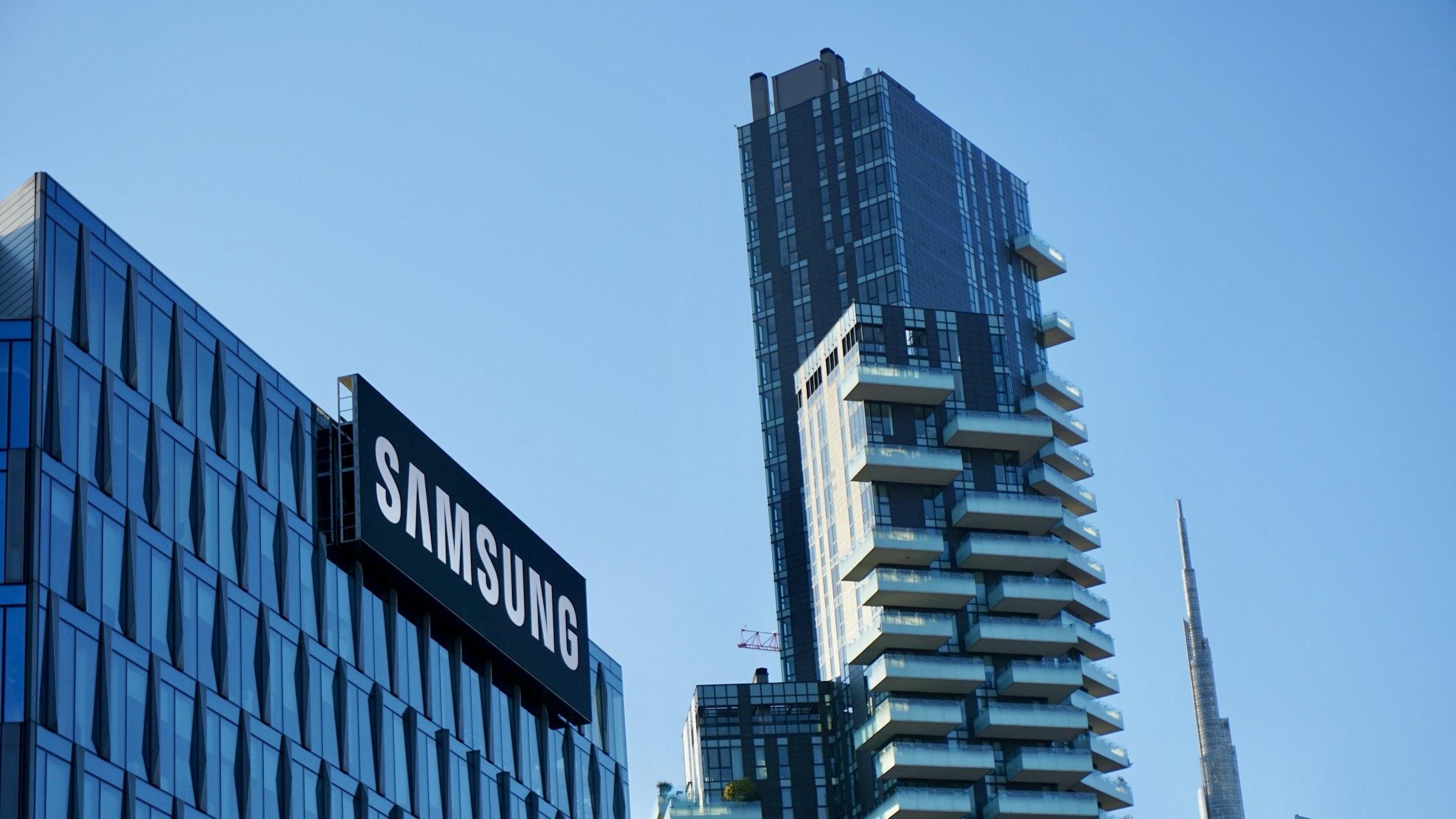
Samsung Electronics is set to generate over $100 million in sales from its advanced chip-packaging division this year. At the same time, Nvidia announces plans to procure high-bandwidth memory (HBM) chips from the tech giant. This marks a significant stride in AI and memory chip technology.
Samsung Sets Sights on AI Chip Market Dominance with Advanced Packaging Unit
Samsung established advanced chip packaging as a business unit last year, and Kyung believes the investment will begin to bear fruit in the second half of this year.
Kyung made his remarks at Samsung's annual general shareholder meeting. He said that Samsung's memory chip business aims to increase its profit share over its market share this year.
In the latest report by data provider TrendForce (via Reuters), Samsung's market share in DRAM chips used in technology devices increased to 45.5% in the fourth quarter of last year.
To accomplish this, Samsung intends to gain a competitive advantage in high-end memory chips required by rising artificial intelligence demand, including mass production of a 12-stack version of high-bandwidth memory (HBM) chips known as HBM3E.
According to Kyung, Samsung will combine its memory chip, chip contract manufacturing, and chip design businesses under one roof to satisfy customer needs for a future generation of HBM chips called HBM4. This generation is expected to be released in 2025 with more customized designs.
Answering a shareholder question about Samsung's recent setback in the current HBM market compared to rival SK Hynix, Kyung said: "We're better prepared to prevent that from happening again in the future."
Samsung Electronics shares rose as much as 6.04% on Wednesday, on track for their biggest one-day gain since early September, after Nvidia (NVDA.O) CEO Jensen Huang announced that the AI semiconductor leader is qualifying Samsung's HBM chips for use.
According to Kyung, Samsung expects tangible results from other memory products developed for AI use, such as compute express link (CXL) and processing-in-memory (PIM) products.
Nvidia Partners with Samsung for HBM Chips, Aiming to Boost AI Chip Efficiency
Nikkei Asia reportedly Nvidia intends to buy high-bandwidth memory (HBM) chips from Samsung to catch up with rival SK Hynix, which recently began mass production of its next-generation HBM chip.
"HBM memory is very complicated, and the value added is very high. We are spending a lot of money on HBM," Jensen Huang, Nvidia co-founder and CEO, said at a media briefing on Tuesday in San Jose, California.
Huang stated that Nvidia is in the process of qualifying Samsung's HBM chips and will begin using them in the future.
"Samsung is very good, a very good company," Huang added.
Meanwhile, SK Hynix, Samsung's biggest memory chip competitor, announced on Tuesday that it had begun volume production of the next-generation high-bandwidth memory chip, known as HBM3E.
HBM has become an essential component of the AI boom, providing much-needed faster processing speeds than traditional memory chips.
"HBM is a technology miracle," Huang stated, adding that HBM also improves energy efficiency and can help make the world more sustainable as power-hungry AI chips become more prevalent.
Samsung and SK Hynix Ramp Up HBM Production, Fueling Nvidia's AI Ambitions
SK Hynix has been the primary supplier of HBM3 chips to Nvidia, the leader in AI chips. While SK Hynix did not reveal the client list for the new HBM3E, an executive told Nikkei Asia that the chip will first be shipped to Nvidia and used in its latest Blackwell GPUs.
Samsung has been heavily investing in HBM to catch up with its competitors. The company announced in February that it had created HBM3E 12H, the industry's first 12-stack HBM3E DRAM and the highest-capacity HBM product to date. Samsung stated that it will begin mass production of the chip in the first half of this year.
"The upgrade cycle for Samsung and SK Hynix is incredible," Huang told reporters at the media briefing on March 19, "As soon as Nvidia starts growing, they grow with us."
"I value our partnership with SK Hynix and Samsung very incredibly," he added.
Photo: Babak Habibi/Unsplash







