


 Morgan Stanley Raises TD Synnex Price Target to $359 on Strong AI Demand
  BlackRock Sees AI Agents Fueling New Crypto Demand
  TD Cowen Starts SpaceX at Buy, Sees AI Compute Driving Growth
  Europe’s AI Data Centre Boom Strengthens Case for Nuclear Power
  Vitalik Buterin Says Hegota Could Be Ethereum’s Last Conventional Fork
  China Says U.S. Shares Responsibility for AI Governance
  Amazon Eyes $8 Billion Nvidia Chip Spinoff to Fund AI Expansion
  Pi Network Price Holds $0.087 as Protocol 28 Mainnet Upgrade Nears
  Apple CEO John Ternus Plans Major Overhaul
  TSMC Accelerates 2nm Expansion as AI Chip Demand Surges
  SoftBank Shares Fall After $10 Billion OpenAI Investment
  DeepSeek, Huawei Partner on Ascend AI Chip Programming Tools
  Anthropic Targets $2 Trillion Valuation in Planned IPO
  Apple iPhone 18 Pro Sales Jump 12% in China
  CSL Partners With AWS to Bring AI Into Drug Research
  Robinhood Launches AI Agents for Automated Trading
  Trump, Tech Leaders Sign ‘Morally Binding’ AI Safety Accord


 Add as a preferred source on Google
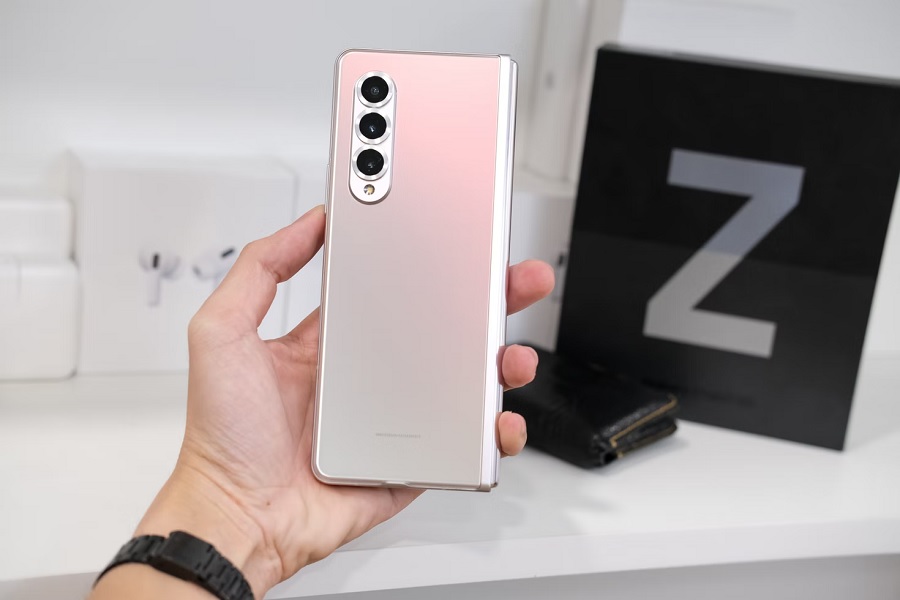
Samsung has reportedly contemplated changing how it applies biometric sensors for Galaxy Z Fold 4 and Galaxy Z Flip 4. But the tech giant ultimately decided to keep using a side-mounted fingerprint reader.
More OEMs have started using in-display fingerprint sensors on their premium smartphones in recent years, including Samsung. The company has even received praises for the improvements of its ultrasonic in-display fingerprint scanner on the Galaxy S22 series. However, this technology might not be used on its foldable phones anytime soon.
Business Korea said the company has also considered doing the same for its next series of Galaxy foldable phones but decided not to implement it this year. The same report added the Galaxy Z Fold 4 and Galaxy Z Flip 4 would still have their fingerprint scanners integrated into the side-mounted power button just like their predecessors. Samsung reportedly deemed this to be “more advantageous” and would offer a better user experience.
Samsung previously filed a patent for a dual-sided sensor, which was discovered late last year, sparking speculations that the company could use in-display fingerprint scanners on its future foldable phones. In the illustrations provided by LetsGoDigital, Samsung’s concept includes two sensors that would allow users to have their fingerprints scanned from the external and main displays.
It appears that the main purpose of having a dual-sided fingerprint scanner is to allow users of a foldable phone to unlock the device when it is either folded or unfolded. While this could be a great innovation, in terms of functionality, Samsung may not have a reason to rush into adopting this technology for the Galaxy Z Fold 4 and Galaxy Z Flip 4. Having the fingerprint scanner on the side power button already allows for easy access to the sensor when biometric authentication is needed, regardless of which screen is being used.
The report also noted that the Galaxy Z Fold 4 and Galaxy Z Flip 4 are planned to launch in the third quarter of 2022. That falls within the usual schedule of Samsung’s summer product launch. Last year, the third generation of foldable smartphones was unveiled on Aug. 11 and arrived in stores later in the same month.
Photo by Thai Nguyen on Unsplash







