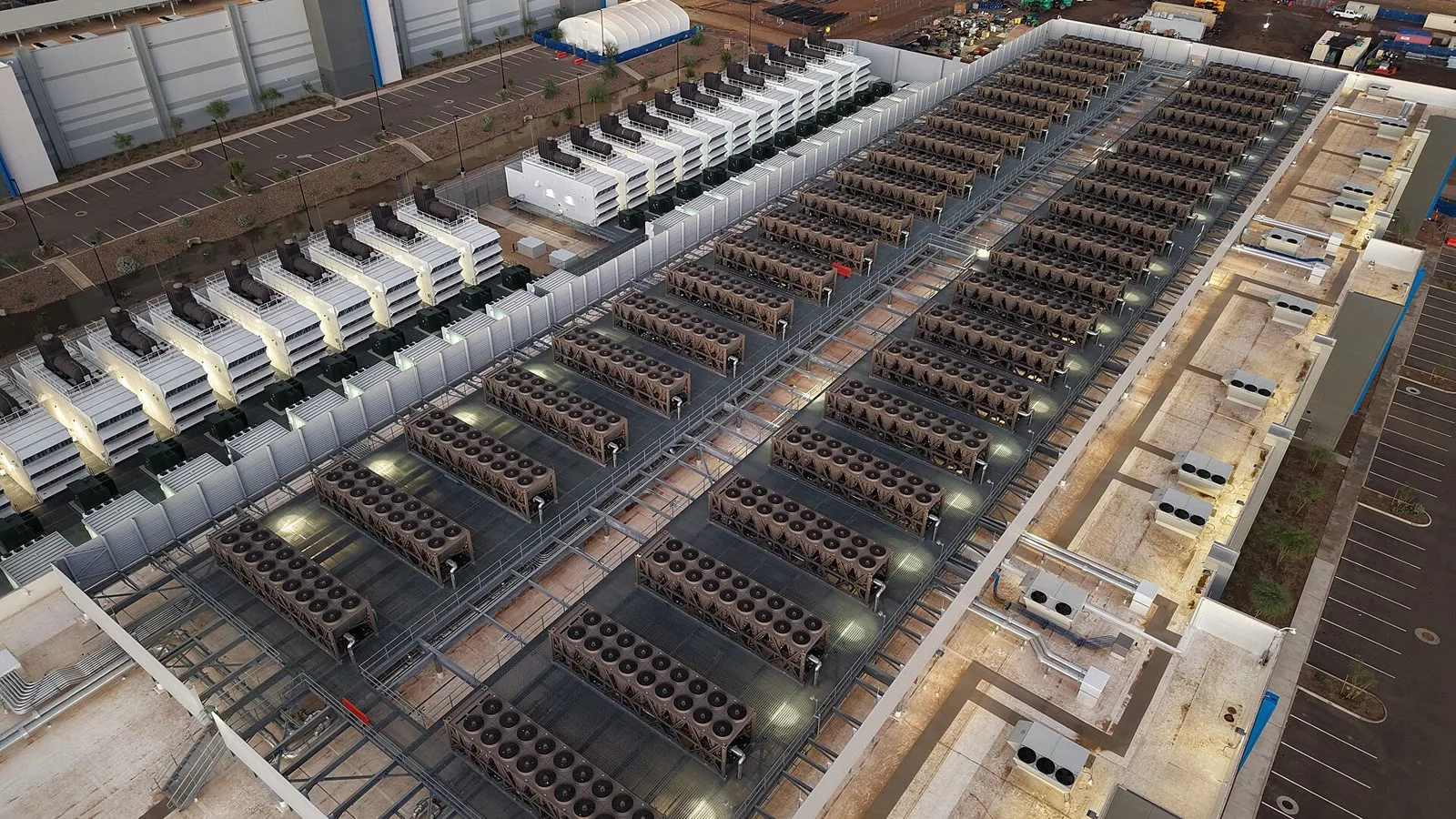
Technology stocks faced pressure as investors questioned how companies would pay for artificial intelligence spending and earn returns, Alpine Saxon Woods investor Sarah Hunt said in an interview published Oct. 30.
Strong earnings and enthusiasm for AI had supported sentiment, but both now faced doubts. Speaking on Bloomberg Television, Hunt questioned whether Alphabet's AI business could eat into the existing operations financing its expansion.
Cash flows supporting that spending were moving from modestly positive to negative looking into 2027. Uncertainty about future returns helped explain why investors were paying less for companies relative to their earnings.
“We're gonna spend it, they're gonna come, and then there will be money,” Hunt said, describing the uncertain path from spending to revenue. Companies previously could explain what spending a dollar might earn. Oil-related inflation and component shortages added to the difficulty as companies sought financing through borrowing and share sales.
Moving into other sectors offered limited protection if confidence weakened in the theme driving the broader market. Hunt described her firm's focus on balance sheets and cash flow, with opportunities in industrial companies and health care. Higher interest rates had hurt industrial stocks, but construction and expansion continued, and parts of the economy outside AI were doing well.
Energy earnings were easier to connect to commodity prices, although oil's swings around ceasefires and other developments had made the trade difficult. Price rises had quickly reversed, discouraging investors from holding energy stocks. Hunt saw longer-term opportunities as rising power consumption increased demand, while some energy infrastructure could perform across different conditions.
Damage to refining capacity linked to Russia and Ukraine complicated that outlook by raising fuel-product prices. Such increases could keep inflation higher for longer and were harder to address than expensive crude alone. Hunt considered the longer-term prospects for energy assets stronger than investors had expected even five years earlier, while leaving the timing uncertain.
Hunt had initially expected the midterm elections to remove uncertainty. A large Democratic victory could instead bring more volatility if investors questioned the consequences for data centers. Power shortages already limited the likelihood that all planned projects would proceed, and regulatory delays could create another obstacle.
Her firm had modestly increased duration, a measure of bonds' sensitivity to interest rates, after rates rose following a September Federal Reserve rate increase. Its holdings still favored shorter maturities because longer-term bonds remained volatile. The firm had also sought companies less exposed to cash-flow swings, including Microsoft, whose earlier software-related decline Hunt considered excessive.
Hunt questioned whether investing abroad would provide an effective hedge. Asian markets also depended on memory and chip businesses, while Europe faced government-debt and country-specific difficulties. She continued to see opportunities among U.S. companies, including businesses operating overseas and parts of the domestic market less dependent on AI.