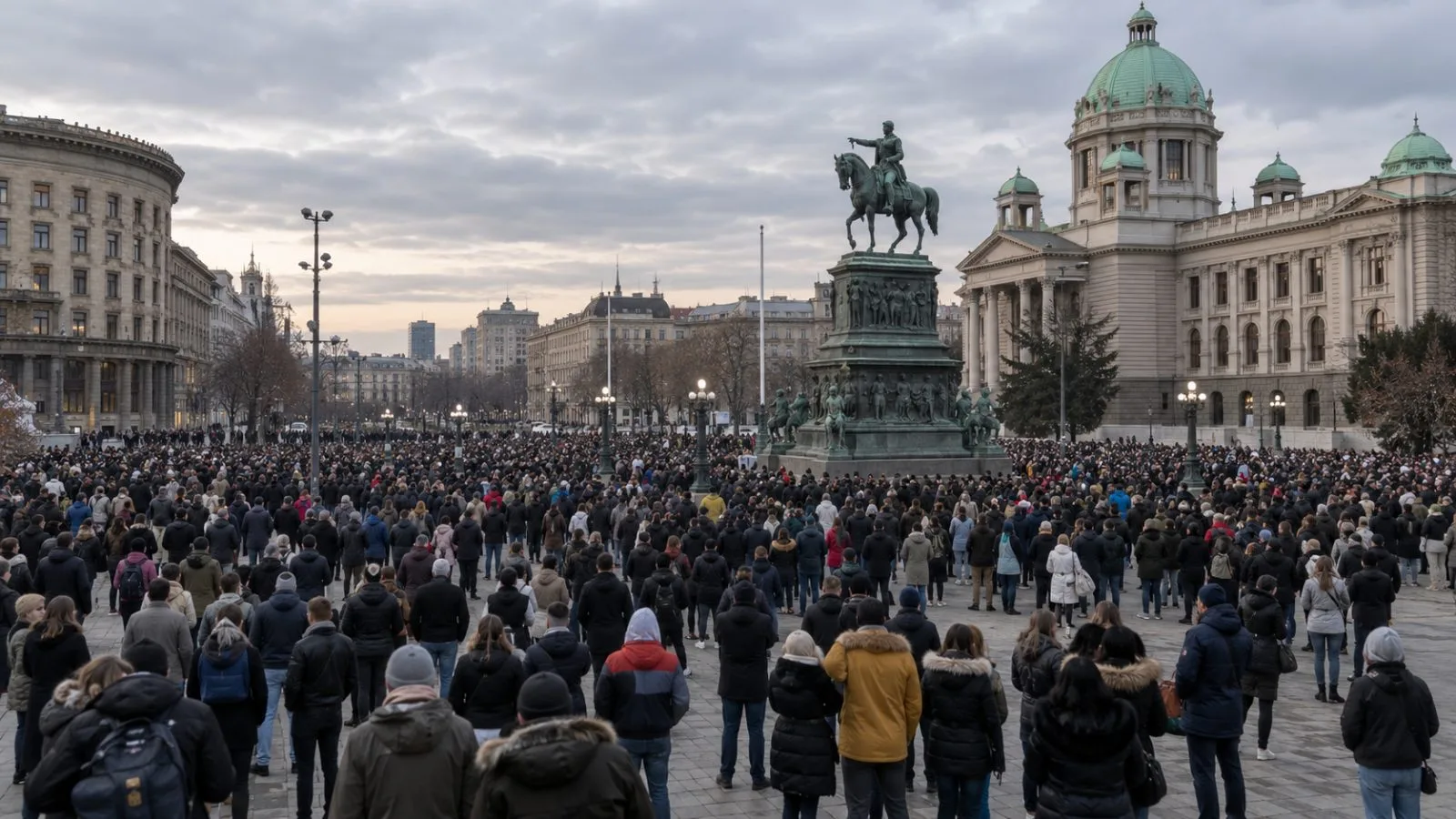
A rally for Serbia’s student-backed opposition list drew sharply different crowd estimates in Belgrade on Thursday, three days before an early parliamentary election that will determine the balance of power in the 250-seat National Assembly.
The Public Assemblies Archive estimated about 150,000 attendees. Its count combined video footage with estimates of the space demonstrators occupied and crowd density. The Associated Press put the crowd in the hundreds of thousands. AP also reported that student speaker Natalija Stepanovic told the rally, “Three more days are left, and they will pass.”
The demonstration followed student marchers’ arrival in Belgrade on Wednesday. On Sept. 15, the Republic Electoral Commission proclaimed “Student List – Students Win” as an electoral list for the vote.
The Serbian Progressive Party (SNS) said its Main Board chose former President Aleksandar Vučić as its prime minister candidate and lead name on the party list on Sept. 5. Vučić resigned as president on Sept. 27 to participate in the parliamentary election. The Organization for Security and Co-operation in Europe (OSCE) said its Office for Democratic Institutions and Human Rights (ODIHR) confirmed the resignation and that National Assembly Speaker Ana Brnabić was serving as acting president.
Serbia’s voters elect members of the 250-seat National Assembly, which chooses the government; they do not elect the prime minister directly. ODIHR says the SNS has governed in coalition with the Socialist Party of Serbia since 2012.
The student movement emerged after a canopy collapsed at the Novi Sad railway station in November 2024, killing 16 people. ODIHR said its early demands focused on state accountability and the rule of law, then widened to include calls for early elections.
In an Oct. 9 interim report, ODIHR said some recommendations remained outstanding, covering voter pressure, campaign-finance oversight, certain uses of state resources, media-regulator independence, journalist safety and voting rights. Serbia’s government said in September that election conditions had improved significantly. The parliamentary vote is scheduled for Oct. 25.