


 Apple Supplier Luxshare Sees Limited Impact From US Patent Probe
  TSMC Q3 Revenue Beats Estimates as AI Chip Demand Surges
  OpenAI Annualized Revenue Hits $50 Billion, Below Earlier Estimates
  US Suspends Microsoft, Adobe From Green Card Program
  Samsung Q3 Profit Hits Record High on AI Memory Demand
  DogecoinVM Makes DOGE Transactions 300x Faster
  Micron Shares Rise 4% Despite Taiwan Strike Risk
  TSMC Profit Set to Surge 65% as AI Chip Demand Drives Record Earnings
  Yandex Data Center Hit by Drone Strike as Russia-Ukraine Cyber Infrastructure Attacks Escalate
  Amazon in Talks to Acquire AI Startup Decart for $7 Billion
  Florida Seeks Tougher Meta Rules to Protect Young Users
  Oracle Uses Trucked Natural Gas to Power AI Data Centers Amid Pipeline Delays
  OpenAI Revenue Hits $50 Billion, Below Earlier $70 Billion Estimate
  Moonshot AI Executives Seek Settlement Ahead of Hong Kong IPO
  Jameson Lopp Downplays AI Threat to Bitcoin Cryptography
  Apple Cuts iPhone 18 Pro Production Orders Amid Weak Demand
  Amazon Cuts More Jobs as AI Investment Expands


 Add as a preferred source on Google

Heating of space and water in buildings accounts for about 44% of all energy consumed globally according to the International Energy Agency. This heat is still overwhelmingly generated by burning fossil fuels, making it an enormous source of the carbon emissions driving climate change. But you might be surprised to learn just how much heat is wasted each day. Finding ways to recover and recycle it could drastically reduce emissions.
Consider a standard petrol or diesel car. The engine provides the momentum and produces excess heat that a radiator removes. This heat is largely wasted, except in winter when it warms the windscreen and passengers. Generators that supply electricity to the grid work in a similar way – their excess heat could be diverted to heat buildings instead. In the UK, there are many gas engines on standby to supply the power grid when needed. I was part of the team that linked the heat from a gas power generator to a building central heating system.
The idea of combined heat and power is nothing new. In Nottingham, the energy for the city’s district heating network and some electricity comes from a waste incinerator. This also reduces the amount of rubbish sent to landfill. But once you realise just how much heat is out there, waiting to be reused, the problem of decarbonising heating doesn’t seem so mighty. Here are seven examples.
1. Data centres
Computers processing data get hot – just feel the bottom of a laptop. Data centres are rooms filled with computers that may house the IT servers for an entire office building. The heat they generate is extracted and dumped, usually by energy-hungry air conditioners.
Elsewhere, data centres have been used as “digital boilers” to heat swimming pools. In many cases, cold water runs through pipes between the two buildings where it helps to cool the data centre servers. The heated water is then pumped back to warm the pool.
2. Ice rinks
Believe it or not, any artificially cooled ice rink produces lots of heat. This is because of the refrigeration cycle that keeps the water you skate on frozen. Think about this process as you would your freezer at home. When you put something at room temperature in the freezer, like a water tray for making ice cubes, the heat is extracted to freeze the water and pumped outside of the fridge. You can feel the side or the back of the freezer getting warmer as this happens.

Keeping all the ice frozen generates a lot of heat. Ground Picture/Shutterstock
Similar to data centres, this heat can be captured by circulating water and distributing it via pipes to other parts of the building or buildings nearby.
3. Kitchens and bathrooms
In most homes, extraction fans and windows remove steam from kitchens and bathrooms. Certain types of ventilation systems can recover the heat from this humid air instead, reducing how much energy is needed for heating. It’s estimated that this could save between 23 and 56% of the cost of an energy bill when combined with other energy-saving measures, such as wall and loft insulation.
4. Wastewater treatment plants
Sewage and water treatment plants produce a lot of heat, which is generated from the composting of organic material in sludge (temperatures can reach 70°C). This excess heat can be reused directly or via heat pumps.
5. River and sea water
A heat pump works in a similar way to a kitchen fridge, in which the heat is extracted from the food and drink inside and released outside. The temperature of river and sea water changes less between days and seasons than the air, and heat pumps can use these stable water temperatures as a source of heating in winter and cooling during summer. Think about the water bottle inside the fridge as the river water, and the heat pumped outside the fridge as the source of heating for a house.

River, lake and sea water are stable heat sources for heat pumps. Amin Al-Habaibeh, Author provided
6. Flooded coal mines
The water in coal mines offers an even more efficient solution. Ground temperatures do not change much deeper than 1 metre. At much lower depths, temperatures actually increase. Abandoned coal mines tend to fill with lukewarm water from rain and the water table, and the UK has the equivalent of 400,000 Olympic swimming pools stored in these mines, all at a fairly stable temperature. In winter, when the weather is very cold, this warm water is a suitable source of heat that can be transferred to buildings via heat pumps.
7. You
The average human body emits around 100 watts of heat at rest. When exercising, that heat can reach 1,000 watts: enough to boil one litre of water in six minutes.
When people gather indoors, the heat they emit starts to accumulate. Crowded public places can be used to heat other parts of the same building or adjacent buildings.
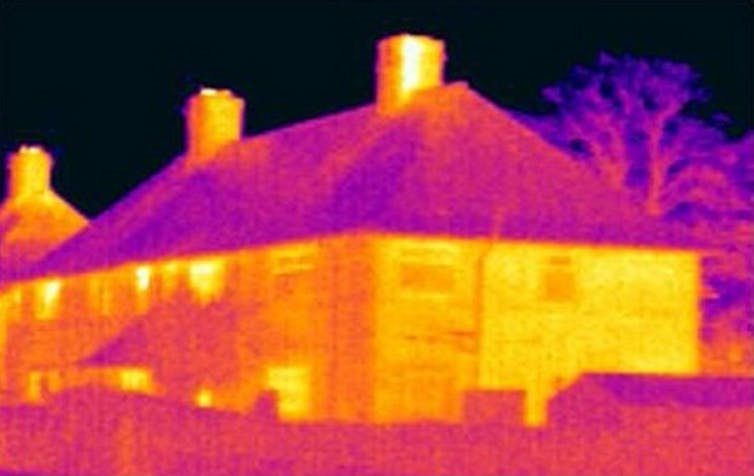
An infrared image of a house in winter: the lighter the colour, the warmer the surface. Amin Al-Habaibeh, Author provided
Infrared imaging reveals how much heat is typically lost from the buildings we spend much of our lives in. Combined with insulation and some of the technologies discussed here, humanity could meet much of its heating needs without additional sources – and cut one of the biggest sources of climate-warming emissions.







