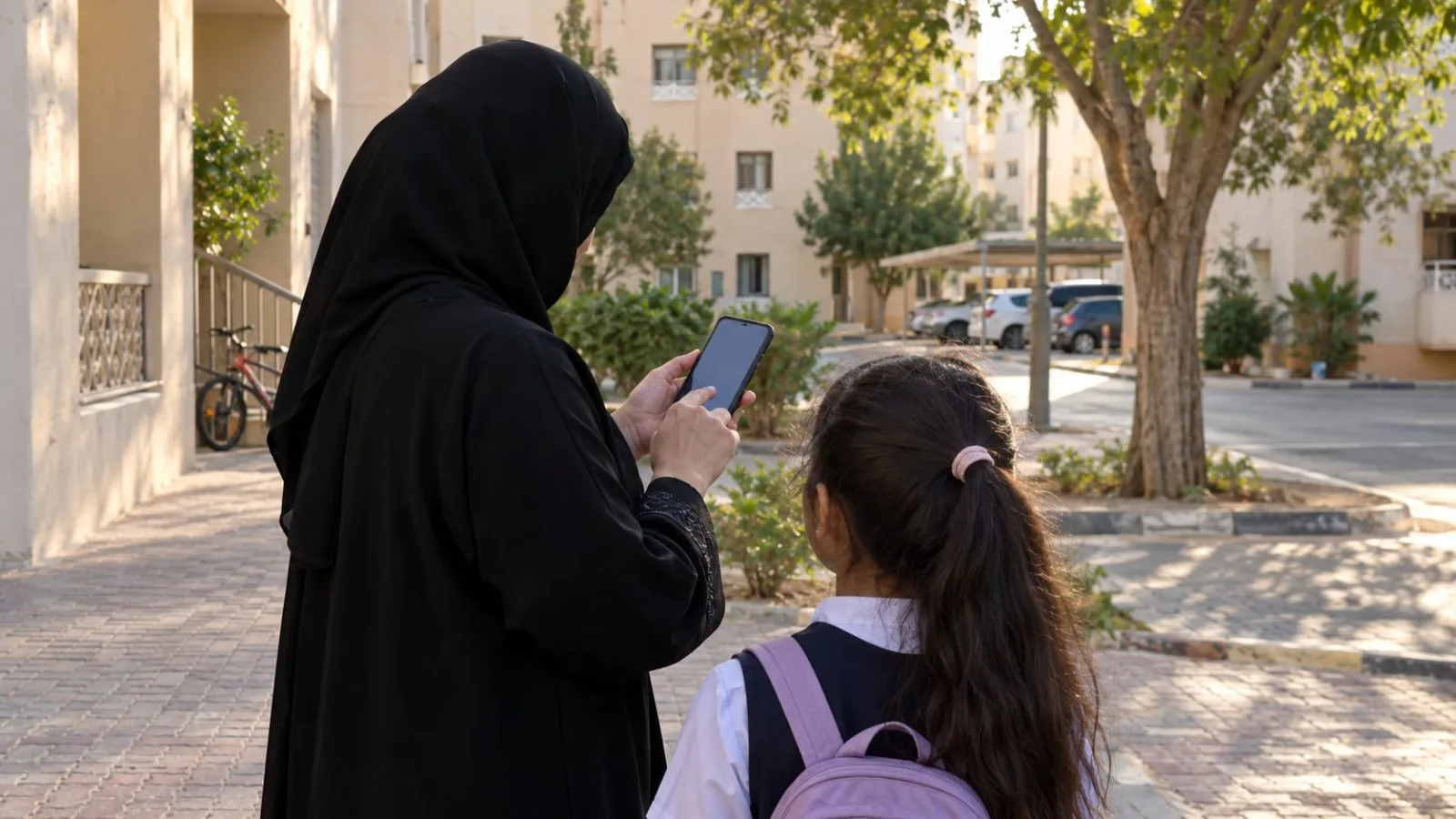
Sharjah’s Child Safety Organisation says artificial intelligence (AI) can turn ordinary family, school or social-media photos into fabricated sexual images used to threaten children, and has urged parents to monitor their children’s online lives.
In an Oct. 28 warning, the organisation said a child could face threats even without ever sharing a personal photo. Manipulated images may circulate among peers or strangers, while a perpetrator may use the threat of wider distribution to demand money, intimate images or other compliance. The organisation cited humiliation, anxiety, isolation and fear of attending school as possible effects.
The organisation recommends that parents check who can see children’s photos and avoid sharing details that could identify a child’s school, location or routine. It also urges parents to stay involved in children’s online activities and look for signs such as withdrawal, school anxiety or distress when messages arrive.
If abuse is suspected, parents should reassure the child, refuse demands and report the content to platforms and authorities, the organisation said. It advises saving usernames, links and threatening messages, seeking official guidance on evidence preservation, and not downloading or forwarding sexual images of children. Suspected child abuse or exploitation can be reported throughout the United Arab Emirates (UAE) at 800700.
Federal Law No. 3 of 2016 on Child Rights, known as Wadeema, defines child pornography to include a child shown in an actual, simulated or fictional sexual situation. The law prohibits producing, publishing, distributing, possessing or electronically sending such material.
Federal Decree-Law No. 34 of 2021 sets penalties for several forms of online abuse. Article 44 covers using information technology to alter or process an image, recording or scene to defame or insult someone; the penalty is at least one year in prison, a fine of AED 250,000 to AED 500,000, or both. Article 42 allows up to two years in prison, the same fine range, or both when online extortion or threats are used to make someone do something or stop doing it. A threat to commit a crime or dishonorable act, accompanied by such a demand, can carry up to 10 years of temporary imprisonment.