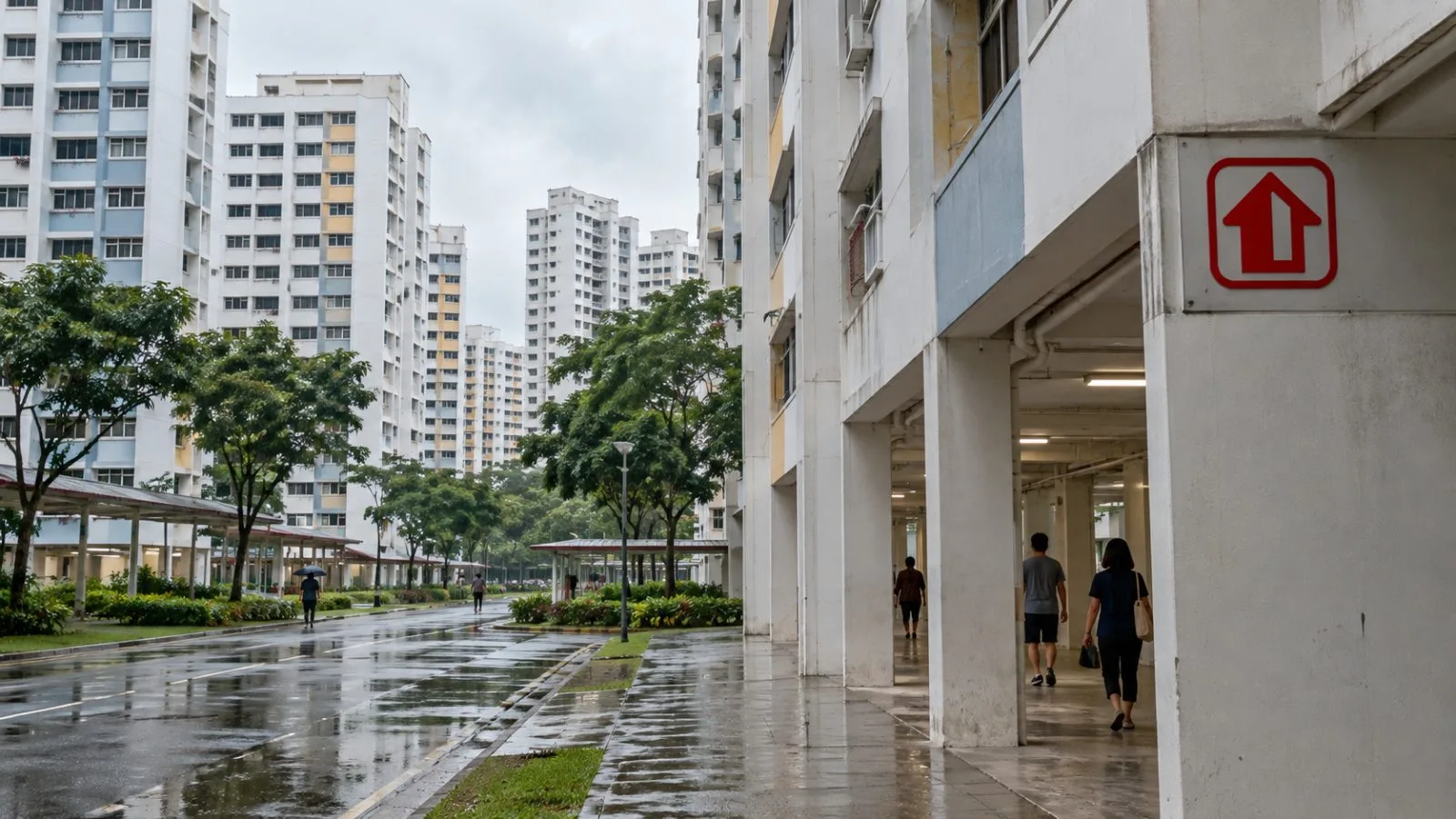
Singapore’s Housing and Development Board (HDB) has moved revised concepts for Maju Forest and Gillman Barracks into detailed planning, designating about six more hectares for greenery while retaining estimates for 11,000 homes.
HDB announced the revisions Oct. 28. At Maju Forest, the area designated for greenery grows from about eight hectares to 10, or roughly 45% of the 23-hectare site. At Gillman Barracks, it increases from eight hectares to 12, about 60% of the site’s 20 hectares of existing greenery. The agency’s before-and-after figures add up to about six more hectares designated for greenery across both sites.
HDB estimates the projects will provide about 4,000 public housing units at Maju Forest and 7,000 homes at Gillman Barracks, including about 5,500 public units. The agency said the preliminary totals will be reviewed as the designs develop; housing mix and launch dates will come later.
Minister of State for National Development Alvin Tan put the reduction from the original estimates at about 1,200 homes: roughly 400 at Maju Forest and 800 at Gillman Barracks. The revised plans followed public consultation held from July 10 to Aug. 6, 2026. HDB received about 7,200 submissions on Maju Forest and 2,300 on Gillman Barracks, while agencies engaged around 1,000 stakeholders.
HDB said it assessed vacant and brownfield locations suggested by residents. Some were already earmarked for housing, remained in use for other purposes or could not be released in time to help meet housing demand expected from the 2030s.
Residents’ views on the process remain contested. The Online Citizen reported that a joint statement from residents said a request to review revised options before their announcement was declined and that the changes should not be treated as residents’ endorsement.
Yun Hye Hwang, a landscape architecture professor at the National University of Singapore, argued in a Channel NewsAsia commentary that stakeholders should have a role in developing alternatives as agencies weigh housing, nature and heritage. Singapore’s earlier Dover Forest plan provides a precedent: after environmental studies and public engagement, HDB set aside the more biodiverse western half as a nature park and planned homes for the eastern half.
HDB said suggestions on amenities and building design could be considered during detailed planning, but it has not set out whether there will be further consultation or what it would cover. Site works at Gillman Barracks are expected to begin in the second half of 2027, with land preparation in 2029. Preparation at Maju Forest is expected to start in the first half of 2028. An environmental management and monitoring plan will be in place before work begins in vegetated areas.