Snowy Hydro set a target cost to complete of A$22.2 billion for Snowy 2.0 on Oct. 22, alongside an A$25 billion scenario; a June audit had found the Commonwealth bore most project cost risk.
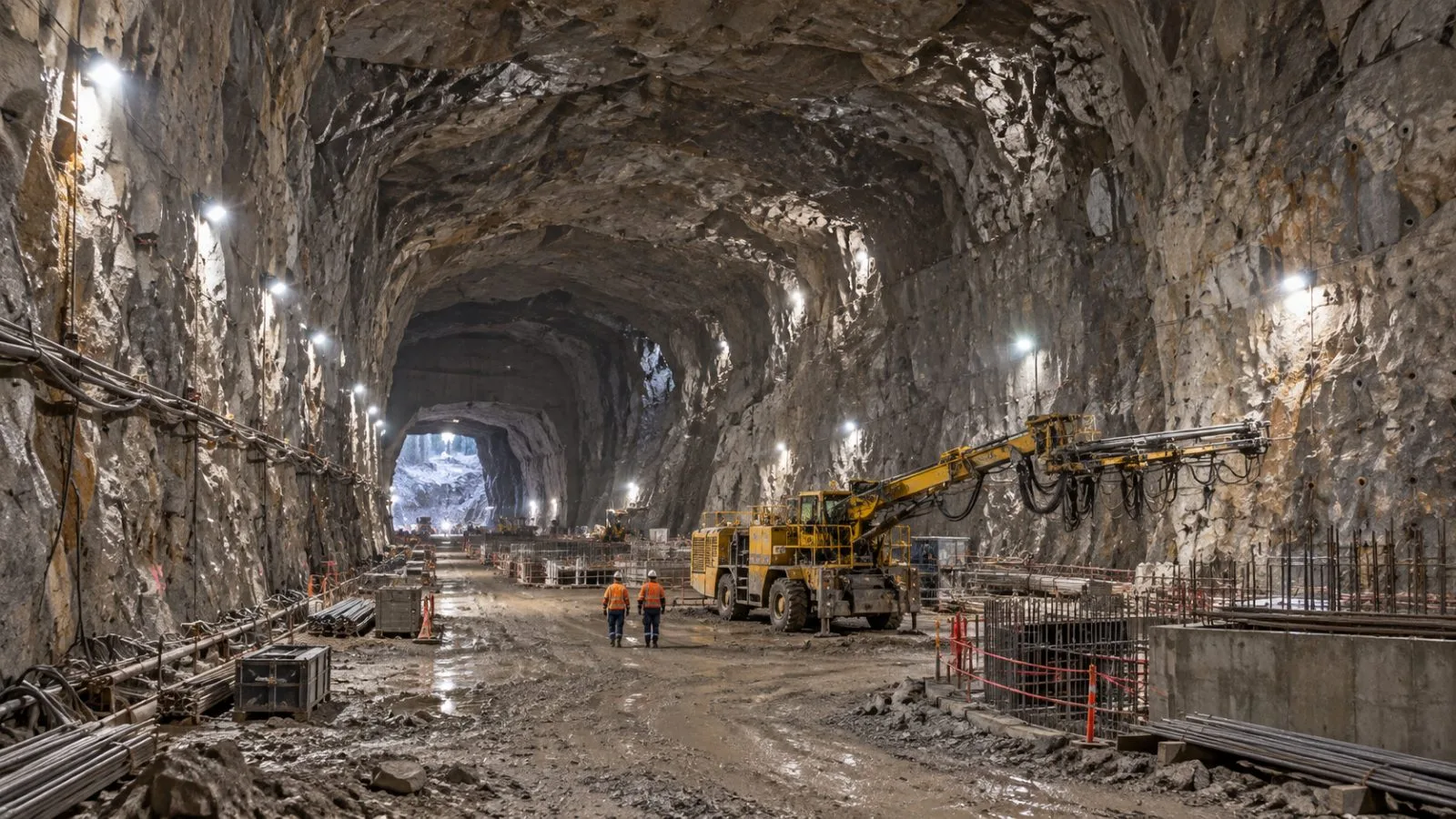
The government-owned company moved its full commissioning target to late 2029. It reported that machine tunneling was 65% complete, excavation of the underground power-station cavern had reached 90%, and station construction was underway.
Snowy Hydro attributed the higher estimate to design immaturity at the final investment decision and construction challenges. It also cited productivity shortfalls, an undercount of the remaining work and worldwide cost increases that exceeded the budget allowances made in the 2023 reset. The reassessment was conducted by principal contractor Future Generation Joint Venture.
The 2023 reset replaced the fixed-price arrangement with a hybrid incentivised target cost (ITC) contract that includes reimbursable costs. Chief Executive Dennis Barnes said the change helped shield the project from a larger increase. The Australian National Audit Office (ANAO) found that the reset shifted project cost risk to Snowy Hydro, with the Commonwealth carrying most of that risk.
In its June audit, the ANAO reported A$11.1 billion in project spending and 73% overall completion as of March 31, 2026. It found there was no agreed baseline schedule or robust cost forecast to completion. The ANAO also reported that Snowy Hydro said productivity gains expected from the reset were proving difficult to achieve. The audit’s overall completion figure and Snowy Hydro’s current tunneling figure measure different things at different times.
The A$25 billion scenario is about 12.5 times the approximate A$2 billion figure Malcolm Turnbull, then prime minister, cited in March 2017. A feasibility study later that year estimated A$3.8 billion to A$4.5 billion. The 2018 final investment decision put the cost at A$5.9 billion excluding exploratory works, or A$6.1 billion including early works.
Snowy Hydro said the A$22.2 billion target does not determine the eventual taxpayer contribution. Under the previous A$12 billion estimate, about A$4 billion was non-repayable Commonwealth equity; most of the rest was expected to come from government and bank loans repayable with interest, alongside company cash flows. The final funding mix for the revised estimate has not been announced.
The project is designed to connect the Tantangara and Talbingo reservoirs through 27 kilometers of tunnels, with 2,200 megawatts of capacity and 350 gigawatt-hours of storage. A GHD report prepared for Snowy Hydro projected A$18.3 billion in gross value added and about A$7 billion in present-value savings for electricity customers through 2075. GHD said its estimates depend on assumptions and input data it did not verify; it did not conduct a formal cost-benefit analysis or measure the investment’s opportunity cost.
Snowy Hydro said a new capital strategy for the revised estimate is being developed, but has not announced a release date.