


 3 clinical-grade skincare creams you really shouldn’t buy online
  New York Declares Measles Disaster Emergency as Cases Surge
  Novartis M&A Strategy Faces Investor Scrutiny After Drug Setbacks
  U.S. Issues Cuba Health Alert as Illnesses Rise
  Moderna Short Sellers Hit With $4.8 Billion Loss as Stock Soars
  Novo Nordisk Raises 2025 Outlook Despite Wegovy Pill Miss and CagriSema Setback
  FDA Investigates New Cyclospora Outbreak as U.S. Cases Continue to Rise
  HUTCHMED, AstraZeneca Seek FDA Approval for Lung Cancer Combo
  Trump Administration Bars U.S. Travelers From Congo Flights Amid Ebola Outbreak
  Hanmi Pharm Soars 30% on $2.3 Billion Genentech Obesity Drug Deal
  US-Backed Pediatric HIV Treatment Drops After Foreign Aid Changes, Study Finds
  Hims & Hers Shares Fall as GLP-1 Costs Widen Q2 Loss
  Venezuela Earthquake Health Risks Rise as Disease Monitoring Intensifies
  Eli Lilly Eyes AtaiBeckley Acquisition to Expand Psychedelic Mental Health Pipeline
  AstraZeneca, Bristol Myers Squibb Explore Mega Merger Worth Nearly $400 Billion


 Add as a preferred source on Google
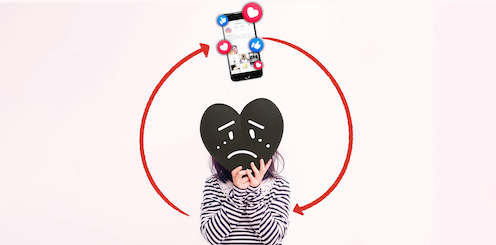

We often hear about the negative impacts of social media on our wellbeing, but we don’t usually think of it the other way round – whereby how we feel may impact how we use social media.
In a recent study, my colleagues and I investigated the relationship between social media use and wellbeing in more than 7,000 adults across four years, using survey responses from the longitudinal New Zealand Attitudes and Values Study.
We found social media use and wellbeing impact each other. Poorer wellbeing – specifically higher psychological distress and lower life satisfaction – predicted higher social media use one year later, and higher social media use predicted poorer wellbeing one year later.
A vicious cycle
Interestingly, wellbeing impacted social media use more than the other way round.
Going from having “no distress” to being distressed “some of the time”, or “some of the time” to “most of the time”, was associated with an extra 27 minutes of daily social media use one year later. These findings were the same for men and women across all age groups.
This suggests people who have poor wellbeing might be turning to social media more, perhaps as a coping mechanism – but this doesn’t seem to be helping. Unfortunately, and paradoxically, turning to social media may worsen the very feelings and symptoms someone is hoping to escape.
Our study found higher social media use results in poorer wellbeing, which in turn increases social media use, exacerbating the existing negative feelings, and so on. This creates a vicious cycle in which people seem to get trapped.
If you think this might describe your relationship with social media, there are some strategies you can use to try to get out of this vicious cycle.
Reflect on how and why you use social media
Social media aren’t inherently bad, but how and why we use them is really important – even more than how much time we spend on social media. For example, using social media to interact with others or for entertainment has been linked to improved wellbeing, whereas engaging in comparisons on social media can be detrimental to wellbeing.
So chat to your friends and watch funny dog videos to your heart’s content, but just watch out for those comparisons.
What we look at online is important too. One experimental study found just ten minutes of exposure to “fitspiration” images (such as slim/toned people posing in exercise clothing or engaging in fitness) led to significantly poorer mood and body image in women than exposure to travel images.
And mindless scrolling can also be harmful. Research suggests this passive use of social media is more damaging to wellbeing than active use (such as talking or interacting with friends).
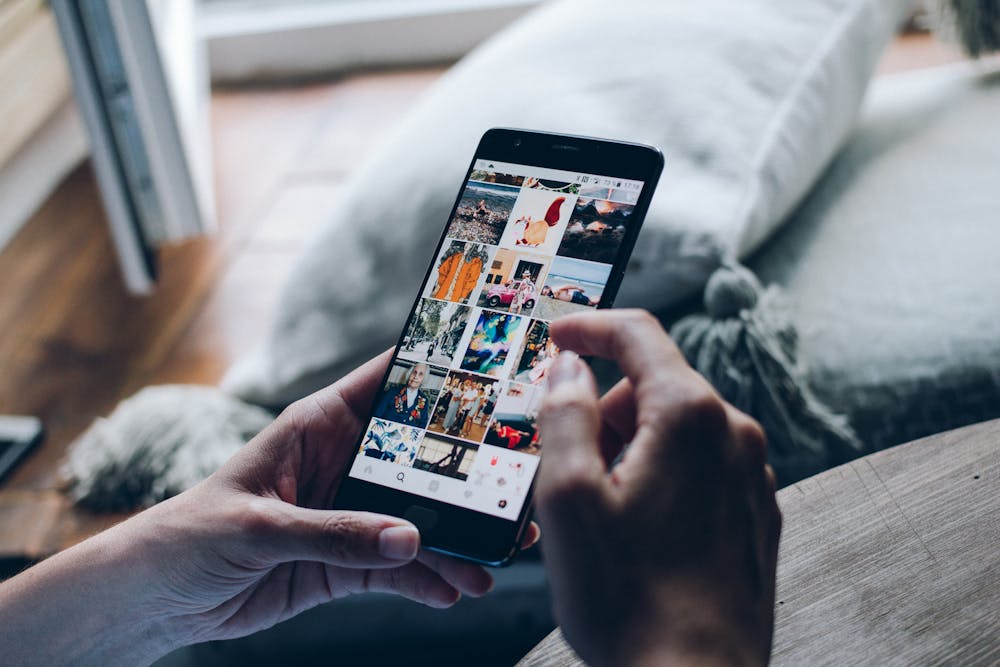
Mindless scrolling can be damaging to your wellbeing. Shutterstock
So be mindful about how and why you use social media, and how it makes you feel! If most of your use falls under the “harmful” category, that’s a sign to change or cut down your use, or even take a break. One 2015 experiment with more than 1,000 participants found taking a break from Facebook for just one week increased life satisfaction.
Don’t let social media displace other activities
Life is all about balance, so make sure you’re still doing important activities away from your phone that support your wellbeing. Research suggests time spent outdoors, on hobbies or crafts, and engaging in physical activity can help improve your wellbeing.
So put your phone down and organise a picnic with friends, join a new class, or find an enjoyable way to move your body.
Address your poor wellbeing
According to our findings, it may be useful to think of your own habitual social media use as a symptom of how you’re feeling. If your use suggests you aren’t in a good place, perhaps you need to identify and address what’s getting you down.
The first, very crucial step is getting help. A great place to start is talking to a health professional such as your general practitioner or a therapist. You can also reach out to organisations like Beyond Blue and Headspace for evidence-based support.







