Workers in several reported workplaces describe directing and checking AI agents, while a growing share of respondents at large organizations say agents are being scaled in at least one function.
McKinsey's 2026 survey found that 40% of respondents at organizations with more than $1 billion in annual revenue said their employers were scaling agents in at least one function, up from 27% a year earlier. At smaller organizations, 22% of respondents reported scaling agents, unchanged year over year. The survey collected responses from 1,719 people in 97 countries between May 4 and June 8.
In the same survey, 80% of respondents said AI improved their individual productivity, while 37% said it had a positive effect on their organizations' earnings before interest and taxes.
Dhruv Amin, co-founder of AI startup Anything, told The Guardian that agents at the company handled scheduling, coding, search optimization and customer onboarding. The Guardian reported Oct. 29 that Anything had 15 human employees and roughly 150 agents. The newspaper also quoted River founder Tarek Abillama as saying, “We all became managers.”
Anything's Skydive platform is designed around role-specific agents. The company's launch announcement says agents can use connected workplace apps, have their own Slack bots, inboxes and phone numbers, and run scheduled tasks on cloud computers.
A National Bureau of Economic Research working paper revised in September analyzed data from more than 500,000 GitHub developers. Its matched event study estimated that autonomous agents raised coding activity by 240% cumulatively, compared with an estimated 80% increase for projects and 30% for actual releases. The paper measures these outcomes separately; it does not establish that human supervision caused the difference, and the results are estimates rather than findings from a randomized trial.
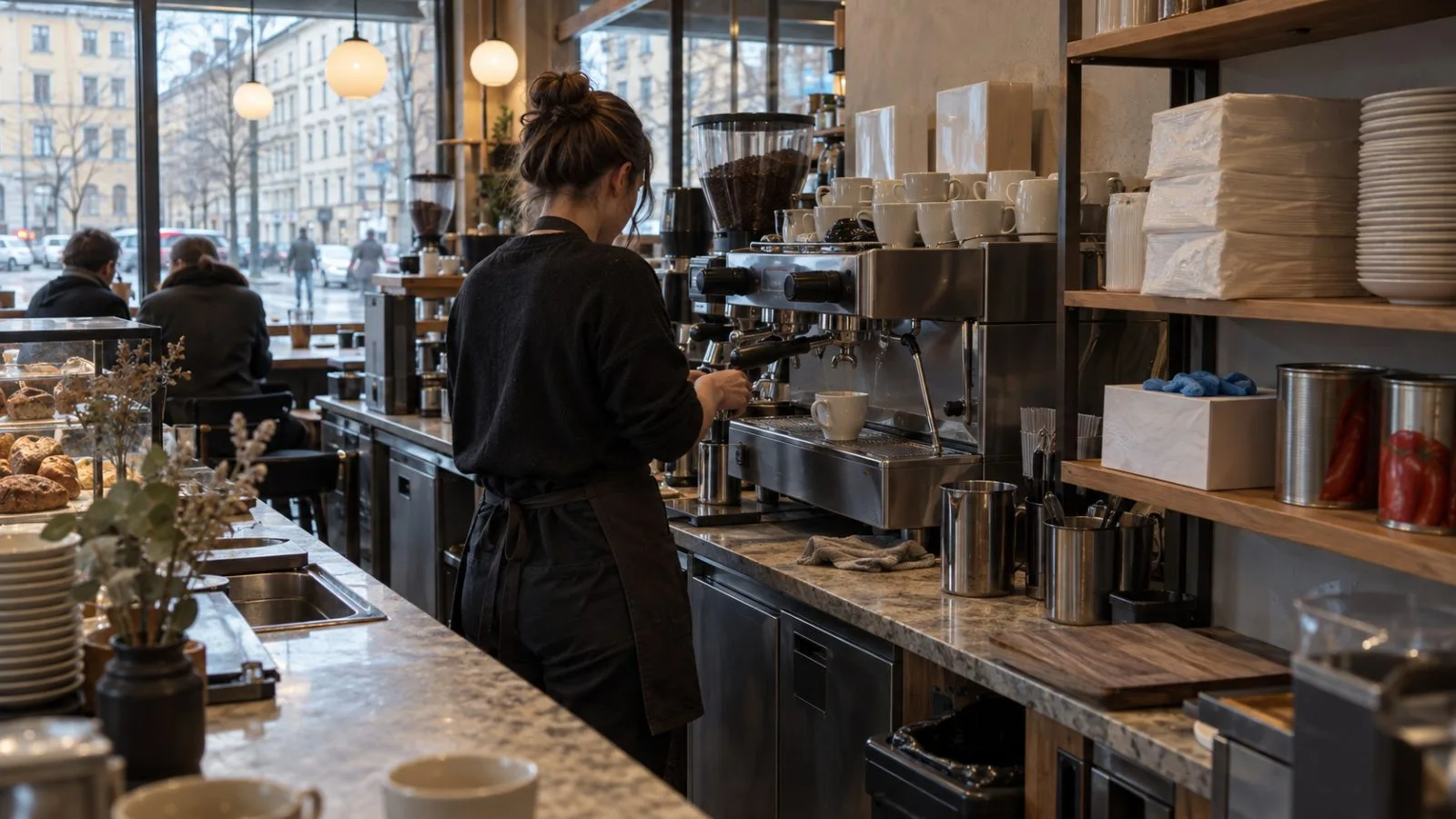
The Associated Press reported that an AI agent overseeing operations at Stockholm's Andon Café ordered 6,000 napkins, 3,000 rubber gloves, four first-aid kits and canned tomatoes the café did not use. Human baristas continued to prepare and serve drinks.
Boston Consulting Group's Applied AI Index 2026, based on a survey of 1,330 executives and senior leaders, found that companies expected AI to reduce their workforces by roughly 10% to 15% by 2030. The same survey found that 89% expected AI to generate new work, while 11% expected it mainly to replace existing jobs. Those figures are expectations, not measured workforce changes. The Guardian also reported worker concerns about job displacement, fewer entry-level opportunities and less human contact with customers and colleagues.