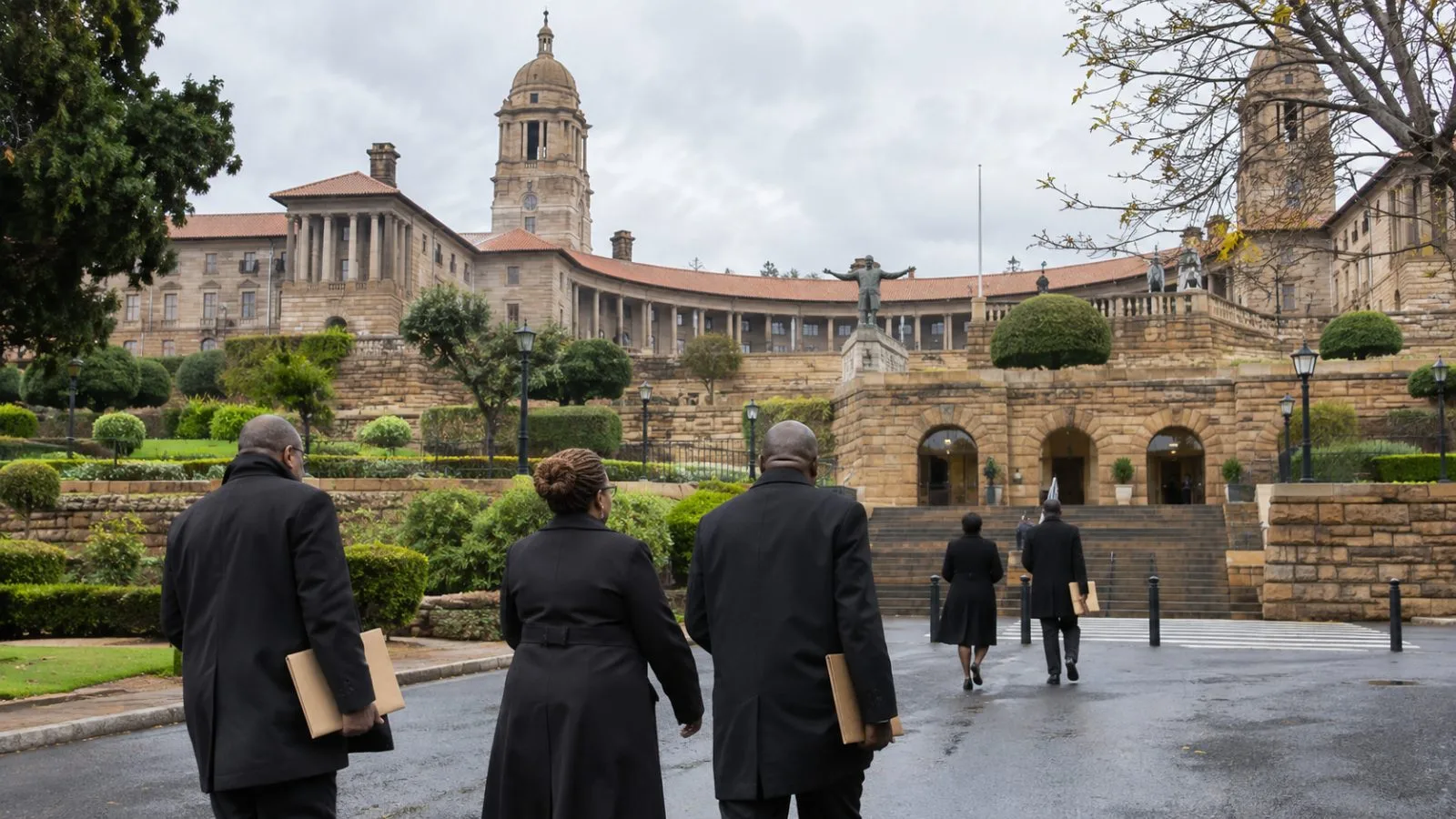
South Africa’s Madlanga Commission has until Jan. 25, 2027, to deliver its final report on alleged criminal-syndicate influence across law-enforcement and intelligence structures, as its findings could inform later prosecutions, discipline or institutional reforms.
An amendment published in the South African Government Gazette gives the commission the deadline to submit its report to President Cyril Ramaphosa. After submitting the report, the commission will spend two months completing referrals, transferring records and handling remaining administrative work.
Ramaphosa established the inquiry after KwaZulu-Natal Provincial Police Commissioner Lt. Gen. Nhlanhla Mkhwanazi made allegations public on July 6, 2025. Justice Mbuyiseli Madlanga chairs the commission, with Advocates Sesi Baloyi SC and Sandile Khumalo SC as members.
The original proclamation says the inquiry covers alleged criminal-syndicate influence over the South African Police Service, metropolitan police departments, the National Prosecuting Authority, the State Security Agency, the judiciary and magistracy, and correctional services. It also lists alleged suppression of investigations, corruption, witness intimidation and failures to act on intelligence or warnings.
Madlanga said the panel had not completed its assessment of the evidence or reached definitive findings. He said the evidence indicated serious criminality and undue influence, adding that “if the allegations proved to be true, that would spell doom for South Africa’s criminal justice system.”
The commission’s second interim report, submitted May 29, 2026, recorded testimony from 32 witnesses across 64 hearing days after proceedings restarted Jan. 26, 2026.
Official crime data provide wider context. South African Police Service figures show 5,590 murders, 12,444 sexual offences and 152,281 contact crimes from July through September 2026. Murders declined 3.5% from 5,794 in the same period of 2025.
World Bank data drawn from United Nations Office on Drugs and Crime records show an intentional-homicide rate of 43.72 per 100,000 people in 2022; the measure covers homicide only and is not a complete ranking of all crime.
Statistics South Africa estimated 1.5 million housebreaking incidents and 259,000 home-robbery incidents in 2024/25. Some or all housebreaking incidents were reported to police by 43.4% of affected households; the reporting rate for home robberies was 51.3%.
The original proclamation identifies potential public costs including weakened investigations, witness intimidation and reduced accountability for serious crimes. It allows the commission to refer matters for criminal investigation or prosecution.
The report due Jan. 25 will provide the next substantive assessment of the allegations. Any prosecutions, disciplinary action or institutional reforms would depend on subsequent action by state institutions.