South Korea is weighing youth jobs in eldercare technology as projections point to 990,000 additional care workers by 2043 and reported use of a foreign-graduate visa remains low.
The Korea Development Institute (KDI) says the estimate assumes current demand and workforce patterns continue, with caseloads held at their 2023 level. It identifies low wages and demanding work as obstacles to recruiting and retaining care workers, and says shortages threaten older adults’ quality of life.
The pilot, launched in July 2024 by South Korea’s Ministry of Justice (MOJ) and Ministry of Health and Welfare (MOHW), allows foreign graduates of Korean colleges to qualify for care work after certification and employment at a care facility. Records Rep. Ahn Cheol-soo says the ministries supplied show zero visas issued in 2024, 18 in 2025 and 23 through September 2026, for 41 in total.
An MOJ table dated Feb. 10 lists 15 actual issuances in 2025 and a 400-person annual allowance for 2026. It does not explain the difference between its 2025 figure and Ahn’s reported count.
Ahn’s records also list 7,623 foreign care workers at long-term care institutions at the end of 2025: 5,425 at home-visit providers and 2,439 at residential facilities, including 241 who worked in both settings. These totals cover workers across visa categories. Ahn has pointed to the pilot’s workplace restriction as a possible constraint and urged the government to consider allowing visa holders to work for home-visit providers, although the figures do not establish that the restriction caused low uptake.
KDI says better job conditions could help recruit domestic workers and retain foreign hires. Study author Junghyun Kwon wrote, “Job quality improvements must accompany the expansion of foreign recruitment.” KDI also cites Japan, where poor conditions and long hours drove more than one-third of foreign workers who had earned care-worker qualifications to return home.
Among facilities licensed for at least 80 residents in KDI’s survey, 89.1% said care robots were needed and 6.4% had deployed them. Separately, 51.8% said they would consider deployment with cost support; 72% viewed purchase or rental subsidies as key to adoption.
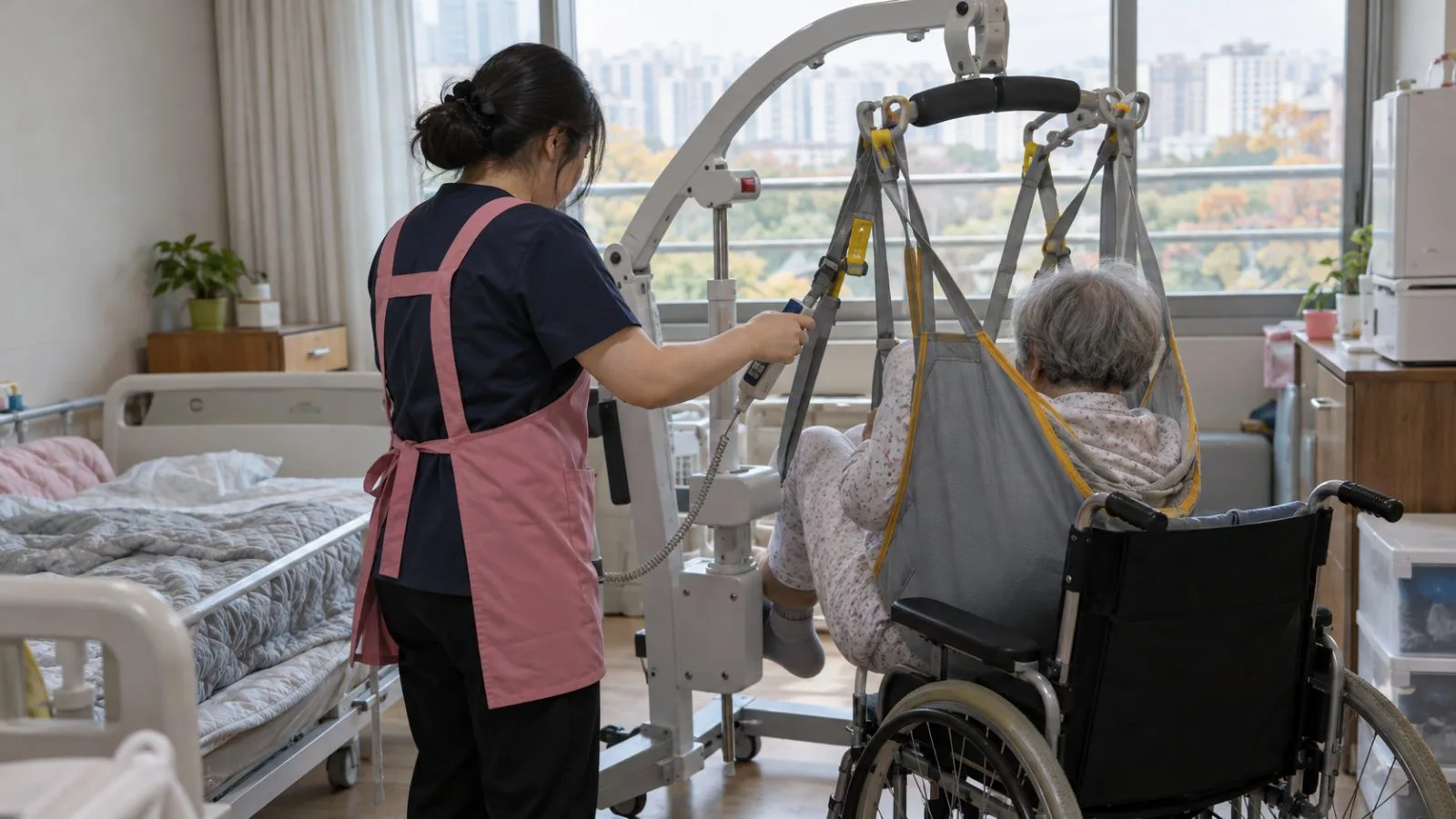
On Oct. 14, the Population Strategy Committee proposed youth roles supporting the use of artificial intelligence, robots and assistive devices in eldercare, particularly in regions losing population. The committee said the proposals require further consultation. It plans to revise the broader population strategy after final public input, then seek vice-minister and Cabinet deliberations and approval; it gave no timetable.