South Korea's planned satellite expansion is putting its rocket launch pace under scrutiny, with President Lee Jae Myung ordering a review Tuesday of investment in launch vehicles and spacecraft.
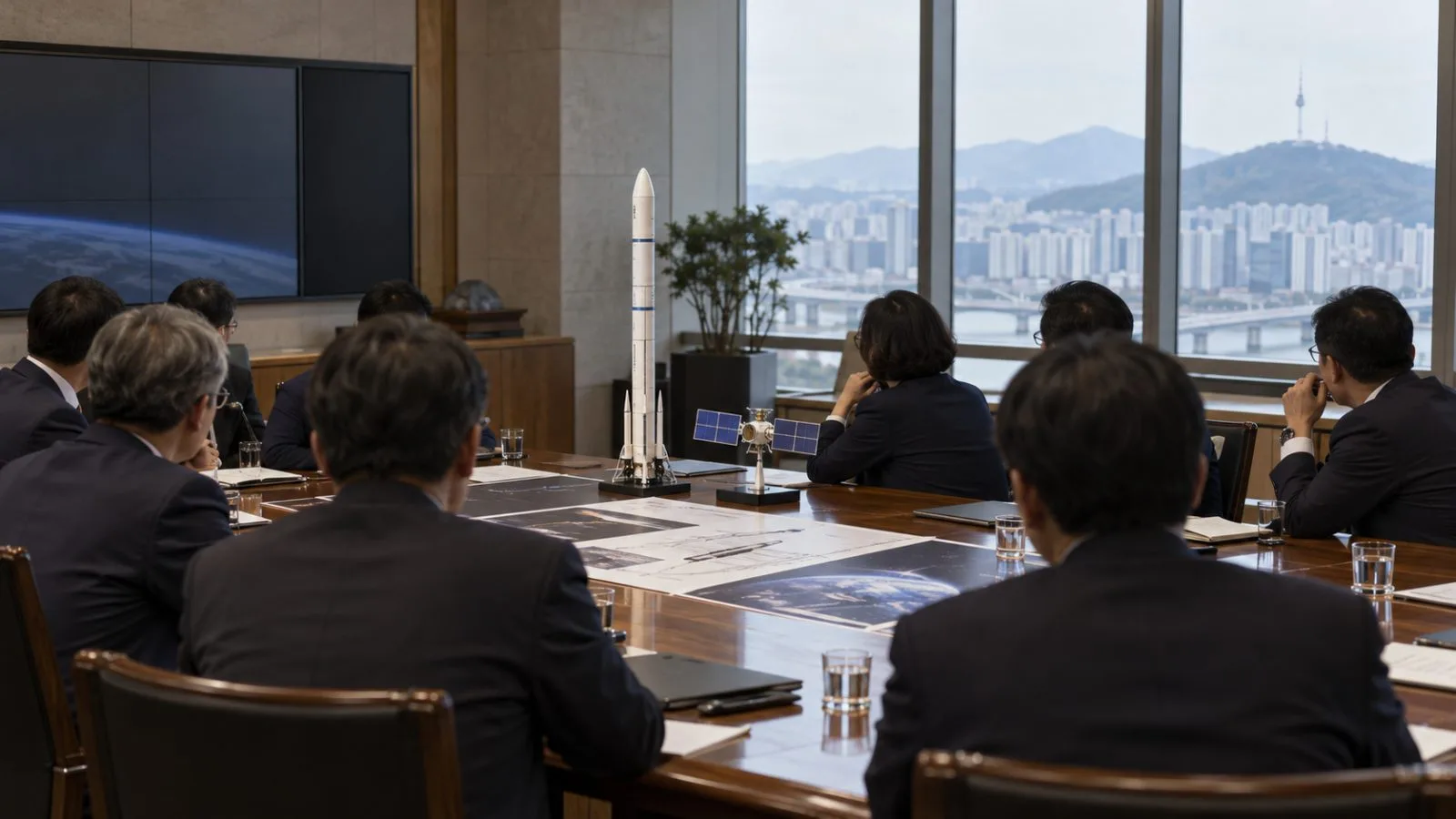
At a Cabinet meeting, Lee questioned whether roughly one launch a year could serve growing demand for communications and surveillance satellites, the presidential office said. He asked whether greater investment could speed development and whether private firms had the capacity to participate. Lee also described launch vehicles and satellites as potential military assets.
The presidential office announced no additional funding or revised launch schedule. The Korea AeroSpace Administration (KASA) already has an approved 2026 budget of 1.1201 trillion won, up 16.1% from 2025. It includes 266.2 billion won for space transportation and related technology and 236.2 billion won for satellite communications, navigation and observation.
Nuri's fifth flight on Oct. 7 showed both the scale of the launch program and a remaining setback. KASA said the rocket placed five microsatellites and nine CubeSats in their target orbits. In a later update, the agency said Quaternion PerSat-2, one of 10 secondary payload satellites, was not deployed.
The National Space Committee approved a strategy that KASA presented in July. It sets a 2030 goal for developing the capacity to mass-produce and launch satellites. The next milestone is to verify the operation of communications satellites in orbit by 2032, followed by a target of completing a domestic low-Earth-orbit communications network by 2035.
KASA says the strategy is intended to strengthen national security and communications sovereignty and create markets for domestic companies. It also envisages reusable rockets and a larger role for private firms, with public demand for satellites supporting local manufacturers and launch providers. The presidential office gave no amount or decision date for any investment beyond the existing budget.
KASA Administrator Taeseog Oh said the agency is preparing Nuri's sixth flight for the second half of 2027 and aims to launch at least once a year through 2032.